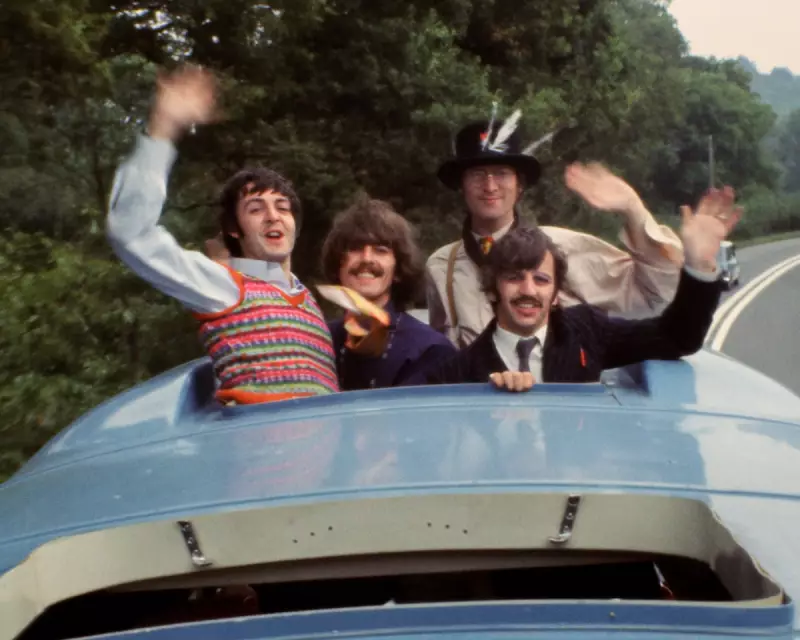
The Beatles Anthology, the landmark documentary series from 1995, has returned with a spectacular audio and visual makeover, offering both seasoned fans and newcomers the definitive account of the band's incredible journey.
A Timeless and Authoritative History
This is not a new story, nor is it an attempt to replicate the magic of Peter Jackson's 2021 documentary, Get Back. Viewers who saw the original series will find the same meticulously assembled collage of archival footage and contemporary interviews. For those discovering it for the first time, The Beatles Anthology remains the utterly authoritative chronicle of the band that changed music forever.
The series functions as a detailed historical record, akin to The World at War but for the group behind songs like Maxwell's Silver Hammer. It pieces together all available footage of The Beatles, interspersed with interviews conducted over a period long enough to showcase a genuinely giddy array of changing styles, from George Harrison's facial hair to Ringo Starr's haircuts and Paul McCartney's dye-jobs. John Lennon's perspective is woven in through extensive archive material.

The Audio Revolution: A Thing of Wonder
The most significant update to the series lies in its sound. The audio has been completely revamped by Giles Martin, son of producer George Martin, using the same machine-learning technology developed for Peter Jackson's Get Back. The result is nothing short of revolutionary.
For years, the reputation of the early Beatles as wild, energetic performers seemed at odds with the sometimes thin and tinny quality of their recordings. Now, their music absolutely thumps with a clarity and power that bridges that gap. In one standout performance from the second episode, the audio is so crisp you can hear the saliva crackle in the back of Paul McCartney's throat as he scream-sings. This raw, visceral quality makes it suddenly, brilliantly clear why global audiences fell in love with them so completely.
The Long Shadow of Get Back and Humanising the Icons
Despite being the original definitive work, the Anthology now exists in the long shadow cast by Get Back. Jackson's documentary brilliantly portrayed the dynamic of McCartney as the driving force, tirelessly pushing his sometimes grouchy bandmates towards productivity. This perspective becomes hard to ignore when watching the Anthology's ninth and final episode.
This episode, promoted as a new look at the band's 1990s reunion without John Lennon, features the recording of the tracks Free as a Bird (1995) and Real Love (1996). However, much of this footage has been available online for years, lessening the impact of its 'newness'. What it does provide are fascinating, unintentional glimpses into the band's enduring, very human friction.
The episode reveals that George Harrison vetoed the original series title, The Long and Winding Road, fearing it gave undue prominence to McCartney. There are shots of Harrison slightly grimacing as McCartney showboats, and it's noted that Harrison once blocked the completion of Now and Then, reportedly dismissing it as rubbish. A telling moment shows the trio listening to the celebrated medley from Abbey Road, where Harrison wrinkles his nose and mutters, bit cheesy.
These moments, along with a shot of Ringo Starr sighing and checking his watch during their final performance as a trio, serve as a powerful reminder that The Beatles were not an untouchable monument. They were four complicated, narky, and profoundly human individuals. The series' opening titles—which show the four members shrinking until they are obscured by the colossal legend THE BEATLES—neatly encapsulate this very necessary message. The Beatles Anthology is available to stream on Disney+ now.