Barbara Hannigan's Remarkable Dual Performance at London's Barbican
In an evening that showcased extraordinary musical versatility, soprano Barbara Hannigan delivered not one but two stunning performances at London's Barbican Centre. The acclaimed LSO associate artist began by singing a demanding 36-minute monodrama before seamlessly transitioning to conduct the London Symphony Orchestra through challenging works by Ligeti and Richard Strauss.
A Visceral Vocal Performance
Hannigan opened the program with Laura Bowler's The White Book, a composition based on Han Kang's autobiographical meditation of the same name. The work sets five chapters for voice, orchestra, and live electronics, exploring themes inspired by the death of Kang's sister who lived only briefly after premature birth.
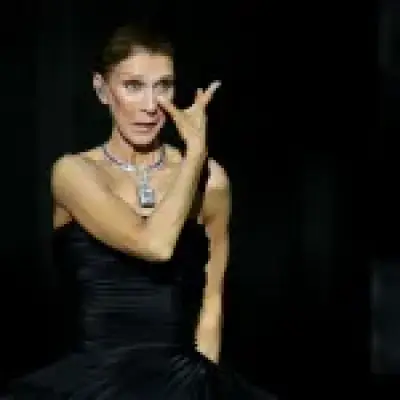
Swathed in spectral silk, Hannigan inhabited the music completely, her gently amplified soprano navigating the emotional landscape with profound sensitivity. The composition exists in that liminal space between life and death, with vast chords rolling like ocean waves before dissolving into delicate percussion. Misty strings created atmospheric textures reminiscent of breath on a winter's day or dust motes in sunlight.

Hannigan's voice ranged from ethereal heights to powerful declarations, with Matthew Fairclough's electronics catching and multiplying her phrases into swirling fragments that filled the hall. The performance concluded in a shimmer of strings so quiet that, as one observer noted, "you could have heard a pin drop."
Commanding the Conductor's Podium
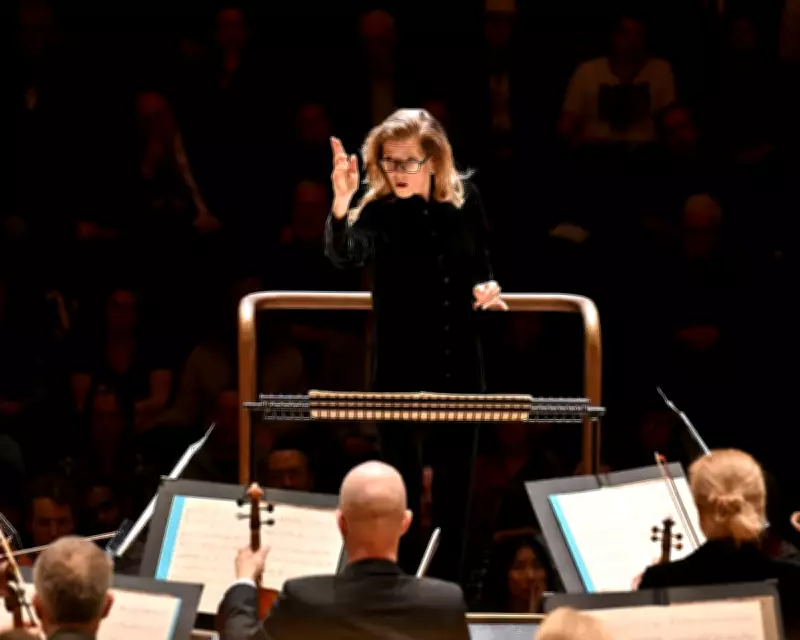
Following this intense vocal performance, Hannigan demonstrated her equally formidable skills as a conductor. Taking the podium, she employed her characteristically elastic physicality to sculpt the music with remarkable fluidity and precision.
Ligeti's Lontano, typically a study in glacial microtonality, emerged under her direction with unexpected sensuality. She brought a similar erotic charge to Strauss's Also sprach Zarathustra, a work that can sometimes feel episodic but here flowed with compelling continuity.
Unafraid to take her time with the music, Hannigan focused on its yearning intensity, coaxing the London Symphony Orchestra to ever greater heights of passion. The double basses delivered a bone-chilling Grave Song, while the fugal Of Science and Learning section maintained a pedantically ponderous quality. A lavishly swung Dance Song, oozing Viennese whipped cream, made Strauss's unstable closing harmonies all the more disquieting.
Technical Mastery and Emotional Depth
Despite occasional balance issues, Hannigan demonstrated complete command of the complex scores. From the mighty opening sunrise of Also sprach Zarathustra to its hushed final bars, she maintained clear artistic vision throughout.
What makes Hannigan's achievement particularly remarkable is how each role informed the other. Her experience as a singer brought unique insight to her conducting, while her conducting background undoubtedly enriched her vocal interpretation. This symbiotic relationship between her dual talents created a cohesive musical experience that left a lasting impression on the Barbican audience.
The evening served as a powerful testament to Hannigan's exceptional versatility and technical mastery. Few musicians could transition so seamlessly between such demanding roles, and fewer still could excel in both with equal brilliance. Her performance reaffirmed why she remains one of the most compelling and innovative musicians working in classical music today.