The Legacy and the Shadow
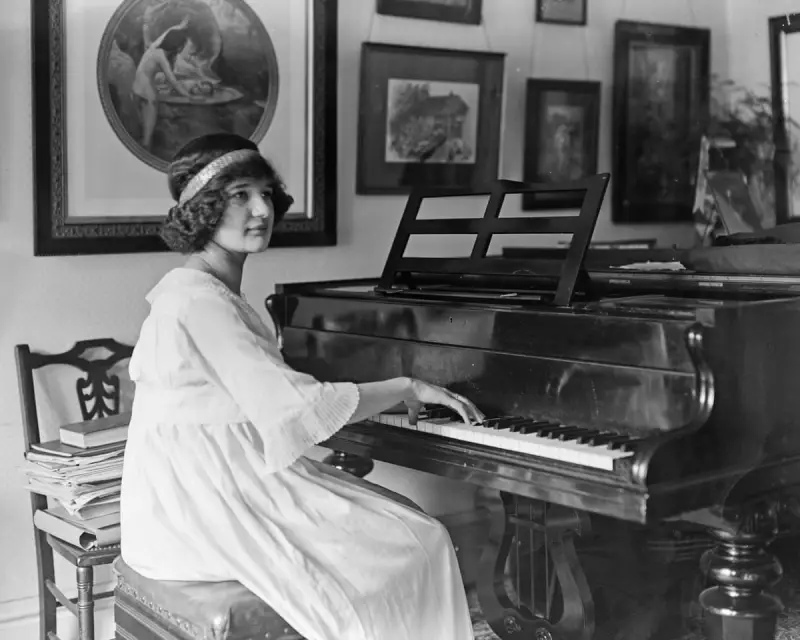
Avril Coleridge-Taylor carried the weight of her father's name throughout her life. As the daughter of Samuel Coleridge-Taylor, one of Britain's most celebrated early 20th-century composers, she existed in the long shadow cast by his remarkable legacy. This year marks a significant moment in musical history as the world premiere recording of Avril's 1936 piano concerto is being prepared with the BBC Philharmonic Orchestra.
The concerto, with its passionate harmonies, soulful lyricism and courageous rhythms, offers contemporary listeners a fascinating window into how this wartime composer, born in 1903, perceived her world as a woman of colour. Yet understanding Avril's complete story requires looking beyond the obvious connections to her famous father.
A Father's Activism, A Daughter's Different Path
Samuel Coleridge-Taylor's musical journey was deeply intertwined with his political consciousness. The son of a Sierra Leonean father and white English mother, he began exploring his African heritage during his studies at the Royal College of Music. His meeting with African American poet Paul Laurence Dunbar in 1897 proved transformative, leading to musical settings of Dunbar's African Romances and the opera Dream Lovers.

Samuel's breakthrough came with Hiawatha's Wedding Feast in 1898, based on Longfellow's poem. The work became an international sensation, particularly resonating with African Americans who saw his success as a triumph against racial prejudice. His activism continued throughout his life, attending the First Pan African Conference in 1900 where he met intellectual WEB Du Bois, maintaining relationships with civil rights leaders, and even discussing racism with President Theodore Roosevelt during a 1904 White House visit.
Du Bois later reflected that Samuel "wrote his name so high as a creative artist that it cannot soon be forgotten." His untimely death in 1912 at age 37 left a profound musical legacy and a strong tradition of political engagement.
Controversial Choices and Hard Lessons
Avril's relationship with her father's legacy took a controversial turn during the 1950s when she worked in South Africa. The American publication Jet magazine ran a shocking headline: "Daughter of Famous Composer gives OK to S African Bias." The article quoted Avril as saying apartheid "seems to me the right policy," though she later attempted to clarify her position, stating she didn't agree with apartheid "in principle" but felt it "should be allowed to work itself out."
Her light skin tone, described as "porcelain-white" by Jet, allowed her to move freely within South Africa's white society. She gave talks about her father's music at the University of Cape Town and conducted the South African Broadcasting Corporation Orchestra in Johannesburg, programming the heroic third movement of her Piano Concerto subtitled "In remembrance of my Father."
This privileged existence collapsed in 1954 when authorities discovered her African heritage. The British high commissioner advised her to leave immediately or face imprisonment. She returned to England deeply ashamed, lamenting that "the lesson was a hard one." Her humiliation was compounded when Jet published their damning interview in 1955, a year after her abrupt departure from South Africa.
Reconciliation Through Music
In the aftermath of her South African experience, Avril reconnected with her father's legacy in profound ways. She composed Ceremonial March in 1957 for Ghana's independence, echoing the commemorative spirit of her earlier works like In Memoriam: To the RAF (1945) and the plaintive In Memoriam (1967), which she later dedicated to her brother Hiawatha and her father.
Despite the controversy surrounding her South African chapter, Avril never concealed her heritage or the Coleridge-Taylor name. The concerto movement dedicated to her father progresses with bold symphonic colours that declare "I am here" – a powerful statement of identity and belonging.

Her story reflects a broader narrative of being British until you're not – a experience shared by African-descended soldiers who fought for Britain in the second world war only to be denied compensation, and the Windrush generation who built postwar Britain yet still face challenges regarding their right to remain.
The shadows of history, as Avril's story demonstrates, contain important lessons if we're willing to look closely enough. Her music, particularly the piano concerto receiving its premiere recording, offers a complex portrait of an artist navigating identity, legacy and belonging in 20th-century Britain.
Avril Coleridge-Taylor: Piano Concerto and Orchestral Works with the BBC Philharmonic Orchestra and John Andrews will be released on 21 November on Resonus Classics.