Audrey Hobert: The Unconventional Pop Star Redefining Music with Humor and Heart
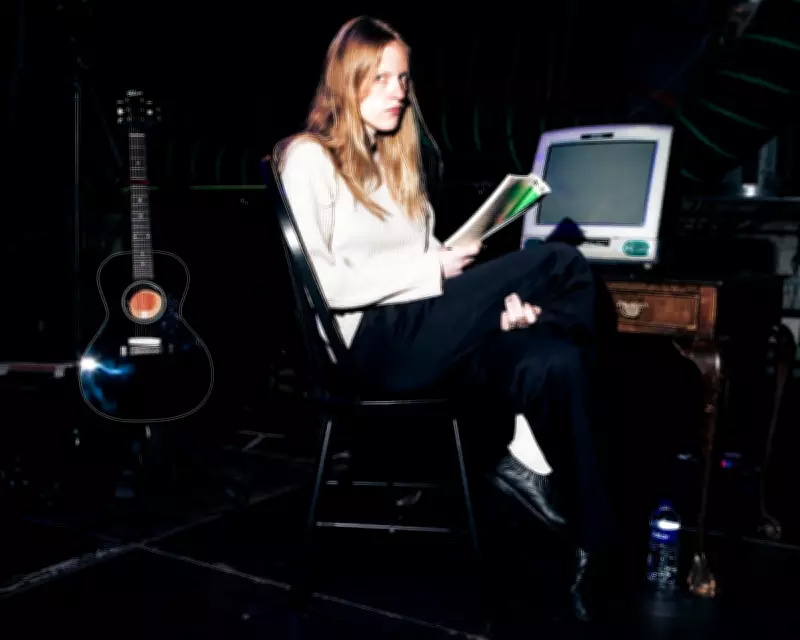
Backstage at Berlin's Huxleys Neue Welt, Audrey Hobert, the 27-year-old pop sensation, showcases her dressing room with childlike enthusiasm. Local snacks from her rider, including chocolate thins, share space with a comically oversized beige trenchcoat that pools on the floor and Groucho Marx glasses modified with orange fluff to match her strawberry blond hair. "Those glasses are not flattering," Hobert admits with a laugh, noting that matching her hair to the plastic nose "makes it more flattering." This whimsical setup previews a performance that blends high-concept pop with slapstick comedy, establishing Hobert as a unique voice in modern music.
From Accidental Songwriter to Cult Favorite
Hobert's journey into pop stardom was serendipitous. With no prior songwriting experience, she moved in with childhood friend Gracie Abrams, a pop superstar, and their spontaneous collaboration yielded six songs for Abrams' platinum-certified album, The Secret of Us. "It was complete kismet," Hobert recalls. "Best time of my life." Inspired by witnessing these songs come to life in producer Aaron Dessner's studio, Hobert, a screenwriting graduate working on a Nickelodeon show, pivoted to music. "I'd never had this feeling before," she says, describing the pull toward songwriting.
Her solo debut, Who's the Clown? released last year on RCA, features breezy yet lyrically dense pop, reminiscent of a lost Stephen Sondheim musical set to Y2K MTV sounds. Tracks like Sex and the City humorously explore awkward desire with lines like, "Touching my leg / You don't have a headboard / Do that again / I think that I want more." Hobert's delivery is addictive, driven by a rhythmic flow she admires in artists like Taylor Swift. "I'm always trying to best myself," she notes.

The Rise of a "Good-Natured Control Freak"
Hobert's fandom is cultish, with fans at her Berlin show wearing trenchcoats and bowling pins on their heads, referencing her song Bowling Alley. Despite her rapid rise, she remains pragmatically grounded. "I feel lucky because I'm in my mid-20s and more fully developed than many starting out," she says, criticizing the industry's tendency to push young artists. "I think it should be illegal for a 16-year-old to go into a label meeting and pitch themselves as an artist."
Describing herself as a "good-natured control freak," Hobert emphasizes a complete artistic vision. "What I have been working towards my whole life is having a platform where I can express myself and inspire others," she explains. Growing up in Los Angeles with a screenwriter father, she honed an ear for language, often sharpening others' expressions. Influenced by showrunners like Lena Dunham, she moved to New York to study screenwriting, only to face lockdowns during her final year. This period, marked by trichotillomania (hair-pulling) and isolation, fueled her resilience. "I was dealing with bald spots, living next to a freeway and wishing life would improve," she recalls.
Embracing Imperfection and Social Commentary
Hobert's music tackles social anxiety and desire, countering stereotypes of a phone-addled generation. In Shooting Star, she sings, "When I'm drunk at the club I wanna be felt up," challenging notions of a sex drought among young people. "The generalization that people don't go out, don't talk to each other, is bullshit – and it's also not," she argues, advocating for real-world engagement over digital escapism.
Her commitment to authenticity extends to her stage presence, where she rejects polished femininity for comedic, leggy dancing inspired by comedians like John Wilson and Patti Harrison. Online criticism labeling her "weird" prompted her to step back from social media. "If I wanted to get in some sort of class that would show me how to be more polished, I could do that tomorrow," she asserts. "But it's not what I'm interested in in pop music right now."

Looking Ahead: Growth on Her Own Terms
As Hobert tours the UK, Ireland, and beyond, she grapples with fame on her own terms. "Sometimes I wonder if I need to get bigger at all, if that would make me happy," she muses. Her song Chateau critiques celebrity culture, though she now finds herself less of a "fly on the wall." With a new boyfriend and evolving relationships, she rejects the "tortured artist" trope. "I have been working tooth and nail to tell myself that's not true," she says, prioritizing balance over suffering for art's sake.
Post-tour, Hobert plans to write in solitude, cherishing creativity without sabotage. She continues collaborating with Abrams and pursues screenwriting dreams, believing music success will enhance future opportunities. "I just try to exist and have as much fun as I possibly can," she concludes. "It's made this whole career, which can be very stressful and draining, very fun and exciting and not draining at all."