Atomic Kitten's 'Whole Again': The Untold Story of How Kraftwerk Inspired a Pop Classic
In a surprising twist of pop music history, the iconic girl group Atomic Kitten was actually conceived with a little help from German electronic pioneers Kraftwerk. Andy McCluskey, founder and songwriter of Orchestral Manoeuvres in the Dark (OMD), reveals that after his band's 1996 single "Walking on the Milky Way" was rejected by Radio 2 and Woolworths during the Britpop era, his friend Karl Bartos of Kraftwerk suggested an unconventional solution: "Why don't you create a girl band as a vehicle for your songs?"
The Unlikely Formation of a Pop Phenomenon
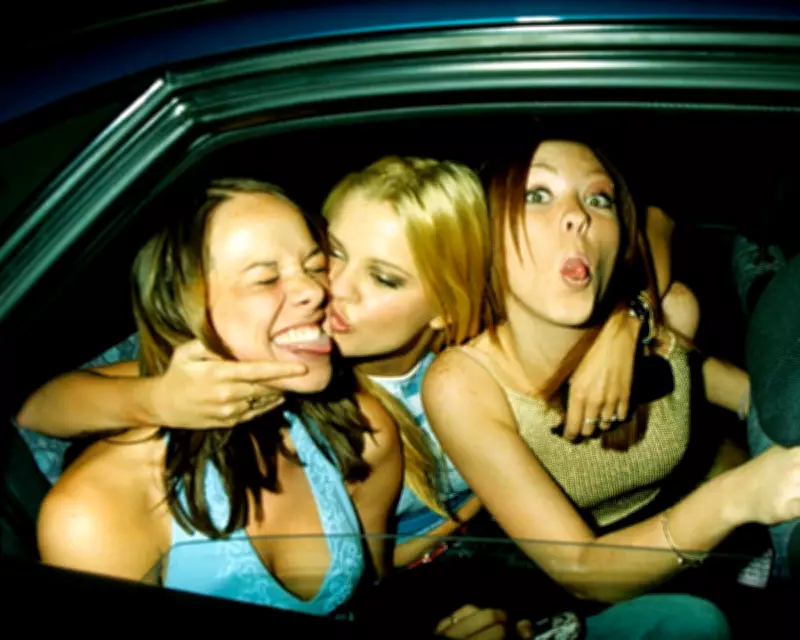
The audition process for what would become Atomic Kitten was anything but ordinary. When Kerry Katona arrived for her meeting with McCluskey, she immediately showed everyone topless photographs she had just taken, which McCluskey described as "an interesting interview technique." Despite not being the strongest vocalist, Katona possessed undeniable star quality. "She was like Marilyn Monroe: she didn't know how engaging and beautiful she was," McCluskey recalled, noting her determination to escape a difficult life through fame.
Liz McClarnon arrived wearing bright blue contact lenses, while Natasha Hamilton stood out with her red hair and striking cheekbones. McCluskey told OMD drummer and Atomic Kitten co-creator Stuart Kershaw: "If she can sing, she's in." Hamilton not only could sing but possessed what McCluskey described as a remarkable vocal talent that immediately secured her place in the group.

The Transformation of 'Whole Again'
The song that would become Atomic Kitten's signature hit began as an electronic ballad before undergoing a dramatic transformation. Stuart Kershaw declared the original version wasn't working and requested a day to rework it into what he called "a modern gospel song." He completely changed the drum pattern to resemble The Fugees' "Killing Me Softly," adding bass and organ elements that gave the track an entirely new emotional resonance.
The lyrics explore the profound sense of loss following a relationship's end, capturing that moment when "you feel bereft, like there's part of the jigsaw missing." Natasha Hamilton's lead vocals deliver this emotion with a resigned quality, while Liz McClarnon's voice provides heartbreaking depth. Kerry Katona's spoken verse proved particularly challenging, requiring 39 separate takes spread over several months because she had recently undergone a tonsillectomy that dramatically altered her voice.
Behind the Scenes of Pop Stardom
The success of "Whole Again" brought with it intense promotional pressures that ultimately proved overwhelming for Katona. During what should have been a triumphant moment, as the group prepared to perform on The Pepsi Chart Show, Katona experienced a breakdown in the van, declaring she couldn't go through with it. Practical-minded Natasha Hamilton immediately called Jenny Frost, instructing her to take a taxi to the studios and learn the middle-eight of "Whole Again" on the way, as she would need to perform it live.
Hamilton reflects on the recording process with amusement, noting that listening back to their vocals now makes her exclaim: "My God, we sound like chipmunks." Despite this self-deprecating assessment, she believes the song maintains a soulfulness uncommon in pop music, influenced by her childhood listening to funk and soul legends like Earth, Wind & Fire, Marvin Gaye, and Gladys Knight.
Overcoming Industry Skepticism
The group faced significant resistance from the music industry when they pushed to release "Whole Again." "We were three working-class kids, and I think there was a real 'look-down-your-nose' attitude towards us," Hamilton revealed. The industry hadn't taken them seriously, and they were treading a fine line without the commercial success others expected. However, their persistence paid off spectacularly when the song reached number one.
Hamilton knew the song would be big based on its reception during live performances. "We'd be dancing around like lunatics, then we'd drop this ballad and everyone was like: 'Yeah, we're here for this,'" she recalled. The commercial success was undeniable—they were outselling U2 two-to-one, with Bono himself acknowledging they had "had our arse kicked by pop."

A Lasting Legacy
For Hamilton, who grew up recording the charts on cassette every Sunday and watching Top of the Pops religiously, reaching number one with Atomic Kitten remains an emotional achievement. "I've got goosebumps just saying it, even now," she admitted. Her favorite performance occurred during the Queen's golden jubilee celebrations, where she performed alongside Phil Collins on drums and Bryan Adams on guitar before 100,000 people on the Mall singing her song back to her.
The song's universal theme of heartbreak has given it remarkable staying power, even appearing in unexpected contexts like England football fans chanting adapted lyrics during major tournaments. McCluskey finds particular amusement in this phenomenon: "There was nothing funnier than seeing a bunch of middle-aged, overweight, bare-chested England fans chant, 'Southgate, you're the one, you still turn me on' at the World Cup and Euros. That's the most surreal thing that's ever happened."
Today, Natasha Hamilton continues her musical career with new releases, while OMD embarks on their Summer of Hits tour, but the story of how Kraftwerk helped create Atomic Kitten and how three determined women overcame industry skepticism to create a pop classic remains one of music's most fascinating behind-the-scenes tales.