André de Ridder Embraces the Challenge to Revive English National Opera
In a bold move that some might call courageous and others foolhardy, André de Ridder has accepted the role of music director at the English National Opera, stepping into what many consider the hardest job in classical music. The Berlin-raised conductor, who will formally take up the position in 2027, inherits an institution reeling from Arts Council England's 2022 funding ultimatum, which demanded the company leave London or lose all financial support.
A Troubled Legacy and a New Beginning
The English National Opera has faced significant turmoil in recent years, with morale reportedly at rock bottom following budget cuts that reduced orchestra and chorus contracts to just seven months annually. The company's chief executive recently resigned, adding to the instability. De Ridder's predecessors, Martyn Brabbins and Mark Wigglesworth, both resigned abruptly, with Brabbins warning of "managed decline" and Wigglesworth stating the organisation was evolving into "something I do not recognise."
Despite this challenging backdrop, De Ridder's enthusiasm remains undimmed. "I like this construction of London and Manchester," he explains during an interview at the London Coliseum. "And I like the spirit of pioneering, of becoming an opera company in a city that previously hasn't had a resident opera company."

The Manchester Expansion and Artistic Vision
The controversial move to establish a second base in Manchester represents both a challenge and an opportunity for De Ridder. Having studied at the Royal Northern College of Music and worked as assistant to Mark Elder at the Hallé, he feels a strong connection to the northern city. He sees the expansion as "a great chance for an opera company and a great chance for opera at large" to develop new audiences in Greater Manchester, particularly among those with "no preconceived ideas of what opera is."
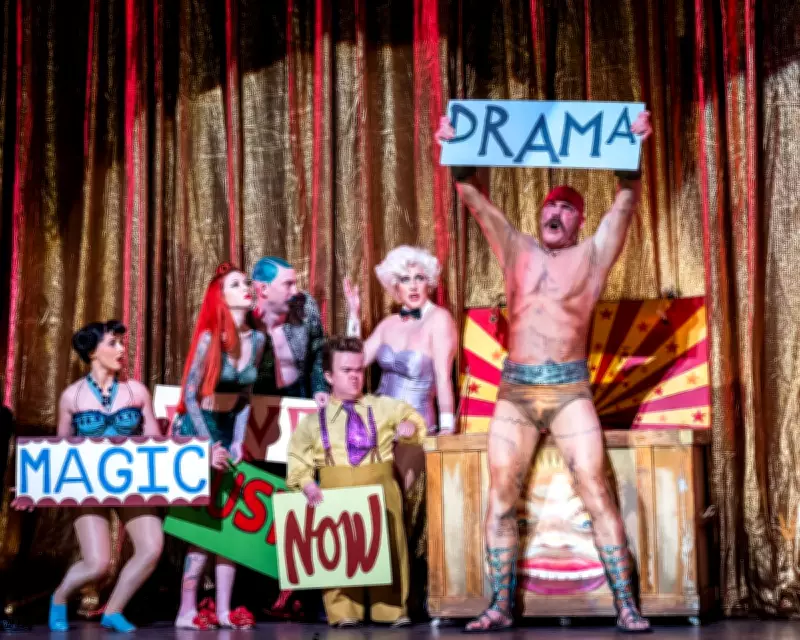
De Ridder is particularly excited about the UK premiere of Chinese-American composer Du Yun's Angel's Bone, scheduled for May at Aviva Studios in Manchester. The work, which addresses modern slavery and human trafficking, represents the kind of boundary-pushing programming he champions. "Du Yun is a modern example of the kind of thing Kurt Weill did 100 years ago," he observes, "incorporating punk and cabaret in classical contemporary music in a new way."
Preserving ENO's Core Identity Amid Change
One of the fundamental questions facing the English National Opera concerns its identity as it expands beyond London. If productions in Manchester don't feature the company's core ensembles, can they truly be considered ENO work? De Ridder acknowledges the complexity, noting that bringing London-made productions north can be both expensive and "a little imperialistic."
"It's not just a one-way street," he insists, suggesting that work created in Manchester may travel to London while efforts continue to present productions with ENO's core ensembles in the northern city. As an example, he cites the semi-staged performance of ENO's Così Fan Tutte at Bridgewater Hall later this month.
Personal History and Artistic Formation
De Ridder's connection to the English National Opera runs deep. As a student in 1996, he witnessed groundbreaking productions at the Coliseum, including Bernd Alois Zimmermann's vast opera Die Soldaten. Two decades ago, he conducted the premiere of Gerald Barry's remarkable opera The Bitter Tears of Petra von Kant, based on Rainer Werner Fassbinder's 1972 film.
"ENO schooled me, ENO formed me as an artist on the operatic stage," he reflects with evident affection. "The togetherness, the vision, the knowing that we're doing something quite special, how everybody pulled together – I was spoiled for life by this experience."
Current Productions and Future Aspirations
De Ridder is currently conducting rehearsals for Bertolt Brecht and Kurt Weill's rarely performed morality tale Rise and Fall of the City of Mahagonny, which examines rapacious capitalism. Despite having only three rehearsal weeks instead of the traditional eight, and just three scheduled performances, he remains optimistic about the production.

"The core of the orchestra is there. The chorus is there. And the spirit of 'Let's do it' is there," he asserts. He acknowledges the difficulties caused by shortened contracts, clarifying that "it wasn't, nor would it have been, my choice to shorten contracts of the core performing groups of ENO," but emphasises his commitment to maintaining the company's artistic excellence.
Embracing the Challenge Over Comfort
When asked why he would leave his comfortable position as music director of the opera in Freiburg, Germany – with its secure funding and generous rehearsal periods – for ENO's precarious situation in a cash-strapped country, De Ridder offers a telling response. "You just said the word 'comfortable,' and that's the operative word," he notes. "It is comfortable, yes, maybe a little bit too comfortable."
He contrasts this with the vibrant atmosphere he recently experienced at 3 Mills Studios in east London, where three ENO productions were being rehearsed simultaneously. "The buzz in the building was incredible," he recalls. "It felt like life and death." Looking around the Coliseum, he adds with conviction: "That make-or-break feeling I had when I first came here? I love it."
As the English National Opera prepares for its dual-centre future, André de Ridder stands ready to guide the company through its most challenging chapter yet, bringing with him a blend of punk spirit, cabaret energy, and unwavering belief in opera's capacity to reinvent itself for new audiences and new times.