On May 1901, Wigmore Hall's inaugural concert began with God Save the King, a novelty for an audience accustomed to singing for Queen Victoria. The programme featured composer and piano virtuoso Ferruccio Busoni performing Beethoven and violinist Eugène Ysaÿe playing unaccompanied Bach. A partial recreation of that evening launched the hall's fortnight of 125th birthday celebrations, and once the national anthem was delivered by soprano Louise Alder and pianist Joseph Middleton, the event felt less like a historical exercise than a celebration of the venue's enduring strengths.
A Gala with a Modern Touch
The concert was billed as a gala but was less formal, shorter, and tighter than expected, partly due to a live broadcast on BBC Radio 3. There were no indulgent speeches, only brief historical context from Radio 3's Ian Skelly. The hall was originally built in 1901 by Bechstein, the piano manufacturer, whose showrooms were next door on Wigmore Street, and was intended as a showcase for the finest pianists of the day.
Historical Resilience
Anti-German regulations during the First World War forced the sale of the hall to the Debenhams group in 1916, and Bechstein Hall became Wigmore Hall in 1917. German songs were often performed in English translation. Since then, the venue has proven remarkably resilient, hosting concerts through the Second World War and even catching the spirit of the 1960s when David Bowie performed twice, once in a spacesuit. It continues to ride out economic challenges facing UK arts venues, offering a London home to leading solo recitalists, chamber musicians, and song performers.
Star Performances
Filling Busoni's role was Thomas Adès, who played a new piano version of his 2023 guitar piece Vesper (for Henry Purcell), a mesmerising miniature that twists and reflects Purcell's Evening Hymn like a hall of mirrors. He then performed Beethoven's Op 109 piano sonata in E major, bringing individual drama with loud chords pouncing on sweet pianissimos, though lacking some melodic definition.
Alder and Middleton returned for three Schubert songs, ending with Erlkönig, which unfolded as a mini-opera with Alder building tension and Middleton making the frantic piano notes electric.
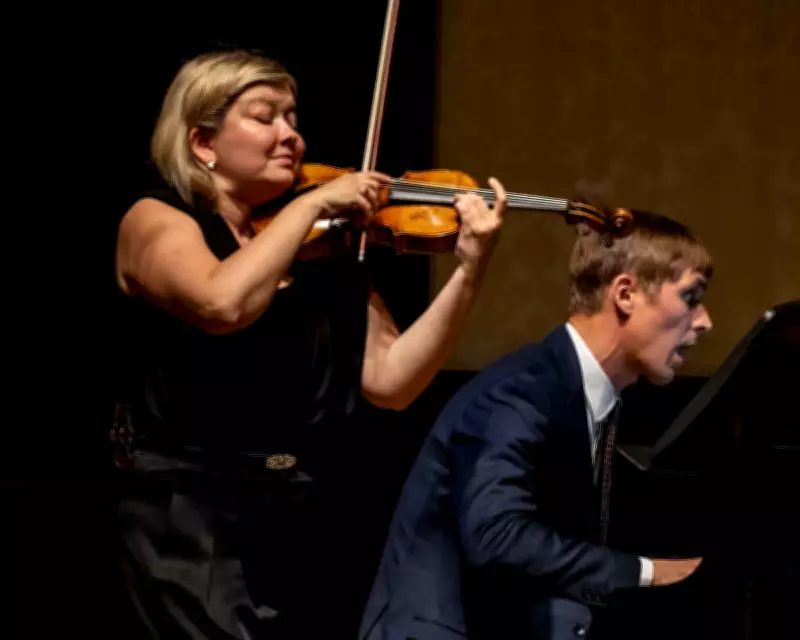
Alina Ibragimova took on Ysaÿe's role, playing the second half of Bach's first Partita for solo violin in B minor with freshness, precision, and elegance, leaving the audience wanting more. She was joined by pianist Cédric Tiberghien for Beethoven's Romance in G, a moment of calm between two stormy parts of Brahms's Paganini Variations. Tiberghien brought old-school Busoni-style dazzle, poise, and control, making the work feel properly celebratory.
The Wigmore Hall 125 festival continues until 7 June, with all concerts broadcast on BBC Radio 3 and available on BBC Sounds for 30 days.