A significant new report has uncovered a worrying trend for American cultural institutions, revealing that one-third of US museums have lost government grants or contracts since Donald Trump took office.
Survey Reveals Scale of Funding Cuts
The findings, released by the American Alliance of Museums on Tuesday, are based on responses from more than 500 museum directors across the United States. They highlight the growing challenges facing the cultural sector under the current administration.
Among the museums affected by cancelled government contracts or unreimbursed expenditures, the survey found that the median financial loss was $30,000. The most common cancelled grants originated from key national bodies: the Institute of Museum and Library Services, the National Endowment for the Humanities, and the National Endowment of the Arts.
Compounding the problem, the report found that two-thirds of the respondent museums reported that the lost public funding has not been replaced by foundations, corporate sponsors, or private donors.
Consequences for Public Programming and Access
This financial shortfall has had direct and damaging consequences for the public. The report detailed that approximately a quarter of museums that lost federal funding have been forced to cancel or reduce educational and outreach programming.
These cuts disproportionately affect vulnerable communities, including students, rural residents, individuals with disabilities, and the elderly. Furthermore, 28% of affected institutions have had to cancel programming for the general public.
Marilyn Jackson, president and CEO of the American Alliance of Museums, issued a stark warning. "We’re seeing attendance and financial performance trending in the wrong direction for the first time since the pandemic, with recovery not just stalling but reversing," she said. "This should be a wake-up call for policymakers and philanthropists alike."
Political Pressure and Future Disruption
Museum directors are bracing for continued disruption into 2026, citing a combination of factors including shifts in philanthropy, general financial instability, changes to travel and tourism patterns, inflation, and the ongoing issue of government funding losses. Notably, a third of respondents identified ideological and political polarization as a likely disruption to their business strategy in the coming year.
This political dimension has been particularly visible. The Trump administration has actively targeted cultural institutions it perceives as being in opposition to the president's agenda. In February 2025, Trump took control of the Kennedy Center, firing board chair David Rubenstein and appointing himself to preside over the theatre. Following this shake-up, ticket sales for the Kennedy Center’s three largest performance spaces fell to their lowest levels in years.
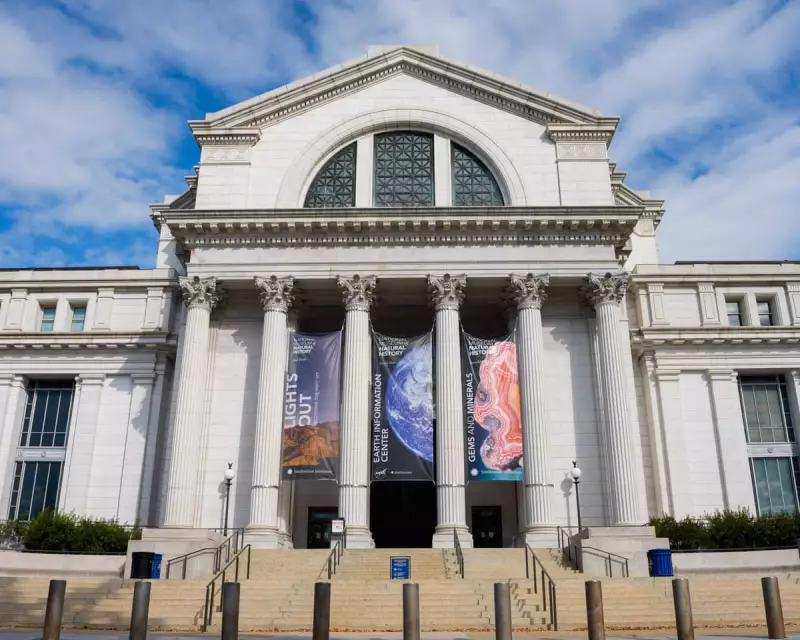
The pressure continued in March 2025 when Trump signed an executive order commanding the Smithsonian to remove content deemed "improper, divisive, or anti-American," with a particular emphasis on the National Museum of African American History and Culture. Then in August, the administration signalled its intent to conduct a wide-ranging review of all Smithsonian exhibits, materials, and operations.
In response, the Smithsonian’s secretary, Lonnie G Bunch III, reportedly told staff that the institution had "agreed to set up a team to review turning over materials to the White House, as requested" but would "do so as an autonomous institution." He emphasised that their own review of content to ensure programming is "nonpartisan and factual is ongoing, and it is consistent with our authority over our programming and content."
A White House document from August detailed examples at seven specific Smithsonian museums that were accused of having "overly negative portrayals of US history," indicating a broad scrutiny of the nation's premier cultural institution.