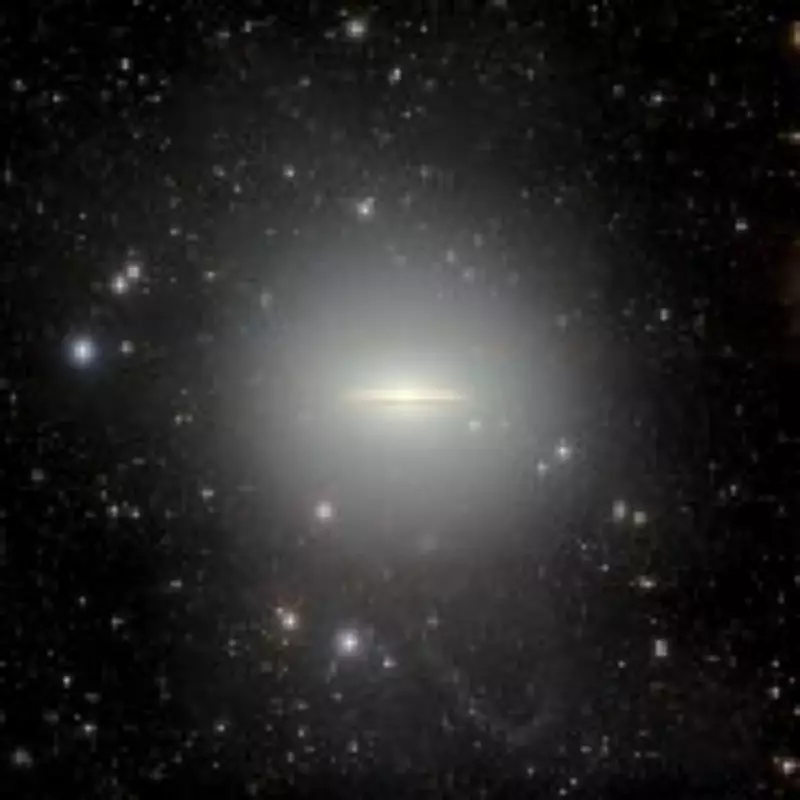
A galaxy shaped like a giant hat has been captured in stunning detail, revealing secrets never seen before. Astronomers have taken a fresh look at the famous 'Sombrero Galaxy,' uncovering a glowing halo and streams of stars stretching far beyond its bright centre.
What Is the Sombrero Galaxy?
The galaxy, also known as Messier 104, sits around 30 million light-years from Earth and is one of the most recognisable sights in the night sky. Now, using a powerful camera in Chile, scientists have managed to photograph it in unprecedented detail, showing off its dramatic shape and hidden features.
Key Features Revealed
The new image highlights the galaxy's bright core, which shines like a cosmic spotlight, surrounded by thousands of tightly packed star clusters. Running around its edge is a dark band of dust and gas – the feature that gives the galaxy its sombrero-like appearance. This 'brim' is where new stars are being born.
Surprising Discoveries
But the biggest surprise lies beyond the main galaxy itself. Researchers spotted a vast, faint halo of light stretching out more than three times wider than the galaxy's main disk. They also found a long stream of stars trailing away from one side, thought to be the remains of a smaller galaxy that was torn apart in the past. Scientists believe this is evidence that the Sombrero Galaxy may have collided with another galaxy millions of years ago.
Observing the Sombrero Galaxy
Despite its huge size – around 50,000 light-years across – the galaxy appears relatively faint from Earth. However, it can still be seen with a small telescope or even good binoculars, making it a favourite for amateur stargazers.
Historical Significance
The Sombrero Galaxy has a long history. It was first spotted in 1781 by French astronomer Pierre Méchain, a colleague of Charles Messier, who was creating a list of objects that could be mistaken for comets. Although it didn't make the original list, it was later added and officially recognised years later after being independently observed again. Today, it is considered one of the most iconic galaxies in the sky, admired by both professional scientists and backyard astronomers alike. Thanks to this latest image, its cosmic 'hat' is now more impressive than ever.