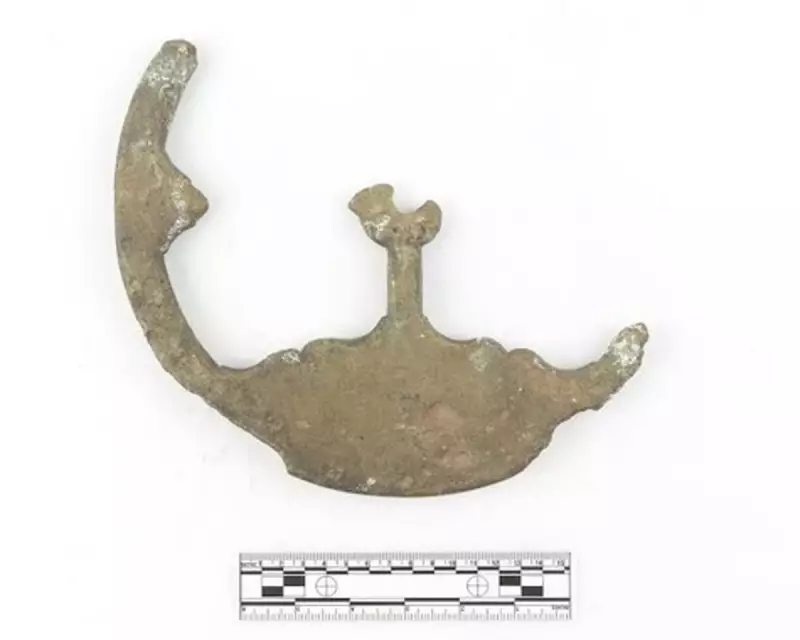
After centuries resting on the ocean floor and a mysterious journey across the globe, a rare Spanish Armada-era astrolabe has finally returned home to the Isles of Scilly. The bronze navigational instrument, known as the Pednathise Head astrolabe, represents a significant piece of maritime history.
A Remarkable Journey Home
The astrolabe spent hundreds of years submerged off the treacherous Western Rocks near Pednathise Head after the Spanish ship carrying it sank around the time of the Spanish Armada's campaign against Elizabeth I in 1588. Divers recovered the artefact approximately in 1990, but its adventures were far from over.
Following its discovery, the navigational tool left British shores and began an unexpected global circumnavigation. Its true identity became lost as it passed through private collections, first in Australia and later in the United States. At one point, it was mistakenly identified as an astrolabe from the Dutch ship Nassau, which sank off Malaysia in 1606.
From Criminal Seizure to Museum Treasure
The astrolabe's journey took several dramatic turns. It formed part of a South Australian collector's holdings until authorities seized it following his conviction for serious crimes. An Australian antique dealer later acquired it for what he described as "peanuts," boasting online about its potential value reaching hundreds of thousands of dollars.
Somehow, the instrument then found its way to a car dealer in New Jersey, who eventually donated it to the Mel Fisher Maritime Museum in the Florida Keys. It was here that American astrolabe expert James Jobling made the crucial identification, recognising it as the long-lost Pednathise Head astrolabe from Scilly.
Final Voyage and Future Display
Before its homecoming, the astrolabe made two significant stops: James Jobling's laboratory in Texas for authentication and the National Maritime Museum in Falmouth, Cornwall. Xavier Duffy, curator of the Isles of Scilly Museum, expressed his excitement about the artefact's return. "It's been on quite a journey," he said. "We're thrilled to have it back on Scilly and in the care of the museum. We can't wait to share its story with visitors."
The instrument will become the centrepiece of a navigation display when the renovated Isles of Scilly Museum opens on St Mary's, the archipelago's most populous island, next autumn. Lydia Bassett, director of Scilly Arts & Heritage, highlighted the perfect timing: "The maritime gallery will tell the story of the many shipwrecks on Scilly. We're so pleased to have the astrolabe back."
The Scilly archipelago, located 30 miles off the British mainland, has witnessed countless shipwrecks throughout history. The astrolabe's survival and eventual return adds another fascinating chapter to this rich maritime heritage, connecting the islands to global historical events like the Spanish Armada and demonstrating the enduring appeal of these rare navigational instruments that inspired Philip Pullman's alethiometer in His Dark Materials.