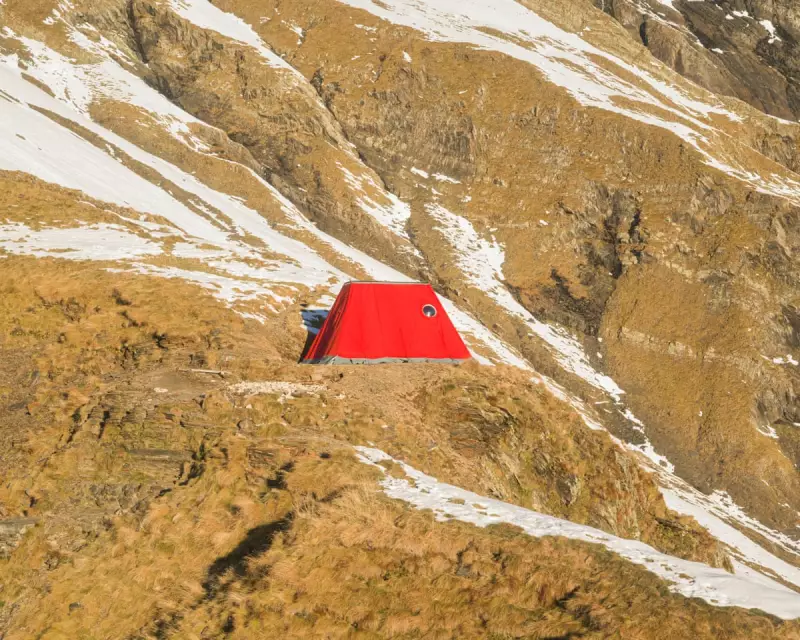
Perched at 2,300 metres above sea level in the Italian Alps, a revolutionary cultural experiment is testing the very limits of what constitutes a museum. The Frattini Bivouac, a striking red shelter visible from distant ridges, represents the most ambitious chapter of Bergamo's GAMeC gallery's Thinking Like a Mountain project – and it's exclusively accessible via a gruelling six-to-eight-hour ascent on foot.
The Ultimate Test of Accessibility
Located along the Alta Via delle Orobie in Valbondione, this unconventional cultural outpost stands completely exposed to the elements. Unlike traditional museums, there are no staff, tickets, or interpretive materials. The only way to experience this museum is by undertaking the challenging climb across scree, moss, and snowfields – a journey that naturally limits visitors to seasoned alpinists and determined hikers.
The interior offers none of the comforts expected from cultural institutions. Instead of artwork, visitors find nine sleeping platforms, a wooden bench, and a rectangular skylight that frames the ever-changing alpine sky. The museum has deliberately exposed itself to temperature, silence, and altitude rather than protecting objects from them.
Architectural Innovation Meets Environmental Challenge
Designed by Turin-based Studio EX in collaboration with the Italian Alpine Club (CAI), the bivouac replaces a 1970s steel refuge that had become structurally dangerous and contaminated with asbestos. The new structure represents a paradox in design: permanent yet reversible, robust yet flexible, insulated yet breathable.
Weighing just over two tonnes, the building was airlifted to its ridge location in four helicopter rotations. Its experimental construction features a red technical fabric shell stretched like skin, with cork-lined interiors that expand and contract with mountain temperatures. Solar panels power basic lighting and emergency outlets, but there's no heating, running water, or phone line.
Even the architects admit uncertainty about how local wildlife, particularly ibex that used the previous structure's metal siding to scratch their horns, will interact with the new materials over time.
Questioning Cultural Accessibility and Environmental Impact
The project raises profound questions about who can access culture when it's placed in such remote locations. With only a few hundred visitors likely to reach it annually, the museum's traditional mission of public access is stretched to its limits.
There's also the concern of contributing to overtourism in the Alps, despite the architects' insistence that their lightweight, reversible design represents a counterpoint to gorpcore culture. The bivouac risks becoming a different kind of status symbol – where peak-performance culture rather than gear claims the ridge.
Symbolically, the tiny red structure at 2,300 metres can be interpreted both as an act of institutional assertion and a gesture of humility. The team behind the project repeatedly stresses intentions of care and coexistence, but architectural gestures at altitude often carry meanings beyond their authors' intentions.
The Frattini Bivouac represents perhaps the most distilled iteration of moving culture from the gallery to the ecosystem. It asks whether cultural experiences can withstand extreme discomfort and whether museums can inhabit spaces where climate, rather than curatorial concepts, determines survival. The project reframes the curator as someone who adapts to weather, terrain, and human physical limits rather than simply selecting artworks.
Open throughout the year at coordinates 46°02'27.60"N 9°55'14.90"E, the bivouac serves primarily as an emergency shelter for stranded hikers while simultaneously functioning as a radical reimagining of what cultural spaces can be in an age of ecological awareness.