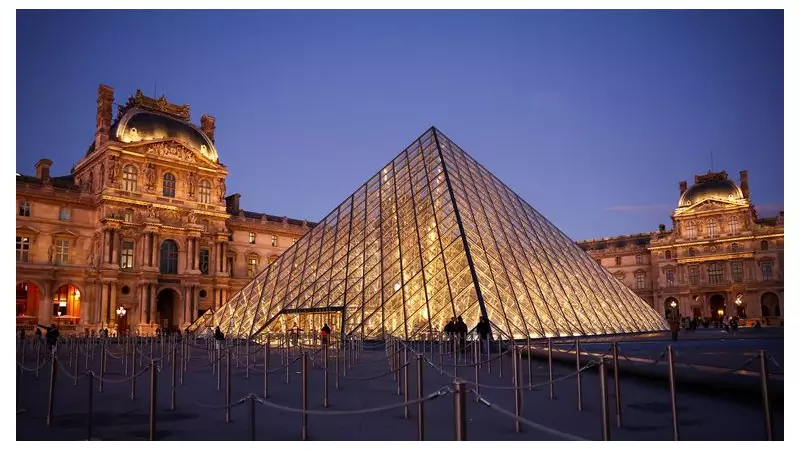
The world-renowned Louvre Museum in Paris has been forced to take emergency action, temporarily closing its Campana gallery after a technical report revealed dangerous structural weaknesses. This dramatic move comes just weeks after the museum was the target of a multi-million pound jewel heist, compounding a period of intense difficulty for the historic institution.
A Gallery in a Dire State
The museum confirmed the closure on Monday, 17th November 2025, stating that the structures of the Campana gallery, which were designed in the 1930s, are now in a dire state. The gallery, located on the museum's first floor, houses nine rooms dedicated to ancient Greek ceramics.
A detailed technical assessment pinpointed weakness in the beams under the second floor of the Sully wing, directly above the gallery. As a precaution, the Louvre has also relocated 65 members of staff from offices on that second floor. The closure highlights long-standing concerns about the physical state of the palace, which welcomed 8.7 million visitors last year.
Compounding Crises: The Audacious Heist
The structural emergency follows a separate, major security incident that shocked the art world. On 19th October, a gang of four thieves executed a brazen robbery. Using a movers' lift parked outside, they accessed the second floor, smashed a window, and used angle grinders to break into display cases.
The thieves escaped on motorbikes with historical jewels worth an estimated £77.5 million ($102 million). Although a crown worn by French Empress Eugenie was dropped during the getaway, the rest of the stolen jewels remain unrecovered. Four suspects are currently under investigation.
It is a particularly poignant detail that the now-closed Campana gallery is adjacent to the Apollo gallery, the very room where the French crown jewels targeted in the heist are displayed.
Warnings Ignored and a Call for Action
This series of events appears to validate earlier alarms raised about the museum's condition. A French trade union representative, Valerie Baud of the CFDT, stated that staff have been warning about the building's state for years, as it directly impacts both working conditions and visitor safety.
But we didn't realise it was this bad, she admitted. It is a major deterioration in the situation.
These concerns were seemingly corroborated by a state auditor's report, which accused the museum's management of having neglected security and infrastructure in favour of other priorities, such as acquiring new artworks and post-pandemic relaunch projects. The Louvre, a former royal palace turned museum in 1793, now faces immense pressure to address its foundational challenges while maintaining its status as the world's most-visited museum.