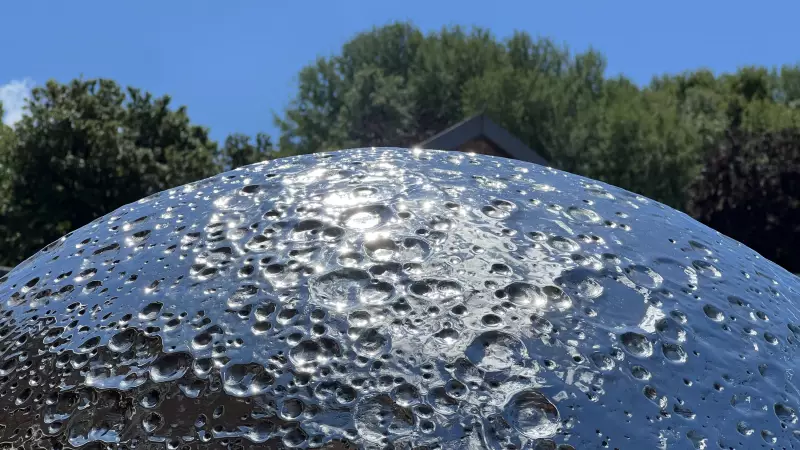
Londoners will soon have the chance to get up close with Earth's celestial neighbour, without ever having to leave the capital. A breathtaking, scientifically accurate model of the Moon is set to land at the Royal Observatory Greenwich in early 2026, offering an immersive artistic experience.
A Reflective Masterpiece Crafted from NASA Data
The artwork, titled 'Mirror Moon', is the creation of renowned British artist Luke Jerram. Known for his large-scale installations of astronomical bodies, Jerram has constructed a two-metre-wide sphere from mirrored steel. The sculpture's defining feature is its precise surface detail, meticulously crafted using topographical data provided by NASA.
This attention to scientific accuracy means visitors will be able to trace the lunar landscapes visible from Earth with their own hands. The experience will extend to exploring the craters and valleys of the Moon's far side, a mysterious surface permanently hidden from our view.
A Fitting Home at a Historic Observatory
The choice of venue for this exhibition is deeply symbolic. The Royal Observatory Greenwich has a 350-year history of lunar observation. It was also the institution where sailors were once taught to navigate by measuring their distance from the Moon.
Jerram expressed his honour at the commission, stating the Observatory has inspired his work for over two decades. "I hope 'Mirror Moon' will inspire generations of visitors to have an interest in contemporary science, art and the wonder of the night’s sky," he said.
Practical Details for Visitors
The exhibition is scheduled to open to the public on 3 March 2026. Admission is ticketed, with prices set at £24 for adults and £12 for children. This cost includes general entry to the Royal Observatory.
Liz Avery, Head of Astronomy at the Royal Observatory, shared the institution's enthusiasm for the project, highlighting the Moon's enduring role as a source of fascination. This follows another of Jerram's celestial works, a massive sculpture of the Sun, which was displayed at Greenwich's Old Royal Naval College earlier in 2025.
For a city often obscured by light pollution, 'Mirror Moon' promises a rare and intimate encounter with our planet's most iconic satellite, blending cutting-edge science with profound artistic vision.