Frida Kahlo is experiencing an unprecedented surge in global popularity, yet this wave of 'Fridamania' coincides with troubling allegations about missing masterpieces from her official museum. While a New York auction is set to smash records for the celebrated artist, serious questions are being raised about the disappearance of valuable works from Mexico's Casa Azul.
Record-Breaking Auction Amid Global Celebrations
This year represents a pinnacle for Kahlo's international recognition. The recent opening of a dedicated museum in Mexico City celebrates her enduring legacy, while the Art Institute in Chicago is exhibiting her work for the first time. Her Chinese debut in Shenzhen further demonstrates her worldwide appeal, nestled between last year's documentary Frida and forthcoming exhibitions in London and the United States.
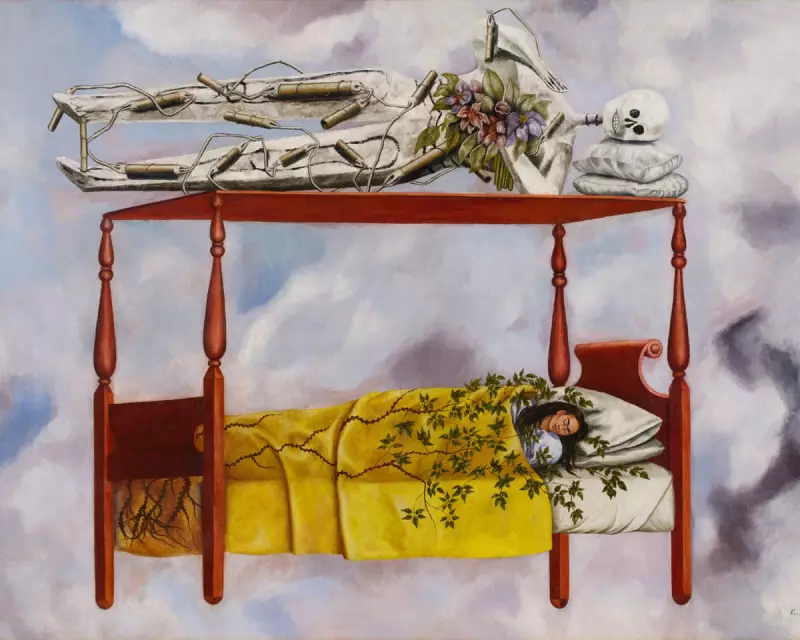
The crowning moment arrives at Sotheby's New York, where Kahlo's 1940 painting The Dream (The Bed) is expected to fetch between $40-60 million. This staggering sum would comfortably surpass the current record for a female artist, set in 2014 by Georgia O'Keeffe's Jimson Weed/White Flower No 1 at $44.4 million.
The Disturbing Allegations of Missing Artworks
Beneath this celebratory surface lies a concerning report published in April by Hilda Trujillo Soto, former director of Casa Azul from 2002 to 2020. Following her five-year independent investigation after leaving the museum, Trujillo Soto alleges that two oil paintings and eight drawings vanished between the museum's 1957 and 2011 inventories. Additionally, at least six pages were reportedly extracted from Kahlo's illustrated diary.
One of the allegedly missing works, Congress of the Peoples for Peace from 1952, was sold by New York's Mary-Anne Martin Fine Art gallery for $2.66 million at auction in 2020. The other painting under scrutiny, 1954's Self-Portrait Inside a Sunflower, was also offered by the same gallery with provenance listed simply as 'private collection, Dallas'. The gallery has not responded to requests for comment regarding these transactions.
Trujillo Soto's findings received support from Berlin-based Kahlo expert Helga Prignitz-Poda, who confirmed that 'many things have disappeared from Casa Azul.'
Institutional Silence and Accusations
Despite Kahlo's revered status in Mexico, where her work enjoys fierce protection under patrimony laws, the government has shown remarkable reluctance to investigate these claims. The Ministry of Culture's Transparency Unit repeatedly deferred to representatives at the state-run Bank of Mexico, which manages Kahlo's trust. These bank officials did not respond to interview requests.
The trust has accused Trujillo Soto of holding a grudge, stating she 'never filed a formal complaint' and alleging her contract was terminated due to 'irregularities detected in their administration.' Trujillo Soto firmly denies these accusations.
Casa Azul has dismissed the allegations as 'unfounded, erroneous and lacking verifiable evidence,' yet has not provided contrary evidence to demonstrate the missing works remain in their inventory. Current museum director Perla Labarthe has been unresponsive to requests for clarification.
Broader Implications for Art Patrimony
The situation highlights significant challenges within Mexico's art protection systems. Retired FBI Art Crime Team investigator Robert Wittman expressed surprise that Mexican authorities weren't sounding more alarms, particularly given the previous presidency's successful focus on art repatriation.
Art lawyer Christopher Marinello of Art Recovery International noted that reluctance to report missing art often stems from 'institutional embarrassment or outright corruption.' He added that in Mexico, obtaining police reports can be complicated by suspicions that 'members of the local police force were the main suspects in committing the theft.'
The London-based Art Loss Register has flagged four disputed Kahlo works in circulation, though the museum has not registered any losses with them. Chairman Julian Radcliffe observed that 'museums are reluctant to admit to missing items,' noting that internal theft from storage occurs more frequently than external robbery of displayed items.
As Kahlo's market value continues to soar—with her 1949 self-portrait Diego and I selling for $34.9 million in 2021—the risks to her legacy intensify. Cambridge University art theft researcher Noah Charney warns that high-profile auctions alert criminal elements to an artist's value, creating additional security concerns.
The ongoing scandal raises fundamental questions about institutional transparency and the protection of cultural heritage, even as Kahlo's commercial success reaches unprecedented heights.