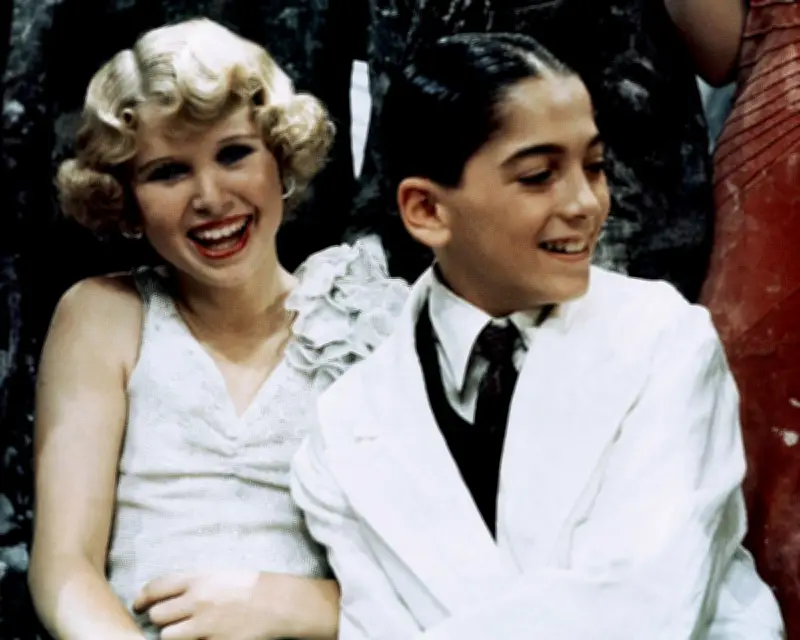
When Bugsy Malone was released 50 years ago, no one had seen anything like it. The wise-talking, rip-roaring spoof poked fun at gangster films with extravagant musical numbers, a cast made up entirely of child and teen actors, and "splurge guns" shooting cream instead of bullets. It was hilarious, startlingly original and a delight to watch.
The idea was born from bedtime stories
Director and writer Alan Parker came up with the idea for a spoof film about gangsters played by child and teen actors thanks to his own children. Bonnie Langford, who played the diva-esque singer Lena, recalled: "Alan had a house in Derbyshire, and he used to put the kids in the back of the car in London and drive up the motorway. On the way there, he would tell them stories, and they came up with the idea of this gangster movie for kids. He used to tell stories of Fat Sam and Dandy Dan and the splurge guns."
Sheridan Earl Russell, who played Fat Sam's knuckle-cracking sidekick Knuckles, said: "He had a terrible time getting finance. He had never made a full-length feature film before. He put it to people: 'It's all with children.' They would say: 'Yeah, next!' It took a very long time to set up."
Casting from drama clubs and stage schools
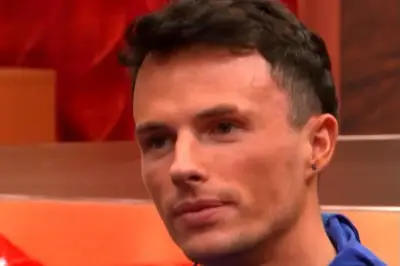
Parker visited drama clubs and stage schools to find new talent. Dexter Fletcher, who played fresh-faced thief Baby Face, said: "I went to a drama club in Islington, north London, where Alan came from, called the Anna Scher Theatre school … for kids who were excluded or weren't academically high achievers. Alan came down with one of the early video cameras, and we all learned a scene and performed it. I was one of the lucky kids who he plucked out. My brother Graham ended up in the film, too."
Bonnie Langford recalled: "I had an audition with Alan at his offices, which were in Camden, north London, quite glamorous. The world and his mother were auditioning. There was a much smaller pool of young actors then, so everybody who performed ended up in that film."
Sheridan Earl Russell added: "The whole school that I attended, Corona Academy, auditioned for him. The unusual thing was that Alan hated stage schoolchildren. He'd always worked with children off the street. So I was very lucky to get that part. I was the second oldest on the film. I was 16."
Jeff Stevenson, who played Louis, a hoodlum in Fat Sam's crew, said: "I was 13. I happened to have done about three or four commercials for Alan, so I knew him already. He remembered me."
According to Russell, casting Fat Sam involved Parker going to Cassisi's schoolroom in New York and asking: "OK, who is the worst pupil here?" Everyone turned around and pointed to him.
Filming at Pinewood Studios and a biscuit factory
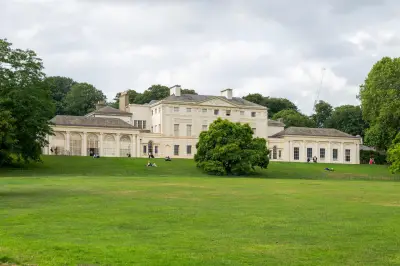
The shoot started in July 1975 at Pinewood Studios and the former Huntley & Palmers biscuit factory in Reading, Berkshire. Jeff Stevenson said: "It was like the best summer camp ever. There were loads of us. We took over Pinewood Studios. We were just kids dressed up as gangsters, running riot. We had school blocks there, because a lot of us had to do lessons while we were at the studio. Everybody got on."
Brian Harris, part of the camera crew, recalled: "The kids were very well rehearsed, so we rarely ever went more than two or three takes on anything. I was standing by the camera one day, and all of a sudden it shot up in the air. I looked about, and the kids were playing with the dolly [the wheeled platform for the camera]. After that, we made sure they were all sent into school."
Dexter Fletcher said: "I was one of the youngest at nine. In the biscuit factory where we filmed one scene, there were four boxes of biscuits, and it turned into complete mayhem. Everyone was throwing biscuits at each other. We were meant to be doing schoolwork, but how do you control 40 unruly kids dressed as down-and-outs and gangsters and convince them to do their maths?"
Sheridan Earl Russell noted: "We had the most beautiful set built on stilts, so that the steam could come through the manhole covers, just like New York."
Bonnie Langford said: "I did get to be in one of the cars, which was very exciting, and do this dream sequence on the set of Pinewood [that was cut]. I mainly filmed at Richmond Theatre, my local theatre at the time, which I was quite disappointed about because I thought we were going to go somewhere glamorous on location."
Russell added: "I was nearly 6ft at 16, and the guy who played Fat Sam was much smaller, so there's a lot of it where I'm sort of, not exactly on my knees, but crouching down, so you can get us in the same frame."
Langford said of Scott Baio: "Scott Baio was very cool. He had a great charm, so he fitted the bill perfectly."
Alan Parker's directing style
Parker knew how to get the best out of the child and teen actors. Dexter Fletcher said: "Speaking to Alan in later years, it was obviously a lot of stress and very chaotic. I don't know how you corral that number of excited kids and get them to behave professionally and realise they're at work."
Jeff Stevenson recalled: "He wasn't the big film director. He talked to us like he was a youth club leader. He would come over and say: 'You're doing it great, but let's just look at it this way and give it a go.'"
Fletcher added: "What he did brilliantly was that he understood that kids don't analyse, and they don't dissect their feelings. He could just say: 'Look sad, look scared, look happy.' He got kids who were very natural and comfortable in front of the camera, and set them free."
Langford said: "Alan always had this wonderful way of talking to actors, young or old, of being completely on the same level. It was never patronising, never superior, always very succinct and very kind."
However, he wasn't always on his best behaviour. Russell said: "The problem with Alan was that he swore an awful lot. He was always being told off by the chaperones, which we had to have, for swearing in front of the children."
And he had his superstitions. Langford recalled: "If the first day went well, he wore the same clothes every single day."
Jodie Foster: from Taxi Driver to Bugsy Malone
Jodie Foster had just finished shooting Taxi Driver when she arrived, aged 13, in London to shoot Bugsy Malone. Russell said: "She was a tomboy. She always got annoyed because her makeup and the hair took ages. She always had a 6am call. It took three hours."
Brian Harris said: "When she was on set, she was like an adult. She had charisma, and she was treated as a star."
Dexter Fletcher recalled a memorable moment: "I was having my bowl haircut done. She came into makeup, and must have seen that I was having a distressing time. She said: 'Hey, you know what they do with all this hair?' 'No.' She picked it up and she made a moustache out of it. 'They make all of the moustaches with this hair!' She walked around with my long brown hair on her lip. At the time I was a bit upset, but in hindsight, I think she was trying to cheer me up."
Post-production corrections
Fletcher also revealed: "I had this big foam baseball bat with chicken wire in the middle. I ran out, I'd smack the guy on the head, say 'Geronimo', smack. A few months later, I had to go back and do ADR [re-recording actors' dialogue] because instead of saying 'Geronimo', I said 'Jimomino'. I'd never heard the word Geronimo before. It was a big joke in my family. My older brothers called me Jimomino for quite a while after that."
Music and choreography
The song and dance numbers involved choreography by Gillian Gregory and music by Paul Williams. Jeff Stevenson said: "We had a rehearsal block where we went through stuff. Fat Sam's gang had a dance called Bad Guys, and I wasn't very good at dancing. Alan came in one day with Gillian. He said: 'I know you're not picking up the dance, but don't worry. I'm rewriting the choreography. You're going to be carrying the bags behind, and we're going to give you a stunt.' I was quite lucky because anybody who really remembers the song remembers the guy who falls down the manhole, and that was me."
Bonnie Langford said: "My song didn't exist until lunchtime. Alan said: 'If we write something in the break, would you sing it?' And so I did. I learned it there and then."
Stevenson added: "They were adult voices being mimed to by kids – at no point did Alan want it to be child singers. I remember when Paul suddenly turned up at the set one day. We all met him. For the next five or six years, a few of us, myself included, used to get a handwritten note from Paul at Christmas, wishing us a Merry Christmas."
The messy splurge gun scenes
There were a lot of scenes involving splurge guns and cream pies, culminating with an epic and very messy fight at the end of the film. Brian Harris said: "I was immune because no one was allowed to hit the camera. Alan got it in the face a couple of times. There was somebody at the side of a camera with a handful of white goo – they made sure that whoever was covered in it was really covered in it."
Jeff Stevenson recalled: "They were using some stuff at the beginning, and then they had to change it, because a lot of us were getting reactions, sore eyes."
Sheridan Earl Russell explained: "They tried all mixtures. The original was fired by compressed air from a pipe. They tried candle grease with lemon curd. Alan Marshall, who was the producer, volunteered to be shot at to see the effect. It was so hard it made a big red mark … In my death scene, it's watered-down lemon curd. At the end of the day, I couldn't open my mouth, my eyes. They had to drag me to a shower to get unstuck. That had to be done last, because they were never going to get the lemon curd off the suits."
Stevenson said: "We only had one go at the big ending when it was all splurge being thrown over us. I remember that was very exciting, because they just kept going with it."
Premiere at Cannes and lasting legacy
The film premiered at the Cannes Film Festival in May 1976, where it competed for the Palme d'Or. Dexter Fletcher recalled: "I remember [producer] David Puttnam talking about when they took it to Cannes. They drove the reels of film in a VW Beetle. He said no one knew who they were. They screened the film, and they carried Alan out of the theatre on their shoulders, because it was so amazing."
The film was a success in the UK although it didn't make as much of a splash in the US at the box office. It went on to win five Baftas, including best supporting actress and most promising newcomer for Foster (which also recognised her work in Taxi Driver), and was nominated for an Oscar for best music.
Fletcher said: "I was at junior school, it was my last year, and I became sort of famous at school."
Stevenson added: "I did read a few reviews. I just remember people saying that it was a quirky film."
Bugsy Malone was turned into a West End stage musical in 1983, with Catherine Zeta-Jones as Tallulah, and continues to be performed regularly in schools and theatres. Fifty years on, the film is a much-loved classic.
Dexter Fletcher reflected: "What's beautiful about the film is that it's funny, it's heartfelt, it's clever, it's genuine, but it's not sentimental. It's not Disneyfied at all. I can watch it as an adult and enjoy it equally as much as a kid who is discovering it for the first time."
Bonnie Langford said: "I think over the generations people have discovered it during their childhood, through school productions, theatre productions. It just has a great charm and wit, and there's a mixture of nostalgia and fun about it."
Sheridan Earl Russell concluded: "The original strap line was: 'There's never ever been a movie like it.' There isn't. There hasn't. The craft in it is just so amazing; the way it's lit, the props … beautiful."
Fletcher added: "I still get recognised, or people comment on it now. Jamie Oliver, who's a good friend, I'm in his phone as Baby Face. It's been with me for 50 years. I'm very proud of it."