Ancient Mass Grave in Jordan Provides New Insights into Earliest Recorded Pandemic
A groundbreaking archaeological discovery in Jordan has shed unprecedented light on the human impact of the Justinian plague, the world's earliest recorded pandemic that devastated the Byzantine empire between the sixth and eighth centuries. Researchers have verified the first Mediterranean mass grave specifically linked to this historical catastrophe, offering what they describe as a rare empirical window into how ancient societies experienced pandemic crisis.
Uncovering a Single Mortuary Event
The research, published in the February edition of the Journal of Archaeological Science, focuses on a mass burial ground discovered at Jerash in modern-day Jordan. DNA analysis from the site reveals this was "a single mortuary event" rather than a traditional cemetery that grew gradually over time. This finding provides crucial evidence about how communities responded to the overwhelming mortality caused by the plague.
According to the international research team, which previously identified Yersinia pestis as the microbe responsible for the Justinian plague, the Jerash site transforms genetic evidence into a compelling human narrative. "The Jerash site turns that genetic signal into a human story about who died, and how a city experienced crisis," explained Rays Jiang, the study's lead author and associate professor at the University of South Florida's department of global, environmental and genomic health sciences.
Connecting Biological Evidence to Social Context
The multidisciplinary team, comprising archaeologists, historians, and genetic experts from the University of South Florida, Florida Atlantic University, and the University of Sydney, examined DNA extracted from teeth found at the site. Their analysis revealed a diverse demographic range of victims buried together at what was once a regional trade hub and pandemic epicenter.
"Pandemics aren't just biological events, they're social events," Jiang emphasized. "By linking biological evidence from the bodies to the archaeological setting, we can see how disease affected real people within their social and environmental context. This helps us understand pandemics in history as lived human health events, not just outbreaks recorded in text."
Parallels with Modern Pandemics
The research uncovered striking similarities between ancient and contemporary pandemic experiences. Jiang noted that the diverse population found in the mass grave suggests a largely mobile population was brought together and effectively trapped by the disease, mirroring travel restrictions during recent global health crises.
"People move. They're transient, and vulnerable, and normally they are disturbed, dispersed. Here, they were brought together by crisis," Jiang observed, adding that ancient pandemics thrived in densely populated cities shaped by travel and environmental changes.
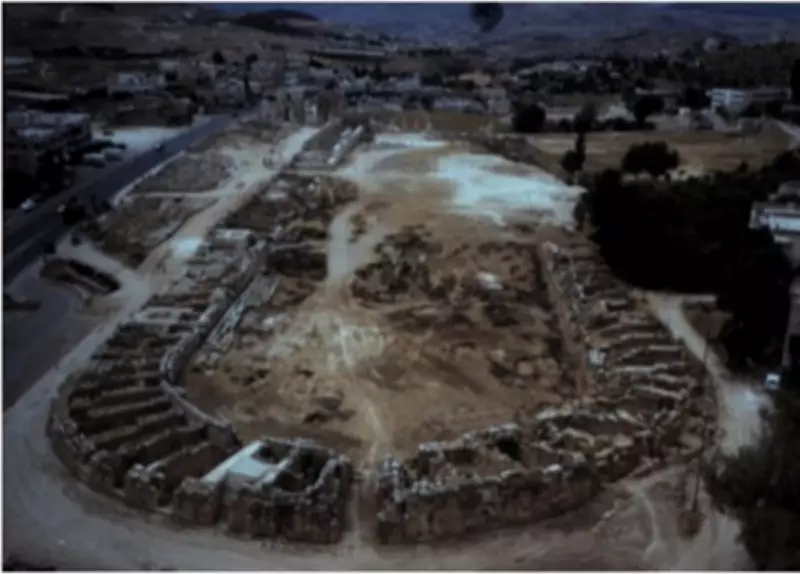
Excavations revealed more than 200 individuals buried at the hippodrome in Jerash, often called the Pompeii of the Middle East for its remarkably preserved Greco-Roman ruins. The victims represented a cross-section of ancient society including men and women of various ages, from teenagers to elderly individuals.
Addressing Historical Denialism
The discovery also provides concrete evidence against historical denialism regarding the Justinian plague's impact. Jiang addressed arguments suggesting the first pandemic never occurred, pointing to the mass grave as definitive physical proof.
"There's a whole school of thought that says the first pandemic did not happen," Jiang noted. "The denialists argue that if you look at census data, the population did not collapse like the Black Death, if you look at economic tracking, you don't see anything, if you study residence density maps you don't see a disruption. And plus, no one had found a mass grave."
She continued: "But the first plague is actually much easier to untangle than Covid. We have Yersinia pestis as the microbe; we have a mass grave, and bodies, hard evidence that it happened. Whether society or institutions collapsed is a separate matter. You can have a disease rampage through and don't have to have a revolution, a revolt, a regime change to prove that it did."
The research offers valuable perspective on how urban centers historically responded to pandemic threats, with implications for understanding both ancient and modern public health challenges. By examining how a diverse, mobile population in a major trade hub experienced and was ultimately buried during the Justinian plague, archaeologists are creating a more nuanced understanding of pandemic impacts beyond mere mortality statistics.