An intriguing development in the art world has emerged as artificial intelligence analysis casts significant doubt on the attribution of two important paintings traditionally ascribed to the 15th-century Flemish master Jan van Eyck. The findings challenge long-held assumptions about works displayed in prestigious institutions on both sides of the Atlantic.
The Questionable Paintings
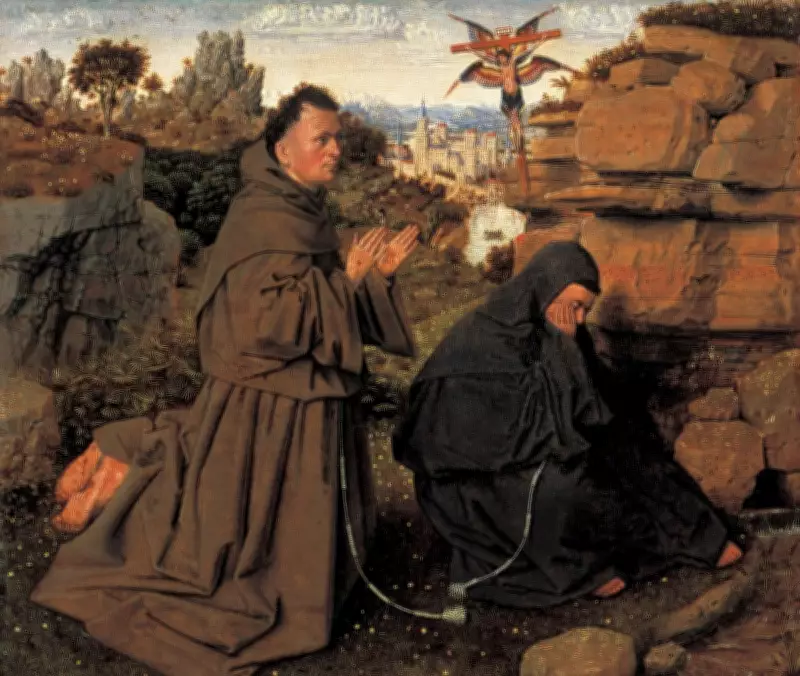
Two near-identical versions of Saint Francis of Assisi Receiving the Stigmata hang in prominent museums: one at the Philadelphia Museum of Art in the United States, and another at the Royal Museums of Turin in Italy. These unsigned works have been considered among the relatively small number of surviving paintings by Van Eyck, an artist celebrated for his revolutionary naturalistic style and religious depictions that transformed Western art.
AI Analysis Reveals Unexpected Results
Swiss company Art Recognition, which collaborates with Tilburg University in the Netherlands, conducted scientific tests using artificial intelligence to analyse the brushstrokes of both paintings. The results proved startlingly negative. The analysis concluded that the Philadelphia version was 91% negative for Van Eyck's characteristic brushwork, while the Turin painting registered 86% negative.
Dr Carina Popovici, chief executive of Art Recognition, expressed surprise at the findings. "I expected that, if one painting was negative, the other would be positive. But no, both came out negative," she revealed. "I'm guessing that the Philadelphia and Turin museums won't be happy. It's not good news on these paintings." Both institutions have been contacted for comment regarding these potentially disruptive findings.
Expert Perspectives on the Findings
Till-Holger Borchert, a leading Van Eyck scholar and director of the Suermondt-Ludwig-Museum in Aachen, suggested the AI analysis supports scholarly theories that both versions might be studio paintings. These would have been produced within Van Eyck's workshop but not necessarily executed by the master himself. Borchert noted that while he was "surprised" by the analysis, it raises further questions requiring exploration.
Dr Noah Charney, an art historian who discussed the initial findings on his podcast, described Art Recognition's previous analyses as "remarkably accurate." He had expected that one painting would emerge as authentic while the other would be identified as a copy. "The negative results suggest that both of these pictures are studio works, which may mean that we have a lost original that was more fully by Van Eyck's hand than these two," Charney proposed.
Understanding Workshop Practices
Charney emphasised the importance of understanding historical workshop practices. "If a work comes out of Van Eyck's studio, it doesn't necessarily mean that he actually physically painted the surface level of all aspects of it," he explained. "That's a misconception that people get from this 19th-century idea of the lone artist in a garret in Paris drinking absinthe, smoking cigarettes, wearing a beret and doing every aspect of the work themselves."
Van Eyck's Enduring Legacy
Jan van Eyck remains regarded as one of the pioneers who perfected oil painting techniques. Charney noted: "[Van Eyck] didn't invent oil painting, but he perfected it so thoroughly that everyone else seemed to be working in his shadow for centuries. His surfaces shimmer with light in detail so fine you need a magnifying glass to take it all in."
Despite his fame, Van Eyck's accepted oeuvre remains remarkably small, with fewer than twenty paintings universally acknowledged as being entirely by his hand. This scarcity makes questions of attribution particularly significant for museums and art historians.
Methodological Considerations and Context
Some critics have suggested that a painting's condition and subsequent restorations might influence AI-based brushstroke analysis. Nevertheless, Art Recognition has established credibility through previous investigations. The company identified up to forty fake paintings being offered on eBay in 2024, and in 2021 concluded that Rubens' Samson and Delilah in the National Gallery was 91% negative, supporting long-standing doubts about that work's attribution.
As a point of comparison, the same AI analysis found Van Eyck's The Arnolfini Portrait in London's National Gallery to be 89% likely to be authentic. This masterpiece remains among the institution's most popular attractions.
Broader Implications for Art Authentication
These findings arrive as the National Gallery in London prepares to stage an exhibition of Van Eyck portraits in November, highlighting continued interest in the artist's work. The AI analysis raises important questions about authentication methodologies in an era where technology increasingly intersects with traditional art historical research.
The investigation demonstrates how artificial intelligence can challenge established attributions and prompt re-evaluation of artworks long accepted as masterpieces by celebrated artists. As museums and scholars digest these findings, they may need to reconsider how they present these works to the public and how they approach authentication in the digital age.