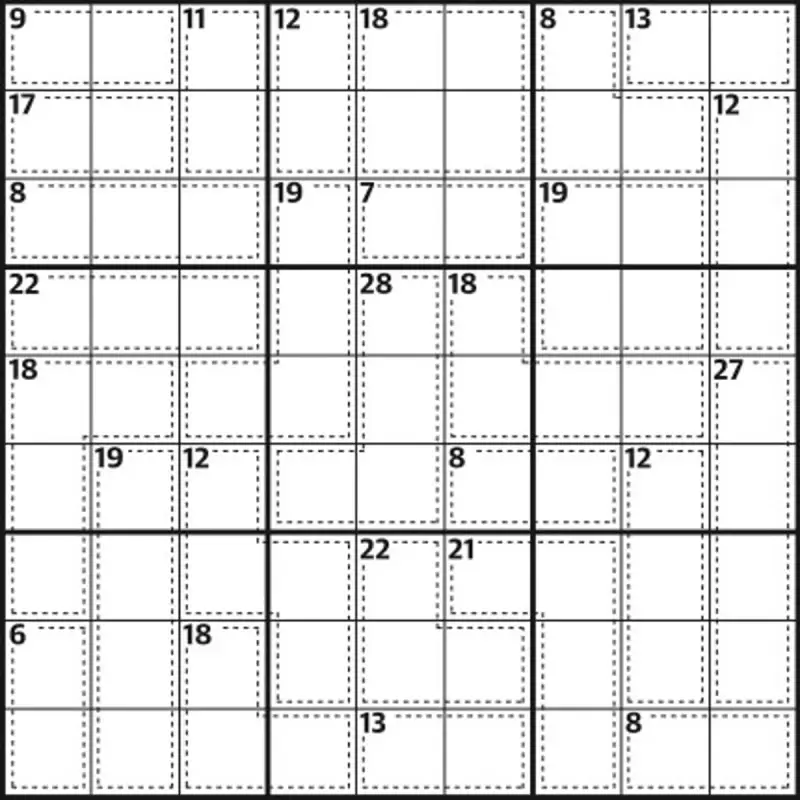
A fiendishly difficult 'Killer Sudoku' puzzle has captured global attention, presenting a logic challenge so formidable that its creators have given it a near-maximum difficulty rating of 999 out of 1,000. As of early December 2025, the puzzle remains officially unsolved by the public, defying enthusiasts and experts alike.
The Anatomy of a Near-Impossible Puzzle
Published in The Guardian's weekend magazine, this particular Killer Sudoku elevates the classic number grid to new heights of complexity. Unlike standard Sudoku, Killer Sudoku incorporates 'cages' – outlined groups of cells that must add up to a given total, without repeating numbers. This puzzle's design, crafted by the renowned puzzle setter David McNeill, pushes this concept to its absolute limit.
The puzzle's staggering 999 rating is not merely for show. It is assigned by the puzzle's publisher, Puzzler Media, based on an algorithm that analyses the logical steps required for a solution. A rating this high indicates a path so convoluted and dependent on advanced techniques that even seasoned solvers are expected to struggle for hours, if not days.

Why This Puzzle Stands Apart
What makes this grid so exceptionally tough? Experts point to the intricate interplay between the cage sums and the standard Sudoku rules. Solvers cannot rely on simple elimination; they must make deep, often counter-intuitive inferences about how numbers distribute across the entire 9x9 board. The puzzle demands a mastery of techniques like 'hidden cages' and complex constraint propagation.
David McNeill, the mind behind the conundrum, is a respected figure in the puzzle world. His creations are known for their elegant but brutal logic, and this '999' offering is considered his magnum opus to date. The puzzle was specifically commissioned for the weekend feature, aiming to provide the ultimate test for dedicated solvers during the quieter holiday period.
A Global Challenge and Intellectual Pursuit
The publication of the puzzle has sparked a quiet but intense international race among puzzle communities online. Forums and social media groups dedicated to logic puzzles are abuzz with shared strategies and dead ends. The enduring appeal lies in the pure challenge: it is a battle of wits against a grid, with no prize other than the immense satisfaction of completion.
This phenomenon highlights the lasting cultural footprint of pen-and-paper puzzles in a digital age. Killer Sudoku, in particular, sits at a crossroads of mathematics, logic, and patient deduction. The '999' puzzle serves as a benchmark, a Everest for number-crunchers that demonstrates how deep and engaging a simple-seeming game can become.
While the solution exists in the publisher's vault, its public revelation is withheld, preserving the challenge. For now, the puzzle stands as an open invitation – or a taunt – to anyone who believes they possess the logical fortitude to conquer it. Will you be the one to finally crack the code of the world's hardest Killer Sudoku?