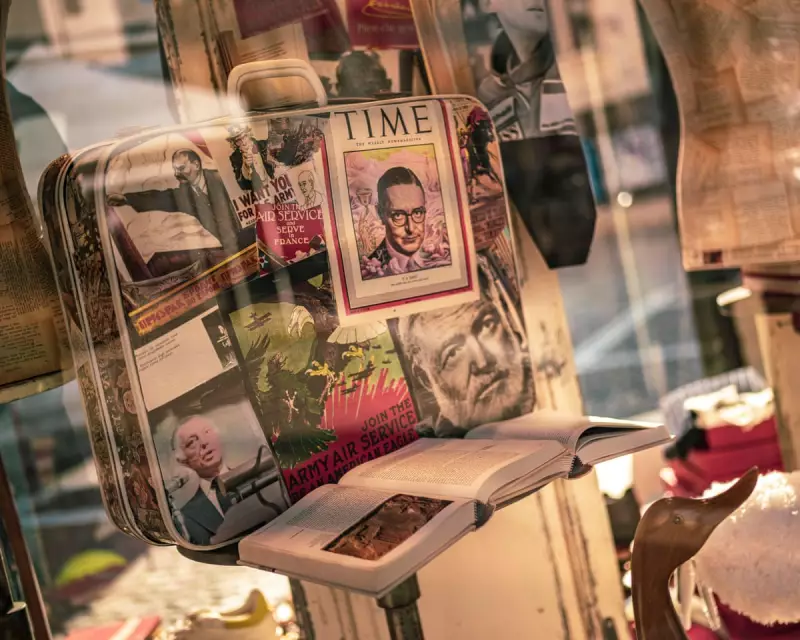
In the quiet Italian town of Rovigo, a curious scene captured on 21st June 2025 reveals much about our relationship with the past. An old suitcase adorned with vintage newspaper clippings and an open book creates a nostalgic display in a shop window, photographed by Filippo Carlot. This carefully arranged composition speaks to the universal human experience of nostalgia that The Guardian recently explored through its 'Readers Reply' series.
The Psychology Behind Nostalgic Feelings
Readers offered diverse perspectives on why nostalgia affects us so profoundly. Many suggested it stems from our tendency to idealise the past, particularly during challenging present times. As one contributor noted, the human condition can be difficult and disappointing, leading us to yearn for simpler times when we felt more hopeful and less burdened by life's complexities.
Another reader highlighted how nostalgia often represents an idealised version of ourselves - recalling periods when we felt smarter, more capable, or more optimistic. This selective memory allows us to focus on positive experiences while minimizing the anxieties and hardships we might have actually faced during those earlier times.

Cultural and Political Dimensions of Nostalgia
The discussion revealed how nostalgia operates on both personal and collective levels. On a cultural scale, we often romanticise eras we never experienced firsthand, influenced by media portrayals in shows like Downton Abbey or Bridgerton. These representations typically smooth over historical realities, creating longing for times that never truly existed as we imagine them.
Several readers expressed concern about how politicians can weaponise nostalgia, promising to return to mythical golden ages that serve divisive agendas. The Maga movement in the United States was cited as an example of this phenomenon, where nostalgia for an imagined past can override historical accuracy and present-day realities.
The Personal Experience of Memory and Longing
Not all perspectives on nostalgia were negative. Many contributors described it as a source of warmth and connection rather than mere escapism. One reader shared how recently reconnecting with an old friend's sister provided comfort through shared memories, creating continuity between past and present.
The bittersweet quality of nostalgia emerged as a recurring theme - that peculiar mixture of joy and sadness when recalling moments that shaped us. As one respondent poetically noted, we seem to experience 'nostalgia for an age yet to come', suggesting that our relationship with time is more complex than simple backward-looking yearning.
Ultimately, the conversation revealed nostalgia as a multifaceted human experience - sometimes a comfort, sometimes a distortion, but always a testament to our deep connection to the passage of time and the stories we tell ourselves about where we've been and who we've become.