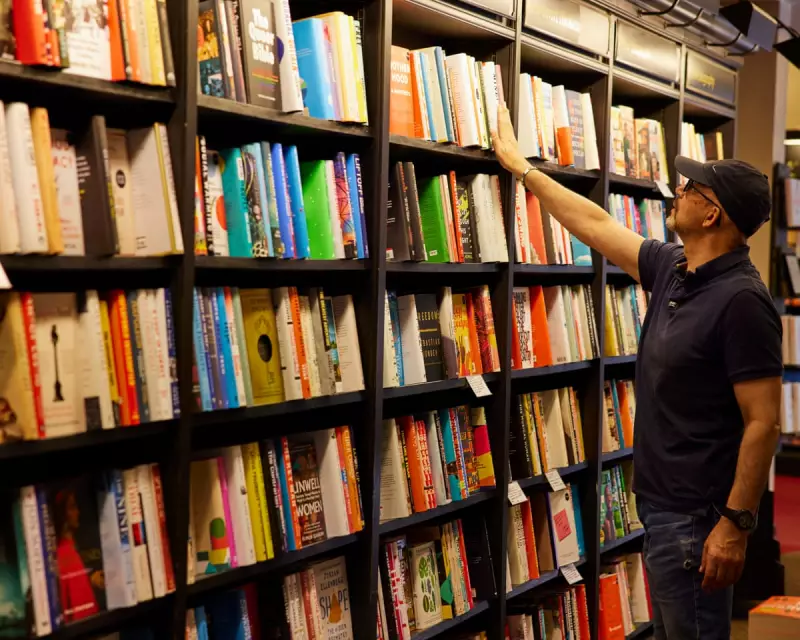
In the early 2020s, British readers turned to nonfiction in droves, seeking to understand a world rocked by political and social upheaval. Books dissecting Brexit, Trump, and social justice movements flew off the shelves, making reading feel like a vital civic act. Today, that trend appears to be reversing, with new data suggesting a significant cooling of the public's appetite for factual writing.
The Data: A Sharp Decline in Engagement
A recent report from NielsenIQ has revealed a worrying trend for publishers: trade nonfiction sales have slipped sharply. In volume terms, the category fell by 8.4% between the summer of last year and the same period this year. This decline is nearly double that seen in paperback fiction. In value, nonfiction sales are down 4.7%. The slump is widespread, with 14 out of 18 nonfiction subcategories contracting, despite a few standout exceptions like Chloe Dalton's Raising Hare.
The anecdotal evidence from authors is stark. After a slew of rejections, one writer was told by publishers that "nonfiction just isn't selling." Another has pivoted to fiction on her agent's advice, describing the market as "hell." A third reported that publishers now seem interested only in "Hollywood-friendly" memoirs, suggesting a shift towards easily adaptable life stories.

The Why: Escapism in a Bleak World
Speaking to industry insiders, one word emerges repeatedly to explain the shift: escapism. In a world perceived as exhausting and grim, readers are increasingly seeking refuge rather than clarity. Holly Harley, head of nonfiction at publisher Head of Zeus, confirms this sentiment. "I think there is definitely a sense of fatigue," she says. "The news is terrible. People feel overloaded. That escapism is why we’re seeing such a rise in romantasy."
Journalist Emily Ash Powell agrees, noting that the bleakness of current events is driving people to "borrow the lives of others" through fiction. This desire to escape also reflects a degree of disillusionment; the voracious reading of politically charged nonfiction in the past decade did not transform the world as many had hoped. Harley points out that the trend-led interest in social justice titles has notably fallen away since its peak.
This is exemplified by the trajectory of books like Reni Eddo-Lodge's Why I’m No Longer Talking to White People About Race, which made history in 2020. While the Black Lives Matter movement spurred a 56% rise in sales of books by writers of colour, analysis by The Bookseller later found this boom "failed to result in the promised broadening of publishing’s output."
Competition and Quality Concerns
The challenge for nonfiction is twofold. Firstly, it faces intense competition from free, high-quality digital content. Detailed video essays and popular podcast series like The Rest Is History dissect complex topics in digestible, entertaining chunks, often during a listener's commute. "Podcasts are in direct competition with nonfiction," admits Holly Harley.
Secondly, some within the industry question whether the quality and appeal of nonfiction itself have changed. One anonymous novelist criticises the output as increasingly risk-averse and boring, filled with "pop politics" or jargon-heavy niche topics rather than compelling narrative-driven works. Another author suggests too many books are now commissioned based on an author's social media following rather than the strength of their ideas, leading to content that feels "very Instagram-coded."
However, veteran editor Caroline Sanderson offers a crucial nuance, highlighting a symbiotic relationship between different media. The popularity of a podcast, for instance, can significantly boost sales of the hosts' related nonfiction books, as seen with Dominic Sandbrook, Tom Holland, and Rory Stewart.
A Complex Future: Blockbusters and a Vital Role
The picture is not uniformly bleak. Some subgenres, like biography, health, pop psychology, and "smart thinking" self-help titles, remain robust or are growing. The surge in personal development books indicates a cultural pivot from societal change to individual betterment.

The industry is also characterised by what Harley calls a "feast and famine" cycle, where the entire market can be transformed by a single blockbuster. "Nobody talked about the decline of nonfiction the year Prince Harry’s Spare was published," notes Sanderson. The problem, Harley observes, is that the gap between these mega-hits and the mid-list is now more stark than ever.
Ultimately, beyond sales figures, experts stress the enduring importance of long-form nonfiction. Caroline Sanderson delivers a powerful closing argument: "Regardless of sales, I hold passionately to the importance of long-form nonfiction in helping us understand the world. We need it. Sales fluctuations are the weather; it’s the climate we need to worry about." In an era of information overload and political pressure on educational materials, the role of rigorous nonfiction as a tool for critical thinking has never been more vital.