The year 2025 has delivered a compelling slate of history and politics books that hold a mirror to our turbulent yet strangely static era. In a time defined more by online hashtags than physical barricades, authors are looking back to periods where conviction sparked tangible change, offering lessons and warnings for the present.
Revolutions, Architecture, and Global Conflict
Jason Burke's 'The Revolutionists' (Bodley Head) transports readers to the 1970s Middle East, a moment when communist ideology rivalled Islamism for the region's future. Burke paints a vivid picture of a geopolitical scene populated by radicals, where hijackings and kidnappings were orchestrated not always for pure Marxist belief, but often for the thrill of chaos.
Shifting focus to a cultural insurgency, Owen Hatherley's 'The Alienation Effect' (Allen Lane) is a group biography of Mitteleuropean architects and designers who shaped post-war Britain. Hatherley highlights the radical figures, like architect Ernő Goldfinger, who brought brutalist concrete to the UK's skyline, challenging national complacency and even inspiring a James Bond villain.

The story of one such brutalist structure is told in Lyse Doucet's 'The Finest Hotel in Kabul' (Hutchinson Heinemann). The BBC correspondent chronicles Afghanistan's modern history through the lens of the Kabul Intercontinental, from its 1970s heyday to its role as a fortress during the American occupation, paying tribute to the resilience of the Afghan people.
Jean-Pierre Filiu provides a harrowing, firsthand account in 'A Historian in Gaza' (Hurst), a companion to his larger history. The book offers an unflinching narrative of the destruction in Gaza, framing the Palestinian tragedy between the fanaticism of Hamas and the policies of the Netanyahu government.
Free Speech, Civil War, and the Politics of Identity
The foundational British value of free speech is scrutinised in Fara Dabhoiwala's 'What Is Free Speech?' (Allen Lane). The book traces how this principle became a civic creed from the 1720s, though Dabhoiwala provocatively concludes it may have gone too far in today's polarised climate.
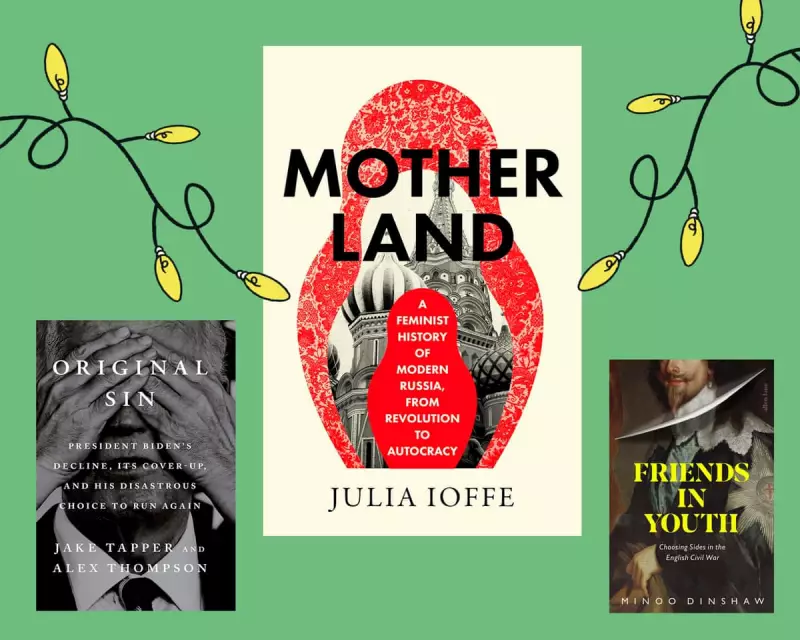
History is viewed through personal rupture in Minoo Dinshaw's 'Friends in Youth' (Allen Lane), which examines the English civil war via a broken friendship that saw one man become a royal propagandist and the other a crony of Oliver Cromwell. Dinshaw ends with a timely plea for cross-factional friendship.
In her polemic 'Minority Rule' (Bloomsbury), Ash Sarkar argues that centrism has failed because both the left and right have embraced identity politics. She calls for a renewed focus on class solidarity to combat elites and issues like austerity and the gig economy.
The raw deal handed to women is explored in Emily Callaci's 'Wages for Housework' (Allen Lane), which revives the radical 1970s movement demanding payment for domestic labour. The book highlights the fierce opposition the movement faced, even from men on the left.
Julia Ioffe's 'Motherland' (William Collins) charts the regression of Russian womanhood from revolutionary ideals to the submissive 'tradwife' model promoted under Putin's patriarchal rule and the Orthodox Church.
Contemporary Politics: American Farce and British Implosion
The state of modern democracy comes under fierce examination. Richard Beck's 'Homeland' (Verso) argues that the post-9/11 paranoia exported by the US ultimately came home to roost, morphing into the authoritarian Trumpist movement.
In 'Original Sin' (Hutchinson Heinemann), Jake Tapper and Alex Thompson chronicle the 'gerontocratic farce' of American politics, detailing Joe Biden's cognitive decline and the Democratic establishment's failed cover-up, which they argue paved the way for Donald Trump's return.
Closer to home, Simon Hart's 'Ungovernable' (Macmillan) provides damning diary entries from the Johnson-Truss years, painting a picture of a debauched and chaotic ruling class that reads like political satire.

The aftermath of that chaos is detailed in Patrick Maguire and Gabriel Pogrund's 'Get In' (Bodley Head). Their account of Keir Starmer's rise to power depicts a victory built more on Tory implosion and psephological calculation than charismatic socialism. The book reveals that early goodwill has evaporated amid scandals, and quotes one insider suggesting Starmer is not truly in control, but merely 'at the front of the DLR' – London's driverless train.
From revolutionary dreams to the stark realities of modern governance, the best history and politics books of 2025 provide essential reading for understanding the forces that have shaped – and continue to shake – our world.