From Booker Shortlist to Winner: Szalay's Triumphant Journey
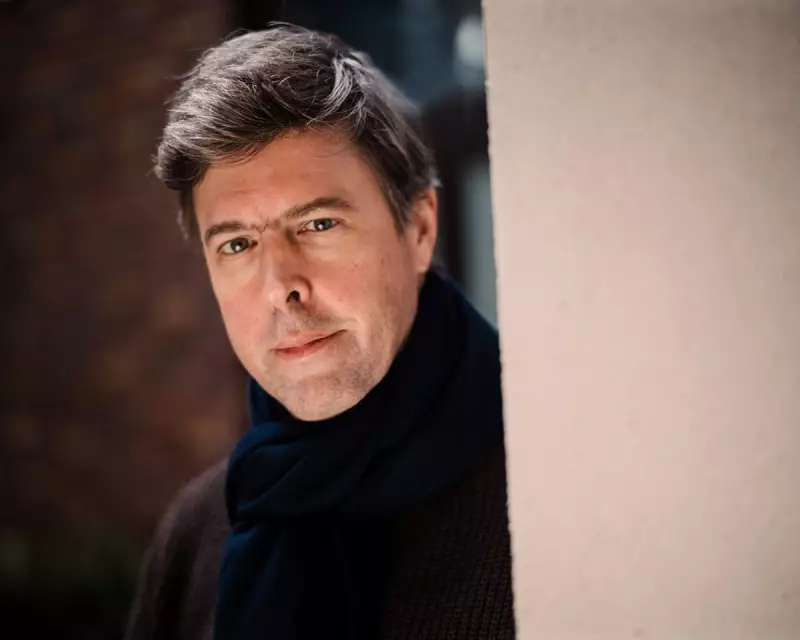
David Szalay has transformed from being a critically acclaimed 'writer's writer' to Booker Prize winner with his sixth novel, Flesh. The morning after the prestigious award ceremony, the 51-year-old author appeared both exhausted and exhilarated, his voice scratchy from lack of sleep and extensive media interviews.
This wasn't Szalay's first experience with the tension-filled Booker ceremony. In 2016, he was shortlisted for All That Man Is, which sparked controversy about whether its interconnected stories constituted a novel. He describes that evening as 'very, very stressful'. This time, he employed a different strategy: 'I decided to sort of hypnotise myself into believing that I hadn't won,' he reveals. 'I maybe succeeded almost too well. I was eerily calm – and then when it did indeed happen, I was slightly shocked.'
The Genesis of Flesh: From Abandoned Novel to Greek Tragedy
Flesh emerged from the ashes of another novel that Szalay had been working on for four years before ultimately abandoning it. The pressure following the attention from All That Man Is and what he describes as a 'wrong central concept' led him to scrap 100,000 words. 'There was an enormous feeling of relief, as well as trepidation that I now had to start with something else,' he admits.

The new novel began with what would become its unforgettable opening chapter, almost standing alone as a short story. It introduces fifteen-year-old István living on a Hungarian estate with his single mother, where a seduction by a 42-year-old neighbour leads to disastrous consequences with her husband. 'I would certainly read the second chapter,' Szalay thought, prompting him to continue István's journey.
The novel follows István through juvenile detention, service in the Hungarian army during the Iraq war, work as a London club doorman, and eventually as a chauffeur for an extremely wealthy man before achieving wealth himself. Szalay didn't shy away from putting his protagonist through extreme experiences. 'I didn't want to be a coward. I didn't want to shirk, or to leave out things that were quite extreme,' he states. He conceived the novel as 'something akin to a Greek tragedy', where the hero must endure immense suffering to reach catharsis.
Writing the Unsayable: Sex, Silence and the Male Perspective
Over six novels and fifteen years, Szalay has honed his exploration of masculinity, examining what it means to be a man today with particular focus on sex, violence and money. He knew he was taking risks with Flesh, especially in writing about sex from a specifically male perspective as honestly as possible.
'It's very difficult, notoriously, to write about sex,' the author acknowledges. 'I tried to write about it as matter-of-factly as possible.' He explains that both sex and anger are largely 'non-verbal experiences', presenting a particular challenge for novelists who must convey everything through language unless they leave blank pages.
István himself represents a remarkable literary creation – almost a blank space on the page. Readers never learn what he looks like, though women consistently find him attractive. He's a man of few words, with 'OK' appearing approximately 500 times throughout the novel. 'It's one of the main aspects of the characterisation,' Szalay explains. 'I very specifically didn't want a character who unpacked themselves for the reader, either reliably or unreliably.'
Despite the novel's focus on physicality, István exists within a specific historical context spanning roughly the author's lifetime. External events from the Iraq war to eastern European migration and the pandemic illustrate how political and socioeconomic forces shape lives. 'The end of communism, Hungary joining the EU, those two things completely transformed life for Hungarians,' Szalay notes, adding that 'Brexit will cause very deep changes in the psychology of the UK.'

A European Novelist's Perspective and Literary Influences
Szalay happily identifies as a European novelist, having spent most of his writing career in Hungary and now living in Vienna with his wife and young son Jonathan. He describes himself as a 'literary hermit', not speaking much German and remaining outside any bookish scenes.
His literary preferences lean toward concise, compressed novels rather than traditional sprawling narratives. 'That sort of Russian novel that begins with the main character's grandparents, and slowly works up to their birth about 200 pages in – that's probably not my favourite sort,' he admits. 'I prefer more compressed or concise novels, books that don't tell you everything.'
He cites Ernest Hemingway and John Updike as early favourites, while also acknowledging Virginia Woolf's influence and reading equally from male and female authors. He's already halfway through his next book, which 'partly' involves a female perspective.
The day after his Booker win should have been spent with his wife in London, but instead she returned to Vienna with their baby while he remained to discuss masculinity. It marked the first time they had left their son with other people. 'I think this is probably a good moment to do that,' Szalay reflects.
'I really didn't know how people were going to take the book,' he says of his unexpected win. 'I'm proud that it has connected with so many people.' From literary hermit to Booker Prize winner, David Szalay has created a novel that challenges conventions while exploring the fundamental physicality of human existence.