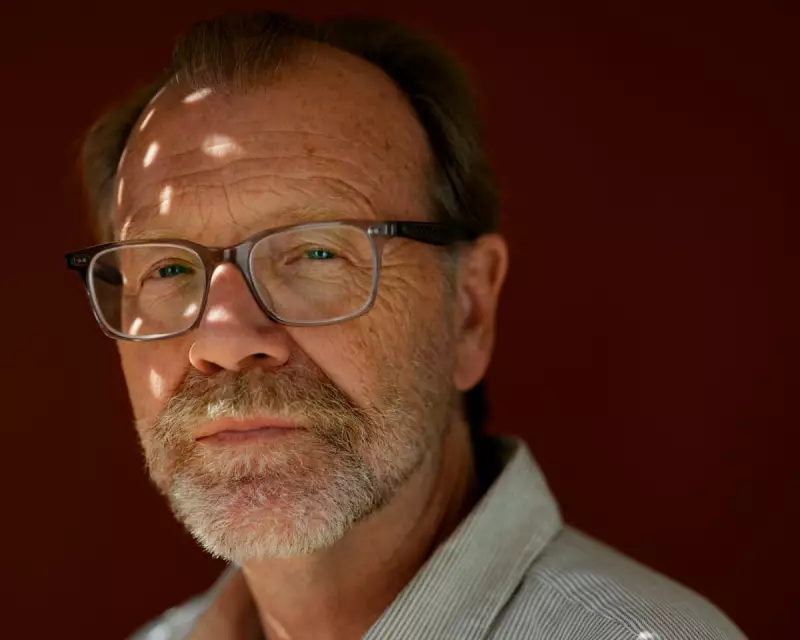
George Saunders makes his long-awaited return to the literary stage with Vigil, his first novel since the Booker Prize-winning triumph of Lincoln in the Bardo back in 2017. Once again, readers find themselves transported to that peculiar liminal space between existence and oblivion, where the boundaries between comedy and tragedy, moral inquiry and narrative experimentation blur into spectral uncertainty.
The Unrepentant Oil Tycoon's Final Hours
At the heart of this contemporary morality play lies KJ Boone, a postwar industrialist who has built his fortune through fossil fuels and climate denial. As he approaches his final moments, Boone remains remarkably untroubled by self-reflection, seemingly destined to exit the world with the same arrogant certainty that characterised his life's work. "A steady flow of satisfaction, even triumph, coursed through him, regarding all he had managed to see, cause and create," Saunders writes of his protagonist's final state of mind.
Ghostly Interventions and Moral Quandaries
Enter Jill Blaine, our spectral narrator and death doula who has guided hundreds of souls through their final transitions. Blaine faces her most challenging assignment yet with Boone, whose unrepentant nature and certainty about his exemption from ordinary moral considerations create a profound dilemma. What is the doula's role here: to comfort the dying man, or correct the moral record? When does mercy become complicity? These questions haunt the narrative as much as the ghosts themselves.

The novel inevitably invites comparison to Dickensian morality tales, particularly A Christmas Carol, with its crotchety protagonist and ghostly visitations. Yet Saunders subverts this tradition in crucial ways. Unlike Scrooge, Boone cannot redeem himself with simple gestures of generosity. His damage is planetary in scale, and readers watch with the expectation that cosmic justice will prevail. That expectation becomes our vigil – our shared watch for some form of retribution.
Structural Violence Versus Personal Villainy
Saunders explores the limitations of personalising systemic problems through Boone's family dynamics. We encounter his sneering daughter, who has "recovered from her brief, friend-induced flirtation with libtarditude," and his cowed wife, both orbiting the gravitational pull of Boone's personality. By the novel's conclusion, there remains little doubt about his nature: "a bully, a ruiner, an unrepentant world-wrecker."
Yet herein lies the novel's central tension. Vigil presents what amounts to a vigilantist fantasy – the notion that identifying and eliminating the right corporate monsters might somehow balance the moral ledger. Saunders seems to recognise the futility of this approach, acknowledging that billionaires and CEOs make excellent villains but that cutting one down merely allows others to sprout in their place, creating an economic hydra. The real monstrosity, the novel suggests, lies in structural violence that is pervasive and monstrously ordinary.
The More Compelling Spectral Presence
Interestingly, the most compelling character proves to be Jill Blaine herself. In her role as death doula to 343 charges, she has systematically forgotten her own past, her violent end, even her name. The sounds of a wedding celebration next door to Boone's deathbed begin to unravel her careful amnesia, forcing her to confront her own love story and its tragic conclusion. Somewhere in a lonely attic, the doula's own wedding dress moulders away, a poignant symbol of personal history sacrificed to professional duty.
This exploration of self-erasure and professional detachment represents where Saunders' ghosts achieve their most persuasive work – not as blunt moral instruments, but as unfinished souls grappling with their own unresolved histories. The contrast with Lincoln in the Bardo becomes particularly revealing here. Where that earlier novel narrowed history to the intimate calamity of Abraham Lincoln holding his dead son, Vigil struggles to achieve similar specificity.

When Innovation Becomes Convention
Unfortunately, the very elements that felt fresh and anarchic in Saunders' Booker-winning novel have begun to harden into convention. The polyphonic chatter, Beckettian riddling, and bawdy ghostly humour (Saunders maintains his affection for gassy spectres and phantom faeces) now risk feeling like a repertoire of established tricks rather than genuine innovation.
What once felt like radical narrative experimentation now occasionally registers as gimmickry, particularly when deployed in service of what amounts to a morality lesson for contemporary readers. There's a certain frustration in being trapped within someone else's moral framework – what the novel itself might term "a readerly Bardo" – where the spectral shenanigans sometimes distract from rather than deepen the philosophical inquiry.
Ultimately, Vigil represents both a continuation and a diminution of Saunders' distinctive literary project. While it grapples with urgent contemporary concerns about climate responsibility and corporate accountability, it struggles to escape the gravitational pull of its own protagonist's villainy. The novel circles important ideas about structural violence and personal responsibility but never quite achieves the transcendent human connection that made Lincoln in the Bardo so remarkable. Saunders remains a writer of formidable talent and moral seriousness, but in Vigil, the magic feels somewhat diminished, the ghosts more familiar, and the moral landscape less surprising than we might have hoped.