This week, we turn our focus to a powerful and unsettling work from the late British-American poet Anne Stevenson. Her poem, 'The Man in the Wind', first published in her 1982 collection 'Minute by Glass Minute', continues to resonate with readers for its profound meditation on an uncontrollable, destructive force.
A Force Beyond Myth and Understanding
The poem constructs an elusive and terrifying figure, the 'man' within the tempest. Stevenson deliberately moves away from familiar personifications, rejecting the image of a 'black monk'—a possible nod to the phantom in Chekhov's story—or a guilt-ridden face under a streetlamp. She also dismisses more politically charged imagery of torture and interrogation. Instead, the poem seeks a representation of raw, existential power.
The central figure is not a myth we can comprehend or control. His dream is his own anger, his cry is his own fear. Stevenson argues that the wind is "not less human for being wilder," blurring the line between a natural phenomenon and a manifestation of primal, human-like emotion unleashed upon the world.

The Soundscape of Uncreation
A masterful element of 'The Man in the Wind' is its meticulous sound engineering. Stevenson uses sparing rhyme, assonance, and breath-like line lengths to mimic the wind's own rhythms. The poem builds to a "continuous roar as of waves where there is no shore," a sound that echoes but ultimately transcends the "melancholy, long withdrawing roar" found in Matthew Arnold's Dover Beach.
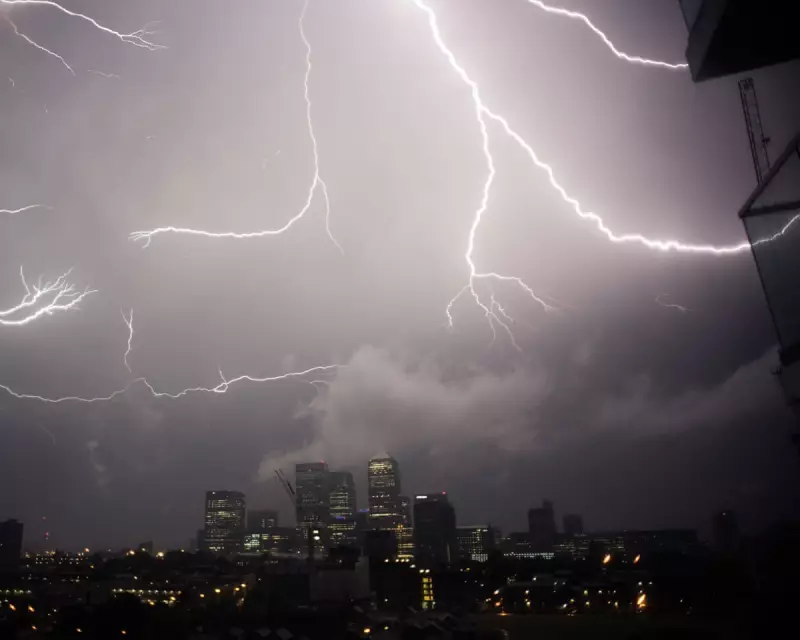
This relentless roar leads to the poem's devastating climax. It describes the drowning of "our polite island," with its ports, skyscrapers, and cranes swept away. The wind becomes a force of pure uncreation, operating in a "night of the uncreated" where it moves "without meaning or being." It is a wave that "began before beginning" and will continue "after the end," shrinking human history and achievement to insignificance.
Legacy and Interpretation
While the poem can be read through a political lens, perhaps reflecting on the climate of early 1980s Britain where Stevenson lived, its scope is vastly greater. It reaches towards an immeasurable concept of nature as an autonomous, indifferent, and terrifying power. The poem remains a stark reminder of forces beyond human dominion.
Anne Stevenson (1933-2020) was an award-winning poet and critic. 'The Man in the Wind' is reproduced in her posthumously published 'Collected Poems' (Bloodaxe Books, 2023), ensuring this haunting work continues to find new audiences and stir profound reflection.