The Man Who Decoded Life and Consciousness
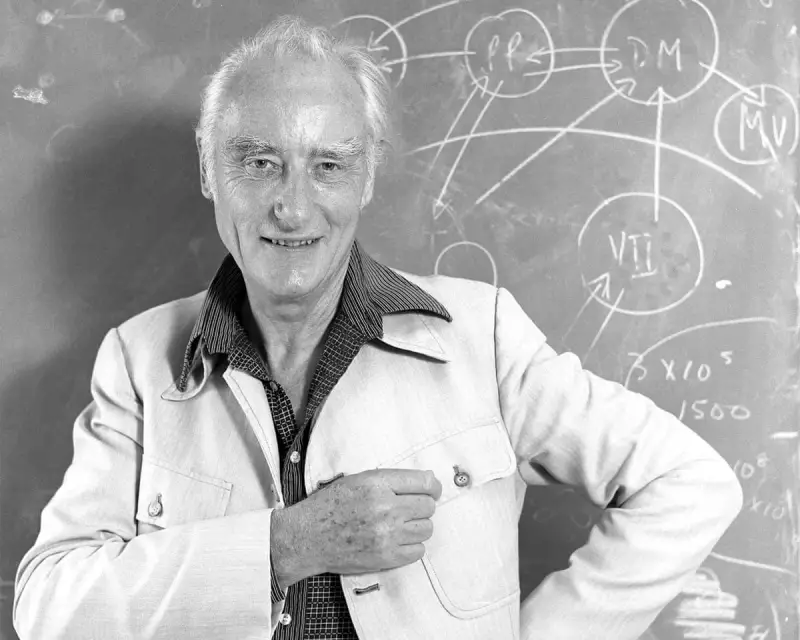
A new biography by Matthew Cobb, Crick: A Mind in Motion, delves deep into the life of the charismatic and complex Nobel laureate Francis Crick. While most know him for his pivotal role, with James Watson, in uncovering the double helix structure of DNA in 1953, this work reveals his profound and equally significant contributions to modern neuroscience.
From Provincial Roots to Scientific Stardom
Contrary to the image of a child prodigy, Francis Crick was born in 1916 into a provincial middle-class family and was considered an averagely bright student. After boarding at Mill Hill School in north London, he studied physics and mathematics at University College London, graduating with a 2.1. His early academic career was interrupted by the Second World War, where he was conscripted to work on mine development.
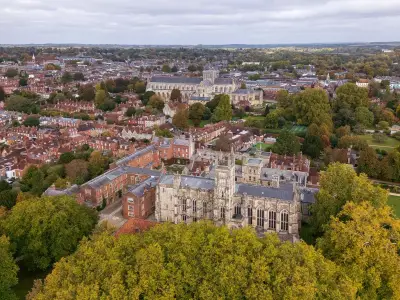
It was only after the war, inspired by Erwin Schrödinger's book What Is Life?, that Crick pivoted to biology. He secured a studentship at the Strangeways Laboratory near Cambridge and later moved to the Cavendish Lab at Cambridge University in 1949. It was here he met the 23-year-old James Watson, and their legendary collaboration began.
A Charismatic and Controversial Figure
Far from a reclusive genius, Crick was a loud, charismatic, and controversial figure—a known philanderer and poetry lover who enjoyed hosting risqué parties. Professor Cobb portrays him as bold and arrogant, with a rare talent for connecting disparate ideas and challenging established experts.
The biography also addresses the enduring controversy surrounding Rosalind Franklin's data. Cobb seeks to correct the narrative that Crick and Watson stole her work, arguing that while they should have asked for permission, the image known as Photo 51 provided no new information and was seen by Crick only after their discovery. However, Cobb acknowledges the pervasive sexism of the era that saw Franklin excluded from key networks and her work undervalued.
A Legacy Spanning Two Scientific Revolutions
Cobb's biography is an ambitious and impressive work of scholarship that attempts to cover both Crick's prolific career and his colourful personal life. Crick's own driving questions—the boundary between living and non-living and the workings of the brain—led him to radically reshape not one, but two scientific fields: molecular biology and neuroscience.
While the book is intended for a general audience, some may find the technical detail challenging. The relief comes in Crick's own words, where his knack for translating complex science into lay terms shines through, such as when he explained that "chance is the only source of true novelty." This biography ultimately captures the wonder of a mind that never stopped moving, from DNA to the very essence of consciousness.