Mark Haddon's Reflections on a Childhood Without Affection
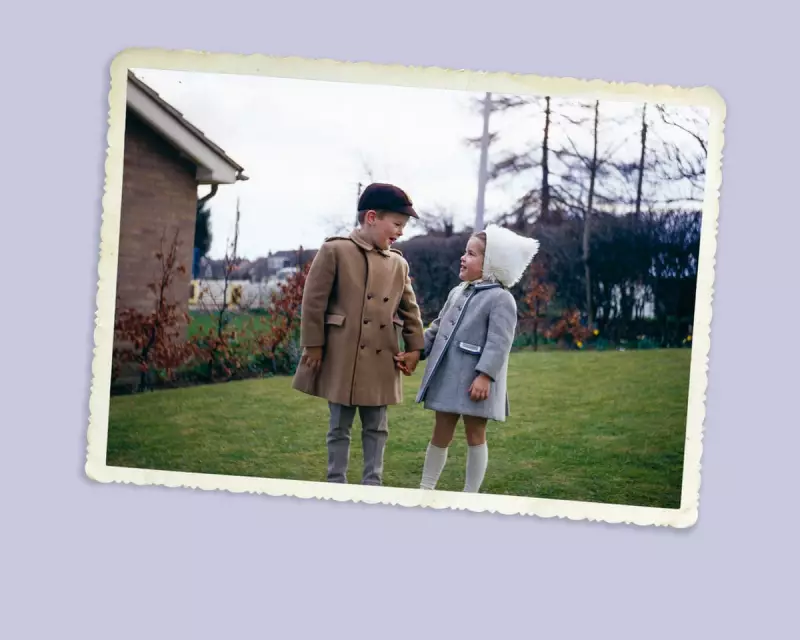
When author Mark Haddon looks back at faded photographs from the 1960s and 1970s, he experiences a complex emotion that cannot truly be called nostalgia. The images of cardigan-clad grandmothers enjoying roadside picnics beside Morris Minors, pale men sunbathing in socks and shoes on striped deckchairs, Raleigh Choppers and caged budgerigars evoke memories of a time when he was often profoundly unhappy. Yet there remains a persistent longing, an echo of remembered comfort that puzzles him to this day.
A World of Internal Escape
For the first fifteen years of his life, Haddon lived with his parents and younger sister Fiona at 288a Main Road, New Duston, on the outskirts of Northampton. The architect-designed house featured Scandinavian modernist influences with external wood panelling, a semi-open-plan ground floor, and a boxy glass lobby. Teak double doors separated the dining room from a living room dominated by an uncarpeted staircase with open risers, while a chimney breast constructed from chunky sandstone blocks resembled something from The Flintstones.
Beneath the stairs stood a Philips radiogram that played André Previn's jazz trio, Paul Simon, and the Jacques Loussier Trio. What Haddon cannot recall hearing were meaningful conversations between adults. The household operated in near silence, punctuated only by occasional outbursts like "Jesus wept!" or "Wait till your father gets home." He never witnessed adults discussing matters of genuine importance, leaving him to wonder if similar internal worlds existed within other people's minds.
Parental Dynamics and Distant Relationships
Haddon's mother presented a complex figure who, in early photographs taken by his father on a Devon or Cornwall beach, radiated confidence and beauty with fuchsia lipstick, freckles, and simple white earrings. Yet this version of his mother seemed to disappear soon after the photograph was taken, replaced by a woman who covered her freckles with foundation, avoided sunlight for fear of migraines, and whose occasional bawdy humor felt like distraction rather than genuine joy.
His father, an academic failure who proudly earned just one point on an English paper for writing his name, emerged as a prodigious sportsman who learned to swim by watching Johnny Weissmuller in Tarzan films. After national service, he established his own architectural partnership, designing buildings for the Open University, Carlsberg, and Ikea while weathering the 1970s building slump by designing abattoirs. This professional choice resulted in the family consuming numerous free pork pies during Haddon's childhood.
Recurrent Nightmares and Emotional Distance
Both Haddon and his sister experienced disturbing recurrent nightmares throughout their childhood. Fiona dreamed for forty-five years that their father chased her with a knife, a nightmare that only ceased when his Alzheimer's became unmanageable and he entered a care home. Haddon himself dreamed of standing at a crossroads on a post-apocalyptic plain as giant insects approached from all directions, and of drowning in an antique diving suit after being flushed down a toilet.
The emotional distance between parents and children became particularly evident when Haddon mentioned in an interview following the publication of The Curious Incident of the Dog in the Night-Time that he had been an anxious and depressed child. His father later informed him that this comment caused his mother to cry herself to sleep and wake up crying each morning, though she refused to come to the phone to discuss the matter.
Preferential Treatment and Lasting Scars
Haddon acknowledges receiving preferential treatment as both the older child and a boy, though he clarifies that being the favorite did not imply actual liking. His father permitted their mother to hit Fiona but not him, resulting in incidents like their mother pulling down seven-year-old Fiona's pants at a bus stop to smack her. Both parents embraced the idea of Haddon as a freakishly clever child, which reduced their need to understand him as he retreated into his world of encyclopaedias and star charts.
Fiona faced different challenges, treated as an encumbrance and unable to earn the academic affirmation at school that might have compensated for what she lacked at home. When hospitalized with meningitis years later, their parents declined to visit because "Your father has golf in the morning," finding reasons not to visit throughout her week-long hospital stay. Neither parent attended her degree show when she earned distinction in her MA in production design, and when she secured a job at the BBC, their mother responded, "You've already got a job looking after three children."
Complex Grief and Final Reflections
Haddon explores the complex nature of grief when losing parents who never showed love. While his parents' deaths brought him relief, for his sister it represented the definitive moment when she knew she would never hear them apologize. Their mother's final words to Fiona in person were, "I've never believed a word you've said."
The author questions conventional injunctions against speaking ill of the dead, wondering which dead deserve such protection and for how long after their passing. He reflects on his mother's obsession with propriety and what others might think of her, noting how she never considered that people might judge her based on whether she was kind, cared about others, or loved her children.
Through this examination of his childhood, Haddon reveals how the constancy of objects provided consolation in a world where adults remained unpredictable, distant, and unloving, while the focused attention of childhood gave everything within his internal world a memorable fierceness that continues to shape his understanding of family, memory, and loss.