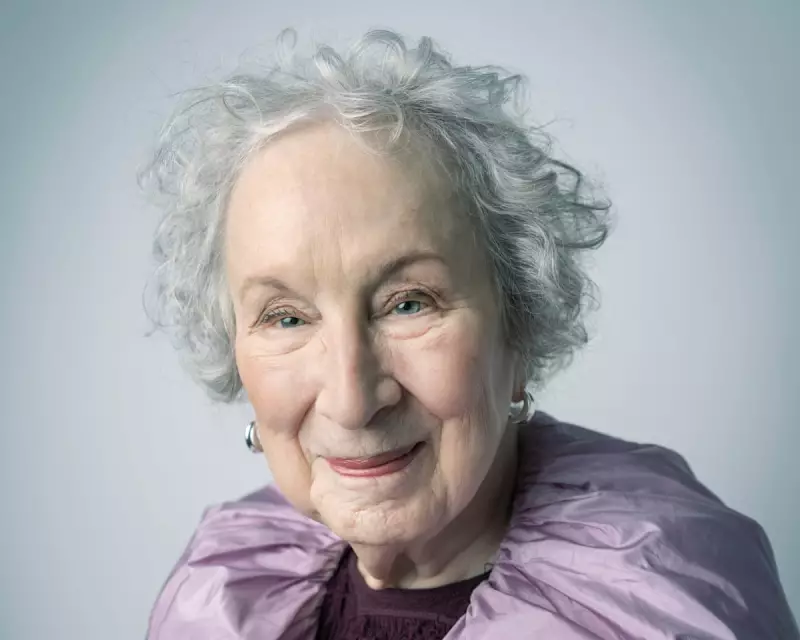
At 86 years old, celebrated author Margaret Atwood has released what she describes as a "memoir of sorts" - Book of Lives - spanning over 600 pages that chronicle everything from her childhood in the Canadian wilderness to grieving her partner of 48 years, writer Graeme Gibson.
A Lifetime of Observation and Wisdom
The visionary writer behind The Handmaid's Tale and numerous other acclaimed works has become something of a cultural prophet, though she strongly resists such labels. "I'd have cornered the stock market," she has said about claims of her prophetic abilities, though she did accurately predict the 2008 financial crash in her book Payback.
In a remarkable interview, Atwood fielded questions from prominent thinkers and artists including Ai Weiwei, Rebecca Solnit, and George Saunders, covering topics ranging from hangover cures to the potential collapse of American democracy.

Confronting Contemporary Crises
When asked by Ai Weiwei about the hypocrisy surrounding ideals of freedom and justice amid current geopolitical conflicts, Atwood responded with characteristic clarity. "Ideals are always aspirational," she noted. "They have never been fully implemented, as we know."
Her concern about the United States was particularly striking. When novelist Anne Enright asked how she would be different if born American, Atwood replied: "I'd be worrying a lot about my country. Is it a democratic world leader on a steep slide into autocracy? Let's hope not."
This theme continued when Diane Abbott questioned whether American democracy would survive. "I don't know," Atwood admitted. "But America is a large and very diverse country. It will be hard to make all the Americans line up and salute without killing a lot of people."
Feminism and the Patriarchy
Addressing Deborah Levy's question about whether we'll ever topple patriarchy, Atwood reframed the discussion with practical concerns. "Can we even hold the line - the line on one side of which women don't have jobs, money or political rights; and on the other side of which they do?"
She reflected on the significant changes she's witnessed since the 1960s, particularly noting the impact of the birth control pill: "A huge change, hardly possible before the pill," followed by second-wave feminism and the rise of the religious right as a political force during Reagan's presidency, which directly inspired The Handmaid's Tale.
Environmental Concerns and Survival
When author Ali Smith asked about tools for surviving current crises from climate damage to savage politics, Atwood offered characteristically practical advice. "Inventiveness, the ability to improvise using any materials at hand, and a knowledge of basic needs and possible hazards are always useful," she said, recommending people always keep fresh water, candles, and basic supplies at home.
Her response to Amitav Ghosh about whether dystopian trends signal total collapse or allow for hopeful turns was equally measured: "More hopeful turns are always possible. Except at the moment when you've been pushed out a window. But there is no 'inevitable course of history'. And yes, individuals have made a difference. And can still do so."
Throughout the interview, Atwood's unique perspective - shaped by 86 years of careful observation, scientific curiosity, and literary achievement - shines through. From her concerns about democracy to her practical survival advice, she remains what she has always been: a clear-eyed witness to our times, unafraid to speak difficult truths.