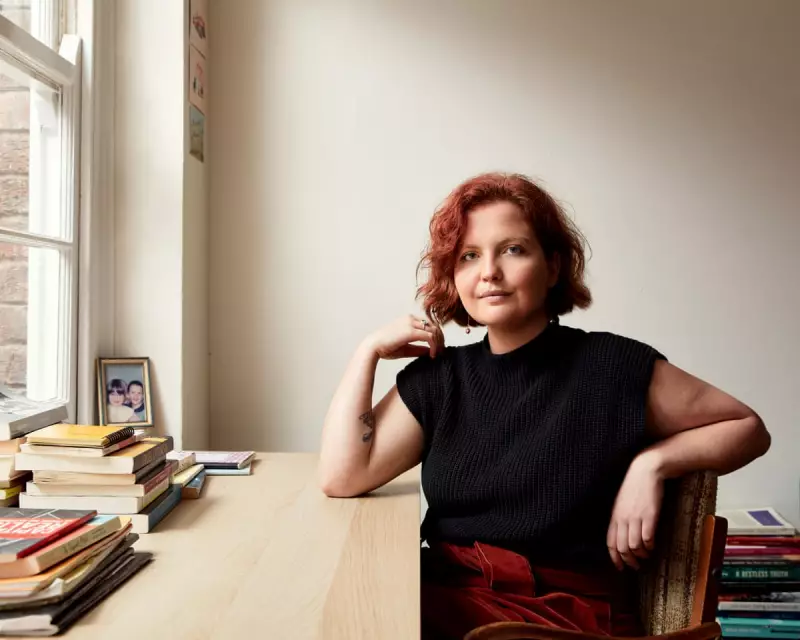
Australian author Madeleine Gray has experienced a remarkable literary journey, transitioning from academic life to celebrated novelist with her debut work Green Dot. Now, with her second novel Chosen Family launching, she reflects on success, representation, and the evolving nature of relationships in contemporary society.
From Academic to Acclaimed Author
Gray's path to literary recognition began unexpectedly when she received a six-figure advance for her debut novel. The 31-year-old writer recalls her astonishment at the news, initially believing there had been some administrative error. This financial validation preceded the critical acclaim that would follow, with Green Dot being heralded as one of the most anticipated novels of its publication year.
The novel's success brought unexpected attention, including celebrity endorsements from figures like Nigella Lawson and Gillian Anderson. "I'm gay," Gray emphasises when discussing Anderson's support, "are you kidding?! I follow Gillian on Instagram, obviously." The author describes her reaction to seeing Anderson's social media post featuring her book as "primal" in its enthusiasm.

Navigating Success and Reader Expectations
With success came unexpected correspondence. Gray's social media channels became flooded with confessions from strangers about their extramarital affairs, some from men claiming the book helped them understand their mistresses. The author maintains a clear boundary regarding these communications, noting "I'm not a psychologist, and I shouldn't be giving advice." She emphasises that despite the novel's convincing portrayal of complicated relationships, "I made it up."
The transition to writing a second novel presented its own challenges. Gray experienced what many authors describe as "second novel syndrome," spending months uncertain about her ability to write another book. Her wife, a musician with experience releasing multiple albums, provided perspective: "Darling, this will never go away. It's not just your second book; every piece of art you create, you will feel the same way."
Exploring Alternative Family Structures
Chosen Family emerged from conversations Gray had with friends about contemporary parenting dilemmas. Many of her thirtysomething acquaintances expressed desire for children without having romantic partners, yet felt uncertain about single parenting. This led to discussions about platonic co-parenting arrangements and the proverb that "it takes a village to raise a family."
The novel follows childhood friends Eve and Nell from painful adolescence through to motherhood in their thirties. Their attempt at platonic co-parenting becomes complicated by unrequited romantic feelings, exploring what Gray identifies as a common queer experience: "I myself as a queer person have experienced this – and every queer person I've ever met has – of having a really intense friendship breakup in high school. And then years later, they look back and think: 'Oh, I was probably in love with that person.'"
Queer Representation and Literary Ambition
Gray deliberately chose a provocative title for her second work. "It's a big move to name a book Chosen Family," she acknowledges. The term carries significant weight within queer communities, often associated with utopian ideals of alternative kinship structures. However, Gray's novel complicates this notion by examining power dynamics within non-traditional family arrangements.
The author draws from her own experiences attending a private girls' school in Sydney, where she "put my sexuality on hold until I left school" because "coming out was not a safe thing to do." Writing the novel allowed her to imagine what openness might have meant in that environment, concluding it would have been "horrific" given the social attitudes of the time.

Personal Evolution and Creative Process
Gray's personal life has undergone significant transformation alongside her literary career. She became a stepmother to her wife's toddler, an experience that has "changed me in every way that could exist." The development of this relationship required patience and trust-building, with love developing gradually over time rather than appearing instantly.
This parenting experience has influenced her writing approach. "Becoming a parent has encouraged Gray to use multiple perspectives when writing fiction," she explains, "because every day I spend time with this little boy who has such a different way of seeing the world." Practical considerations have also affected her process: "I write faster, because I don't have as much time."
Future Projects and Literary Identity
Now working as a full-time writer, Gray is developing a novel she describes as "Germaine Greer meets Monty Python," set in a different historical period. She remains conscious of how authors become categorised within the literary world, noting that "if my first book had had lesbians as its protagonists, I would have been pigeonholed as a 'queer writer'."
The success of Green Dot provided confidence to write Chosen Family with broader audience aspirations. Gray hopes her work will reach beyond queer readerships, expressing that "that's my dream for this book – that everyone can read it."
Regarding her creative process, Gray reveals an unconventional approach to writing intimate scenes: "I only ever write sex scenes in public. There's something about that intimacy, that charge, when the person opposite you is Googling KPIs. It feels naughty." This playful attitude reflects her overall approach to writing, which she describes as "kind of joyous" and an opportunity to "have a really beautiful queer time."