The Faustian Bargain of Literary Success
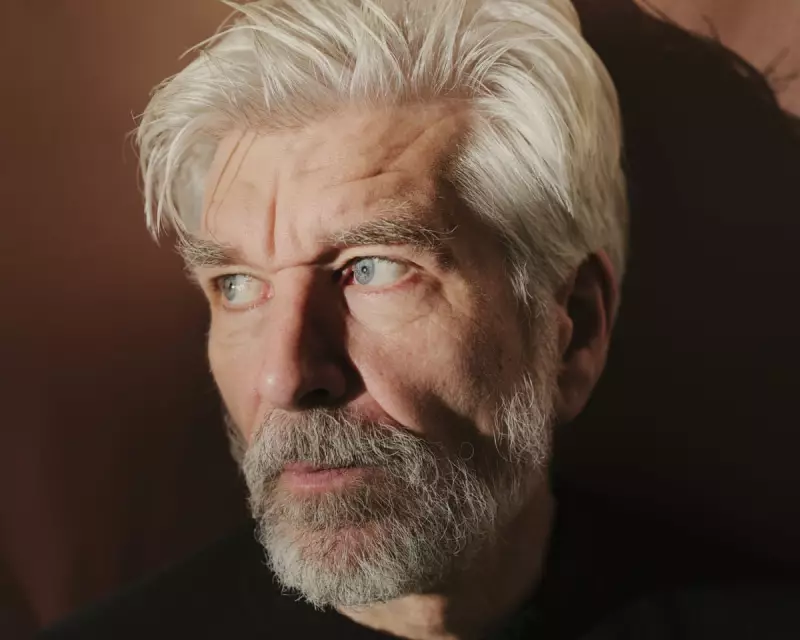
Fifteen years after describing his monumental six-volume work My Struggle as feeling like he had 'sold my soul to the devil', Norwegian author Karl Ove Knausgård returns to explore similar territory in his latest novel. The international success of his autofictional epic came at significant personal cost, provoking anger among friends and family members portrayed within its pages. This experience of artistic creation carrying a heavy price forms the foundation of his newest work.
London Calling: A New Literary Landscape
The School of Night represents the fourth instalment in Knausgård's Morning Star sequence, blending his signature character studies with supernatural elements including mysterious celestial phenomena and the dead returning to life. Unlike previous volumes that advanced the narrative, this novel moves backwards to 1985 London, following young Norwegian photographer Kristian Hadeland and his ruthless pursuit of artistic fame.
Knausgård himself moved to London nearly a decade ago, settling in Deptford with his third wife, formerly his editor. The area's association with Elizabethan playwright Christopher Marlowe, a prominent author of the Faust legend, made it the perfect setting for Kristian's story. 'I grew up as a proper anglophile,' Knausgård reveals, explaining his lifelong fascination with British culture through music publications like NME and Sounds, and Saturday football matches.

Confronting the Darkness Within
The novel takes the form of a suicide note written by Kristian after his spectacular fall from artistic prominence. Throughout the narrative, death emerges as a constant presence, with Kristian reflecting that 'death was the rule, life the exception'. Knausgård explores whether art can serve as resistance against life's ephemerality, though he ultimately rejects this notion.
In creating Kristian, Knausgård confronted his own shadow self. Where My Struggle caused real-world consequences and family tensions, Kristian operates without ethical constraints. 'When I wrote as Kristian, he doesn't care,' Knausgård explains. 'That freedom, you know, comes for him in the end. That, to me, is the Faust story.'
The author acknowledges spending time in Kristian's consciousness 'wasn't pleasant', describing the process as magnifying certain elements of himself. His family's light, he notes in the book's acknowledgements, enabled him to withstand the novel's darkness.
The Writer's Enduring Craft
Now working on his 22nd book, Knausgård maintains remarkable productivity through consistent daily writing. 'It doesn't have to be many hours,' he notes, 'but if you do it every day, five days a week, it's a novel in a year.' While he initially suggests the Morning Star sequence could continue indefinitely, he clarifies with determination that the seventh volume will conclude the series.
The forthcoming sixth instalment, I Was Long Dead, returns to characters from The Wolves of Eternity and promises to be 'the wildest book I've ever written', featuring what Knausgård describes with a laugh as 'real blood spatter and chainsaw kind of stuff'.
The School of Night, translated by Martin Aitken and published by Harvill Secker at £25, continues Knausgård's exploration of ambition's costs and the delicate balance between artistic creation and personal relationships that has defined his career.