A Nobel Laureate's Enigmatic New Masterpiece
Norwegian author Jon Fosse, recipient of the 2023 Nobel Prize in Literature, has returned with his first new work since the prestigious award. Vaim, published by Fitzcarraldo Editions and translated by Damion Searls, continues Fosse's tradition of what he describes as mystical realism - a distinctive blend of everyday life and metaphysical wonder that has become his literary signature.
The Simple Quest That Becomes Extraordinary
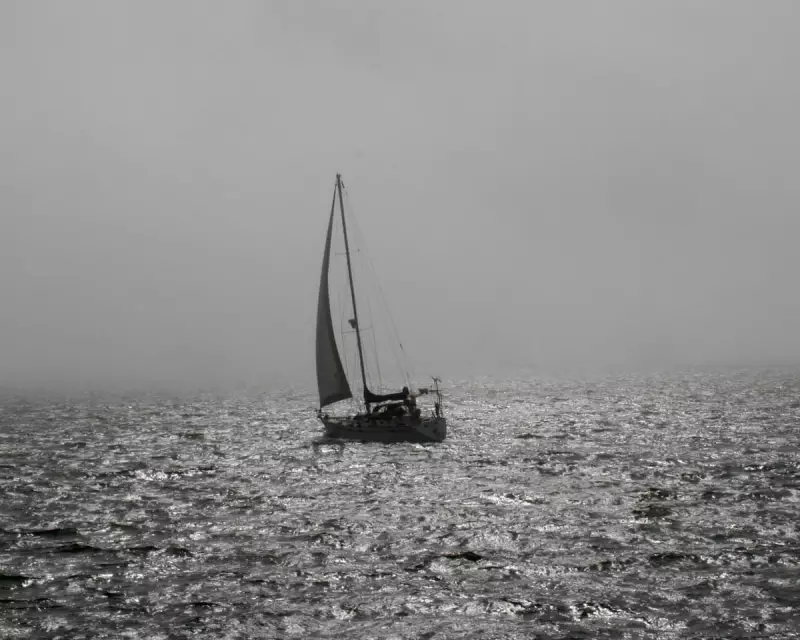
At under 120 pages, this slender novel packs profound emotional weight. The story begins with protagonist Jatgeir undertaking what should be a straightforward mission: sailing from the small town of Vaim to the larger city of Bjørgvin to purchase needle and thread to repair a missing button. Yet in Fosse's hands, this mundane errand transforms into a hypnotic voyage through memory, regret, and human connection.
Jatgeir's journey proves frustrating as he's overcharged at not one but two shops for a simple spool of thread. His internal seething and social awkwardness paint him as something of a provincial figure - a man living alone in his deceased parents' house with beige curtains and greying hair, largely invisible to the women around him. His life appears defined by quiet routines and unspoken longing, particularly for Eline, his secret youthful love for whom he named his boat, an act that caused local amusement and her subsequent departure.

A Mysterious Reunion and Shifting Perspectives
The narrative takes an unexpected turn when Eline mysteriously reappears, calling Jatgeir's name in the night and asking to be rescued from her fisherman husband. What could have become a conventional romance instead demonstrates Fosse's unique storytelling approach as the narrative abruptly shifts perspective twice more.
The story passes first to Jatgeir's religious friend Elias, then to Frank, the husband Eline abandoned. This structural choice creates a haunting ambiguity around Eline herself, who remains elusive despite being central to the plot. Described as having been such a silly girl who left home young and worked for a wealthy family, she possesses an almost supernatural ability to influence men, appearing spectral and dreamlike.
The Hypnotic Rhythm of Fosse's Prose
Fosse's writing style creates what the review describes as disintegration loops - quiet, incantatory prose that builds emotional intensity through repetition and subtle variation. Though Vaim doesn't replicate the single-sentence structure of his monumental Septology trilogy, it maintains the hypnotic, recursive quality that characterises his work.
The novel exists in a temporal ambiguity where, aside from a brief car reference, it could be set a century ago. Characters appear blurred and dissolving - Eline wasn't born with that name, Jatgeir can't recall whether his niece is called Gudrun Anna or Anna Gudrun. Scenes unfold in the gloaming where day and night merge, accompanied by mysterious door knocks and ghostly references.
Yet for all its metaphysical wandering, the novel's most powerful moments emerge from everyday details: meatballs and rice pudding, comparisons between American and European suitcases, Jatgeir's admission that he's felt closer to boats than to any woman. His tender, almost sensual care for his vessel reveals the depth of his emotional life.
As Jatgeir reflects: a dream is a dream and reality is reality, but in a way reality has always been, yes, no, no not like a dream, but reality has had something dreamlike about it too probably my whole life. This blending of the tangible and mystical creates what the reviewer terms a strange miracle - simple prose that pulses with deep feeling, capturing the light, spray and tidal rhythms of Norwegian seascapes with astonishing power.
Vaim represents the first volume in a planned trilogy, leaving readers with more questions than answers but with the abiding sense of having experienced something genuinely extraordinary in contemporary literature.