The Ethical Dilemma of Documenting a Murder Trial
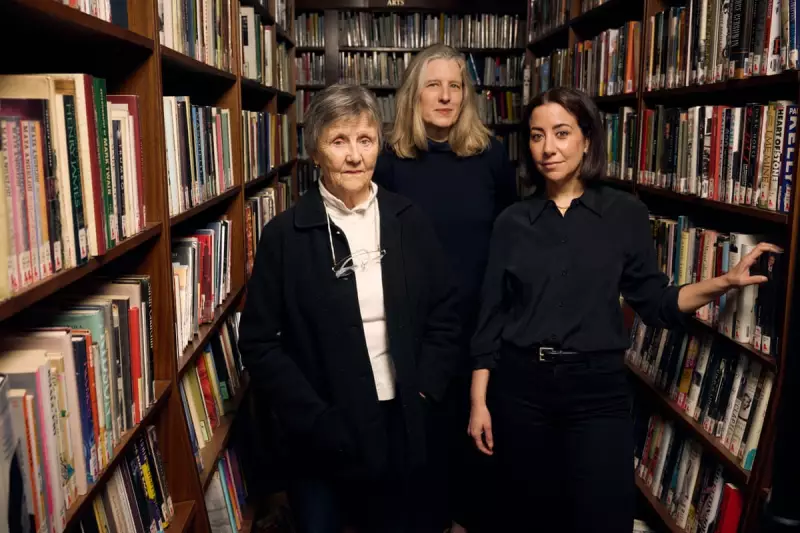
Three of Australia's most distinguished writers, Helen Garner, Chloe Hooper, and Sarah Krasnostein, found themselves grappling with profound ethical questions when they decided to cover the sensational Erin Patterson mushroom murder trial. Their collaboration resulted in The Mushroom Tapes, a unique book that documents their experience through edited transcripts of their conversations during the ten-week court proceedings.
The authors confess to experiencing significant internal conflict about their involvement. "None of us wants to write about this. And none of us wants to not write about it," they reveal in the book's opening pages. This ethical tension permeates their entire project as they navigate the complex territory of reporting on a horrific crime that claimed three lives.
An Unconventional Approach to True Crime Writing
The structure of The Mushroom Tapes emerged organically from the logistical and ethical challenges of covering the trial. Rather than presenting a traditional narrative account, the book comprises heavily edited transcripts of recorded conversations, emails, and phone calls exchanged between the three writers during their time covering the case.
They accumulated a staggering 265,000 words of raw recorded material, which they meticulously edited down to the final 50,000-word book. The authors established strict rules to maintain authenticity, avoiding what Sarah Krasnostein describes as "putting too much lipstick on things that were said spontaneously." Chloe Hooper emphasised that excessive polishing would have compromised the natural flow and genuine quality of their discussions.
The project began as something resembling a literary road trip, with the women making regular two-and-a-half hour journeys from Melbourne to Morwell, where the trial was held. Their immediate post-court recordings captured raw, unfiltered responses to the evidence presented each day.
Grappling with the 'Banality of Evil'
As the trial progressed, the writers found themselves confronting what philosopher Hannah Arendt famously termed "the banality of evil." Initially open to the possibility that the situation might be more complex than it appeared, they gradually realised that Patterson's actions stemmed from what Chloe Hooper describes as "a kind of mundane, self-absorbed indifference" rather than clear financial motive or grand passion.
The case involved the poisoning of four members of Patterson's estranged husband's family with death cap mushrooms served in a beef wellington dish. The evidence revealed a web of petty lies, escalating deceptions, and bizarre elements including fake cancer claims and a non-existent cat.
Sarah Krasnostein noted that while they initially considered the possibility of a great injustice, "as the trial progressed, it became more and more clear that this was perhaps far less complex than we had imagined."
Helen Garner, renowned for her trial coverage, admitted she wasn't initially enthusiastic about this case. However, she found herself drawn in by what she describes as "the familiar stirrings of reportorial desire" – a phrase borrowed from Janet Malcolm's The Journalist and the Murderer.
Feminist Perspectives on a Female Killer
The three writers frequently discussed the gendered aspects of the case, from media portrayals of women who kill to the frustrations of intelligent women confined to domestic roles. They pondered where Erin Patterson's "unused intellectual energy" might have been directed – whether toward "a weird sense of superiority" or "researching the hell out of mushrooms."
Krasnostein drew parallels with mythological figures, mentioning "the Adam and Eve thing with the apple" and the sorrow contained within such stories, likening it to Medea – though in this case, the woman slaughtered her husband's parents rather than his children.
The setting of Morwell, with its eternal fog, coal dust, and pubs, almost becomes a character in the book. The authors documented their nightly motel sessions where they debated their ethical concerns about covering the trial. Hooper questioned whether "our bearing witness actually more high-minded, or are we dressing up our own motives?" to which Garner sharply responded, "I would hate to think I was just perving."
The Enduring Mystery of Erin Patterson
Despite their extensive immersion in the case, Helen Garner confesses that Erin Patterson remains an enigma. "There's something about her that remains mysterious to me, and I think that will always be the case," she admits. Unlike other murder cases she has covered where she felt she could understand the perpetrator's motivations, Garner found Patterson impenetrable.
As the trial stretched beyond its predicted five weeks, the writers faced the grim possibility of a hung jury or even a not-guilty verdict, given the predominantly circumstantial evidence. Garner expressed panic at the thought of enduring a retrial, stating "I'm too old, I can't go back there. I can't do this again."
Since the book's completion, Patterson has appealed against her convictions, maintaining her innocence and claiming the deaths were a terrible accident. The Mushroom Tapes offers readers a unique window into not just the trial itself, but the complex ethical and emotional journey of three writers determined to find meaning in one of Australia's most baffling murder cases.
The Mushroom Tapes by Helen Garner, Sarah Krasnostein and Chloe Hooper will be published in the UK on 20 November (W&N, £20).