The Hungarian town of Gyula, famed for its sausages and castle, is preparing to house a unique new treasure: an official copy of a Nobel medal. This honour follows local author László Krasznahorkai winning the Nobel Prize in Literature, a victory celebrated on billboards throughout the tranquil eastern town.
A Nobel Celebration in a Divided Nation
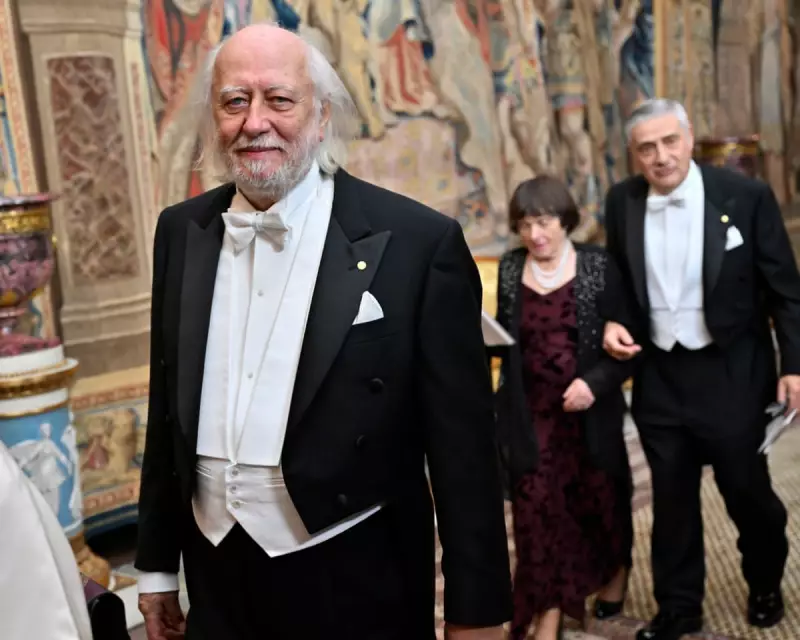
In December, as the 71-year-old writer accepted his medal in Stockholm, residents of Gyula gathered in their wood-panelled library to watch the ceremony live. The town hosted a week of readings and exhibitions dedicated to Hungarian Nobel laureates. Yet, the guest of honour was absent, not merely due to the award ceremony. Like numerous Hungarian artists today, Krasznahorkai no longer resides in his homeland.
As Prime Minister Viktor Orbán's Fidesz government gears up for its most challenging re-election campaign since 2010, authors and human rights organisations describe an increasingly repressive climate. The state has seized control of a major publisher, homophobic legislation dictates what appears in bookshops, and writers report ever-shrinking opportunities.

In a poignant interview with Swedish broadcaster SVT, Krasznahorkai compared Hungary to an alcoholic parent. "My mother drinks, she loses her beauty, she fights," he stated. "Still, I love her." This sentiment captures a complex national relationship felt by many exiled intellectuals.
An Exodus of Talent and a Squeeze on Independence
Award-winning author Gergely Péterfy, who now lives in southern Italy, cited politics as a key reason for his departure. "In the past 15 years, it has become very difficult to live in Hungary because of Orbán's anti-culture stance," he explained. This exodus is compounded by a systemic squeeze on independent voices.
Under Fidesz, governmental control has extended over universities, galleries, and media. The national cultural fund, chaired by the culture minister, now funnels money away from independent periodicals towards pro-government journalists. Remaining independent literary outlets face severe financial strain as state influence over advertisers grows.
"I don't know any young writer [in Hungary] who makes a living," said 32-year-old author Csenge Enikő Élő. She lamented the extreme polarisation in funding, where one side receives disproportionate support while the other struggles.
Political Campaigns Reshape the Literary Landscape
The government has invested heavily in the conservative Mathias Corvinus Collegium (MCC), chaired by Orbán's political director. In 2023, MCC acquired a 98.5% stake in Libri, Hungary's leading publisher and bookshop chain. Soon after, Libri shops began wrapping books depicting same-sex relationships in plastic, complying with Fidesz's "child protection" law.
Krisztián Nyáry, creative director of the rival Líra bookshop chain, stated, "A significant portion of literary works were effectively banned for the sake of a political campaign." Líra has been repeatedly fined for defying the law and is challenging the penalties in court.
The educational sphere has also been affected. In 2020, teaching unions expressed outrage when the works of József Nyírő, a member of Hungary's second world war far-right government, were added to the mandatory school curriculum. Meanwhile, texts by Holocaust survivor and Hungary's first Nobel literature laureate, Imre Kertész, were removed.
Despite Krasznahorkai's criticism of the government—which he recently called "a psychiatric case" over its stance on Russia and Ukraine—his Nobel prize sparked nationwide celebration, transcending political divides. His editor, János Szegő, noted the government had done little to promote the author internationally, but the win was a profound moment. "It's a great confirmation for a small language that's always wary of extinction," he said.
Back in Gyula, Fidesz mayor Ernő Görgényi focused on local pride, planning a plaque for the writer's childhood home and a school library in his name. For resident Márta Becsiné Szabó, 75, politics was irrelevant. "The important thing is that he is from Gyula, and that he is Hungarian." Yet, for the country's literary community, the Nobel glow cannot mask a deepening and hostile environment.