A groundbreaking new documentary has unveiled the profound and previously little-known wartime origins of one of children's literature's most enduring characters: Pippi Longstocking. The film reveals how Swedish author Astrid Lindgren crafted the iconic, pigtailed free spirit as a direct creative and ideological response to the horrors of the Second World War and the shadow of Hitler's regime.
The War Diaries: A Literary Forerunner
The documentary, titled 'A World Gone Mad – The War Diaries of Astrid Lindgren', is set for its international premiere early next year. Directed by veteran German filmmaker Wilfried Hauke, it pieces together the author's life during the conflict through her personal writings. "After I have worked so many years making the film, I am totally clear that Pippi is a child of the war. She never would have existed if there were not these terrible times," Hauke states unequivocally.
The film draws extensively on 17 small, handwritten schoolbooks that constituted Lindgren's wartime diaries. These were discovered in her Stockholm flat and published in 2015, over a decade after her death in 2002. Hauke identifies these intimate journals as the crucial forerunner to her celebrated children's stories.

In 1939, Lindgren was a housewife in her early thirties, living a quiet middle-class life in Stockholm with her two children. Her husband, Sture, worked for the Swedish National Association of Motorists and was often absent. Despite Sweden's official neutrality, Lindgren was a fervent anti-Nazi and a dedicated news follower. She meticulously cut out newspaper accounts of the war, pasting them into notebooks.
Confronting Darkness Through Writing
Her perspective shifted dramatically when she took a secret wartime job at a postal control centre. Here, she steamed open and read private and military correspondence. This clandestine work brought the Nazi atrocities into stark, horrifying focus. In May 1941, she recorded in her diary that she had learned 1,000 Jews a day were being "forcibly transported to Poland in the most shocking conditions." She noted it was "apparently Hitler's intention to make Poland into one big ghetto where the poor Jews are to perish from hunger and squalor."
"As long as you're only reading about it in the paper you can sort of avoid believing it but when you read it in a letter … it suddenly brings it home, quite terrifyingly," she wrote. Hauke observes that her diary entries grew increasingly emotional as she witnessed what she believed was the collapse of European culture.
The creation of Pippi was born from this darkness, both global and personal. The name itself was coined by Lindgren's daughter, Karin, during bouts of childhood illness. The tales were initially oral, a distraction. Then, in 1944, after Lindgren sprained her ankle and was confined to bed for three weeks, she began writing and editing the first Pippi Longstocking stories in earnest.
This creative surge coincided with a profound personal crisis: the breakdown of her marriage after discovering her husband's infidelity. "But then she felt she had something of her own which was her writing. This made her strong again and helped her go through this crisis," Hauke explains.
Pippi as the Antithesis to Authoritarianism
Lindgren's great-grandson, Johan Palmberg, who is the rights manager at the family company, Astrid Lindgren Aktiebolag, offers unique insight. He remembers her remarkable ability to communicate with children on their own terms. "She didn't ask boring grownup questions. She asked interesting child questions," he recalls.
He posits that Pippi's explosive popularity upon publication in 1945 was no accident. "The world had been in this terrible situation for many years and she comes as this fresh breath of air. She's the antidote to the authoritarian regimes of Germany and the Soviets," Palmberg says. "She has all these characteristics of independence, free-thinking and kindness which is the antithesis to the Nazi ideology."

Hauke concurs, linking Lindgren's mission to her fears about childhood education in a traumatised world. She was deeply concerned with how to raise children "not to be psychopaths like Hitler or authoritarians, dictators and so on." In Pippi, she created the ultimate model of resilient, kind, and unbowed individualism.
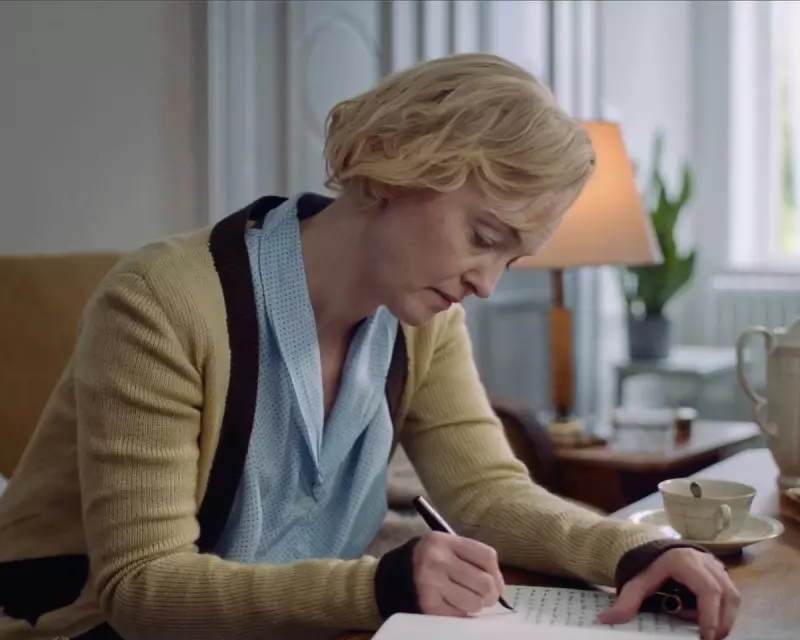
The documentary features three generations of the Lindgren family and includes dramatic reconstructions starring Swedish stage actor Sofia Pekkari as the author. Notably, the executors ensured every word Pekkari speaks is taken verbatim from Lindgren's own diaries and recorded statements.
As Pippi Longstocking's 80th anniversary celebrations continue, her legacy feels more relevant than ever. "Her independence, kindness and generosity are needed more than ever," Palmberg asserts, reflecting on a world that still grapples with conflict and authoritarianism. The film serves as a powerful testament to how one of literature's most joyful characters was forged in resistance to history's darkest hour.