A groundbreaking 16th-century Spanish novel, written by a woman and published six decades before Cervantes penned Don Quixote, is being introduced to a new generation through a vibrant illustrated adaptation.
Rescuing a Pioneer from Obscurity
Beatriz Bernal's Cristalián de España was first published in 1545, making it the earliest known work by a female Spanish novelist. Despite its historical significance, the 800-page epic of knights, dragons, and sorcerers has been largely confined to academic study, overshadowed by the later success of Cervantes's masterpiece.
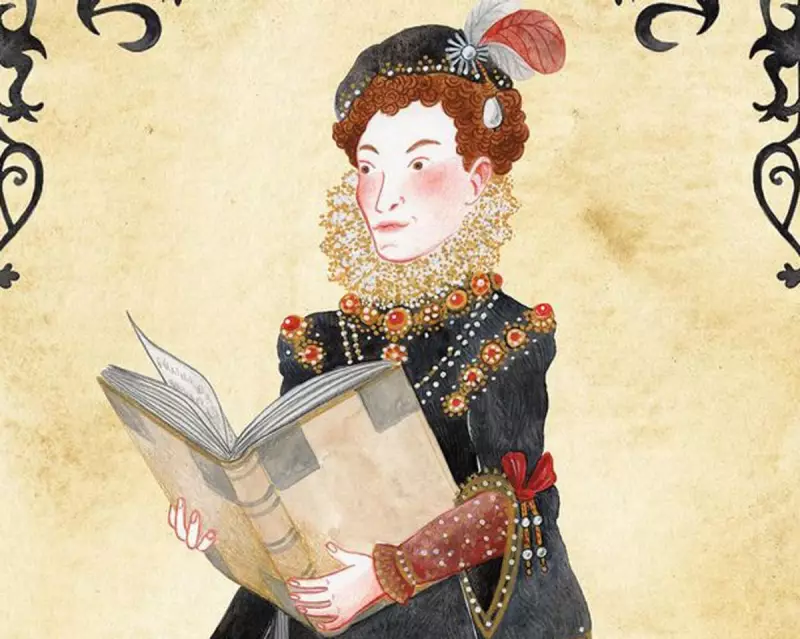
The new adaptation, titled Las aventuras del caballero Cristalián (The Adventures of Cristalián the Knight), seeks to change that. Its creator, children's author Diego Arboleda, first encountered Bernal at university. "She's one of those writers who are studied a lot but who haven't managed to break out of the cage of academic studies," Arboleda noted, pointing out the irony that chivalric romances like Bernal's were widely popular in their day.

A Female Vision in a Masculine Genre
Born into a wealthy family in northern Spain, Bernal published her novel in her early forties. The initial 1545 edition did not carry her name, being attributed only to "a noble and native lady of the most loyal town of Valladolid." It was the posthumous 1587 edition that finally credited her as the author.
Arboleda, who rediscovered Bernal's work during Spain's Covid lockdown, was captivated. "I love the text itself but I also love her as an author," he said. "There was this woman in the 16th century who was writing a book that was full of fantasy and imagination."
He emphasises the novel's progressive characterisation. "She has this female vision within a genre that was very masculine. Her female characters aren't passive, they're strong and active." He highlights figures like the sorceress Membrina, who is so wise she refuses to marry to avoid being ordered about, and the errant knight Minerva, a powerful and brave warrior. "Instead of a princess who has to be saved by a knight, you have Minerva the knight saving people."
A Fun, Fantastical Read for Modern Audiences
Beyond its historical importance, Arboleda insists the book is tremendously entertaining. He describes a female giant who pilots a dragon not by riding it, but by entering through a door in its side. "It's like a plane or like the bus from Hayao Miyazaki's My Neighbour Totoro," he said. "There are so many details like that."
Academic Donatella Gagliardi, who has written about Bernal, states the author's work "legitimised the female voice" in a male-dominated literary world. "From her pen sprang unforgettable female characters," Gagliardi said.
Arboleda's adaptation, illustrated by Eugenia Ábalos and published by Anaya, condenses two adventures from the novel's second edition. He hopes it will connect with young readers, showing them a world not so different from Arthurian legend or The Lord of the Rings.
"Historically speaking, everything was against Beatriz Bernal," Arboleda reflected. "She was a woman and she was choosing not to write a 'virtuous' book about religion... Instead, she wrote in this chivalric genre." He finds a small justice in the book's revival: "It's not revenge, it's just seeing that after such a long time, people are enjoying her text."