Eric Huntley: A Legacy of Radical Publishing and Activism
Eric Huntley, who has passed away at the age of 96, leaves behind a profound legacy as a co-founder of one of Britain's most significant black publishing houses and a tireless campaigner for racial justice. Alongside his wife, Jessica, he established Bogle L'Ouverture in London in 1968, a venture that began humbly in their west London living room but grew to become a cornerstone of black cultural and intellectual life in the UK.
The Birth of Bogle L'Ouverture
Named after two heroes of black resistance, Paul Bogle and Toussaint L'Ouverture, the publishing house was initially self-financed and operated from the Huntleys' home in Ealing. Their first publication in 1969 was The Groundings With My Brothers by the influential Guyanese activist Walter Rodney, who had inspired the couple. This marked the start of a mission to amplify black voices that were often marginalised by mainstream publishers.
By 1975, the operation had expanded into the Bogle L'Ouverture bookshop, which served not only as a retail space but also as a vital community hub and informal advice centre. It became a beacon for black literature, championing authors such as Linton Kwesi Johnson, Valerie Bloom, Lemn Sissay, Beryl Gilroy, and Donald Hinds. The shop was later renamed the Walter Rodney bookshop following Rodney's assassination in 1980, honouring his enduring impact.

A Champion of Black Intellectuals
The Huntleys' commitment extended beyond publishing to fostering global connections among black thinkers. They played a key role in creating the International Book Fair of Radical and Third World Books, which ran from 1982 to 1995. This event united and amplified the voices of black intellectuals, creatives, and activists across continents, solidifying their status as pivotal figures in the diaspora's cultural landscape.
Despite facing challenges, including racist attacks on their bookshop during the late 1970s when support for the National Front was at its peak, Eric Huntley remained resolute. After repeated vandalism, he led fellow black bookshop owners in picketing the Home Office, successfully pressuring the police to provide better security and take such crimes seriously. Bogle L'Ouverture continued until 1991, with Huntley attributing its decline to rising rents and cuts to grants, noting that the business was never intended to turn a profit.
Early Life and Political Awakening
Born in Georgetown, British Guiana (now Guyana), in 1929, Eric was one of twelve children. A bright pupil, he was unable to attend high school due to family hardship, instead working as a postal messenger and briefly training as a Methodist preacher. In 1948, he met Jessica Carroll, and they married in 1950, moving to Buxton where Eric worked as a postman.
His political consciousness was ignited by the tensions between labour unions and British authorities in Guyana. He collaborated with Marxist politicians Cheddi and Janet Jagan and Forbes Burnham to help form the People's Progressive Party in 1950, campaigning for independence. After the party's electoral victory in 1953, the British government declared a state of emergency, leading to Huntley's arrest in 1954 for breaking a curfew. He spent a year in Georgetown prison, an experience he later described as "mental torture," especially as his father worked there as a warder.
Migration to Britain and Community Advocacy
Seeking a safer life, Huntley moved to Britain in 1957, initially leaving behind Jessica and their two young sons. He secured work at the Mount Pleasant sorting office in London and studied at night school while saving to bring his family over, who joined him in 1962. In London, they faced housing struggles, at one point lodging with Trinidadian friends John and Irma La Rose, whose home was a hotbed of political discussion about decolonisation, which Huntley likened to a "university."

Beyond publishing, Huntley was deeply involved in racial justice campaigns in the UK. He was a key figure in the Caribbean Education and Community Workers Association, formed in response to the racist labelling of black children as "educationally subnormal," and the Black Parents Movement, which campaigned against "sus" laws that disproportionately targeted young black people. He also participated in the Black People's Day of Action in 1981, a response to the New Cross fire that killed 13 young black people, highlighting police inaction in the face of suspected racist arson.
Later Years and Enduring Impact
After the bookshop closed, the Huntleys continued publishing intermittently from their home, with Jessica focusing full-time on the business and Eric working part-time as an insurance salesman. Eric's activism persisted well into his later years, as he often remarked that "the struggle never ends: there is always something to fight for." Following Jessica's death in 2013, he created a community garden in Ealing in her honour, a testament to their lifelong dedication to community building.
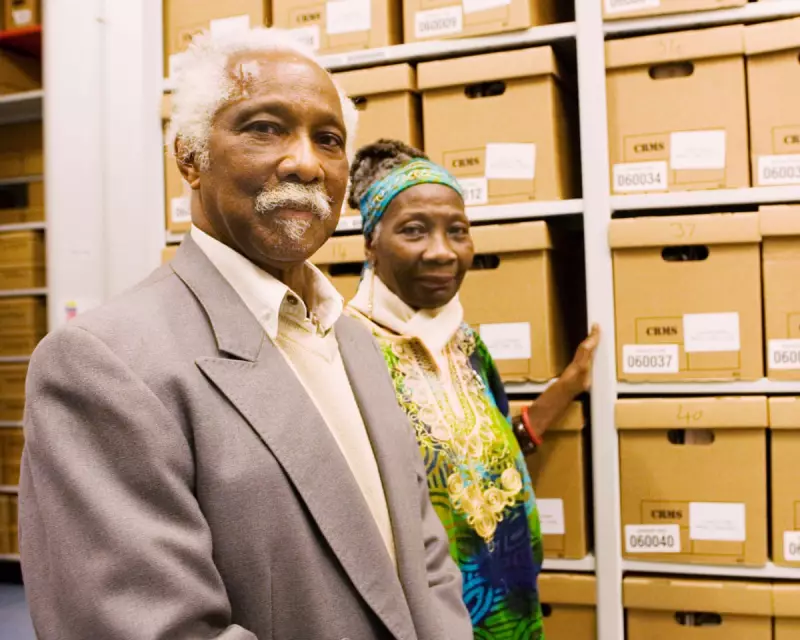
The Huntleys' archives, now held at The Friends of the Huntley Archives at the London Metropolitan Archives, preserve their legacy of activism and publishing. Eric Huntley is survived by his sons Chauncey and Accabre, nine grandchildren, 15 great-grandchildren, and a great-great grandchild, leaving a rich heritage of resilience and empowerment.