Author's Indigenous Identity Unravels After Genealogical Investigation
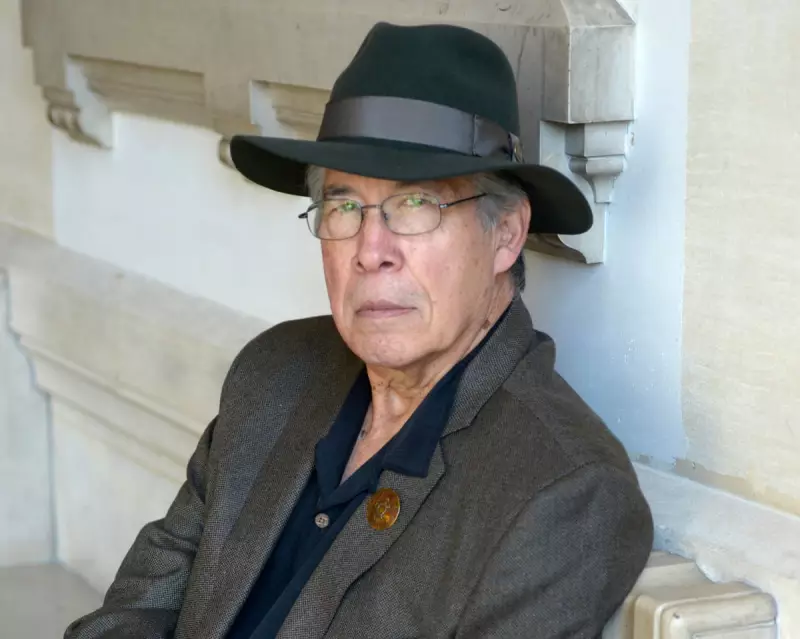
In a startling revelation that has sent shockwaves through literary and Indigenous communities, acclaimed Canadian-American author Thomas King has publicly acknowledged he has no Cherokee ancestry despite having identified as Indigenous throughout his career. The 82-year-old writer learned the truth after meeting with genealogists from the Tribal Alliance Against Frauds (Taaf), who found no evidence of Cherokee heritage on either side of his family lineage.
The Emotional Revelation
King detailed his profound personal crisis in a deeply personal essay titled "A most inconvenient Indian" published in Canada's Globe and Mail. "It's been a couple of weeks since that video call, and I'm still reeling," King wrote. "At 82, I feel as though I've been ripped in half, a one-legged man in a two-legged story. Not the Indian I had in mind. Not an Indian at all."
The author explained that rumours had been circulating in recent years within both artistic and Indigenous circles questioning his claimed Cherokee background. In mid-November, he confronted these doubts directly by meeting with Taaf, a North Carolina-based organisation dedicated to exposing perpetrators of Indigenous identity fraud.

Family History Reexamined
For decades, King had maintained a family narrative that his biological father was not Robert King, but rather Elvin Hunt - a man believed to have Cherokee ancestry. This story formed the foundation of his identity as "mixed-blood Cherokee" throughout his professional life as an activist, academic, administrator and writer.
However, the genealogist working with Taaf thoroughly investigated both sides of King's family tree and found no documentation or evidence supporting any Cherokee lineage. King has stated he accepts these findings without reservation.
Literary Legacy and Awards
Thomas King's career has been distinguished by numerous prestigious honours. He won the 2014 RBC Taylor prize for non-fiction for his celebrated work The Inconvenient Indian and received the 2020 Stephen Leacock memorial medal for humour for Indians on Vacation. That same year, he was promoted to companion of the Order of Canada, recognised for his "prolific and groundbreaking work" that has "changed our perception of Canadian history."
Born in California, King moved to Canada in 1980 to teach Indigenous studies at the University of Lethbridge in Alberta. His work has been praised for using "formidable wit to explore the social, economic and political dimensions of the modern Aboriginal experience," according to Canada's governor general.
Consequences and Reflections
In response to these revelations, King told the Globe and Mail he intends to return the National Aboriginal Achievement award he received in 2003. "The rest of my awards are based on my writing, not my ethnicity," he clarified, drawing a distinction between honours recognising his literary merit versus those tied to Indigenous identity.
When Taaf suggested he might offer an apology, King responded thoughtfully in his essay: "An apology assumes a crime, an offence, a misdeed. And I don't think that's appropriate. Throughout my career... I've conducted myself in the belief that I was mixed-blood Cherokee." However, he acknowledged that now knowing the truth, "if I chose to withhold that information then an accusation of fraud would have merit."
King becomes the latest prominent figure whose claims to Indigenous ancestry have been disproven, following recent revelations about folk singer Buffy Sainte-Marie's background. His case raises complex questions about identity, heritage and authenticity in literary and Indigenous contexts.