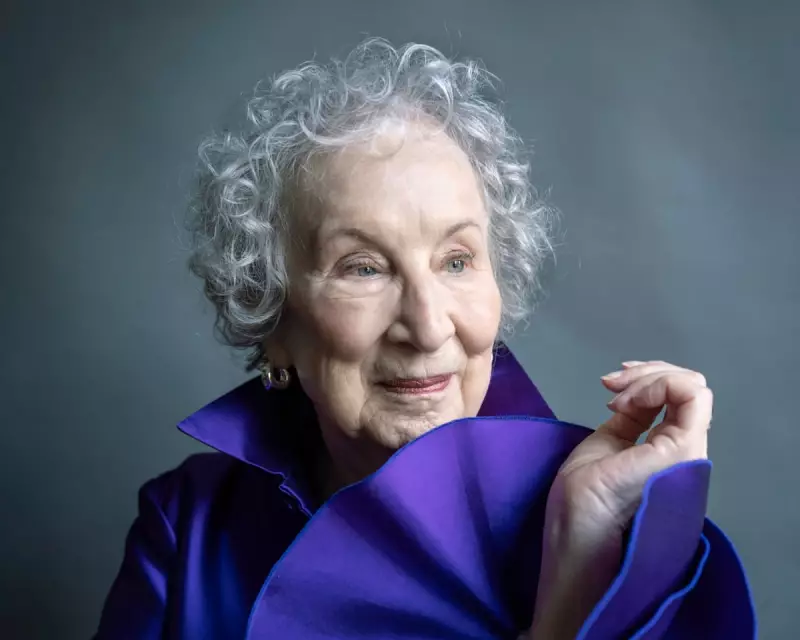
Acclaimed Canadian author Margaret Atwood has issued a stark warning, stating that the dystopian vision of her seminal novel, The Handmaid's Tale, has grown "more and more plausible" in recent years. Atwood made the comments during a candid interview on BBC Radio 4's long-running programme, Desert Island Discs.
From "Bonkers" Concept to Chilling Possibility
Reflecting on the novel's origins in the 1980s, Atwood revealed she initially considered the premise "bonkers." At the time, the United States was widely viewed as the "democratic ideal" and a beacon of freedom, making its descent into a theocratic dictatorship seem unthinkable to many, particularly in Europe.
"I've always been somebody who has never believed it can't happen here," Atwood told host Lauren Laverne. "It can happen anywhere, given the circumstances." She pinpointed the year 2016 as a significant turning point, after which the world entered a period where the novel's themes felt "much closer."

"Not the outfits. I don't think we're going to get the outfits," she quipped, referring to the iconic red cloaks and white bonnets worn by the handmaids. "But the rest of it seems more and more plausible."
A Symbol of Protest and a Warning for America
Published in 1985, The Handmaid's Tale depicts the Republic of Gilead, a totalitarian regime that seizes control of the US and subjugates women, forcing them into reproductive slavery. The 2017 television adaptation, starring Elisabeth Moss, amplified the story's cultural impact.
The handmaid's distinctive costume has since been adopted as a potent symbol of protest, notably against the policies of former President Donald Trump and the subsequent overturning of the Roe v. Wade ruling, which dismantled federal abortion rights in the US.
Despite her grave concerns, Atwood expressed faith in the resilience of the American people and the unsustainable nature of such oppressive systems. "These kinds of regimes don't last, partly because they become unsustainable. This particular one seems quite chaotic," she observed.
She added, "Also, let us not count America out... Americans are quite ornery. They do not like people telling them all to line up and do what they're told."
Artistic Freedom as a Barometer for Liberty
Atwood, whose sequel The Testaments jointly won the Booker Prize in 2019, offered a pointed metric for measuring totalitarianism. In a previous interview with The Guardian in November, she noted that the very fact filming for the TV adaptation of The Testaments could proceed was proof the US was not yet under "full totalitarianism."
"The States is not a totalitarianism – yet," she cautioned. "Though moving towards a concentrated-power structure. If it were a full totalitarianism we would not be filming The Testaments at all. We'd be in jail, in exile, or dead."
Her analysis presents a dual narrative: a clear-eyed warning about the erosion of rights and democratic norms, coupled with a belief in the fundamental orneriness and diversity that she hopes will prevent Gilead from becoming a reality.