The year 2025 has proven to be a remarkable one for poetry, characterised by a wave of daring creativity and formal innovation. Many of the most notable collections have been driven by a spirit of wild experimentation, actively testing the boundaries of what poetry can be.
Forward Prize Makes History and Experimental Voices Shine
This year, the prestigious Forward Prize for best collection made history by awarding two winners for the first time. Karen Solie’s "Wellwater" (Picador) confronts environmental catastrophe with a sharp focus on the economic systems that led to the crisis. Her refreshingly clear tone offers no easy comfort, as seen in lines like "Under the darkest night skies on Earth / an explanation is not forthcoming." The other joint winner is Vidyan Ravinthiran’s "Avidyā" (Bloodaxe), a collection drawing on the poet's travels to northern Sri Lanka and his life in the US. These journeying poems are rich with linguistic invention, showcasing a deep immersion in the English canon.
In the realm of bold experimentation, Sarah Hesketh’s "2016" (CB Editions) stands out. The book transforms fragments from interviews about the events of that year into haunting prose poems, creating a powerful cumulative effect. Luke Kennard’s "The Book of Jonah" (Picador) daringly relocates the biblical prophet to a world of futile arts conferences, while Nick Makoha’s "The New Carthaginians" (Penguin) uses Jean-Michel Basquiat’s collage techniques as a poetic device.

Celebrated Returns and Powerful Debuts
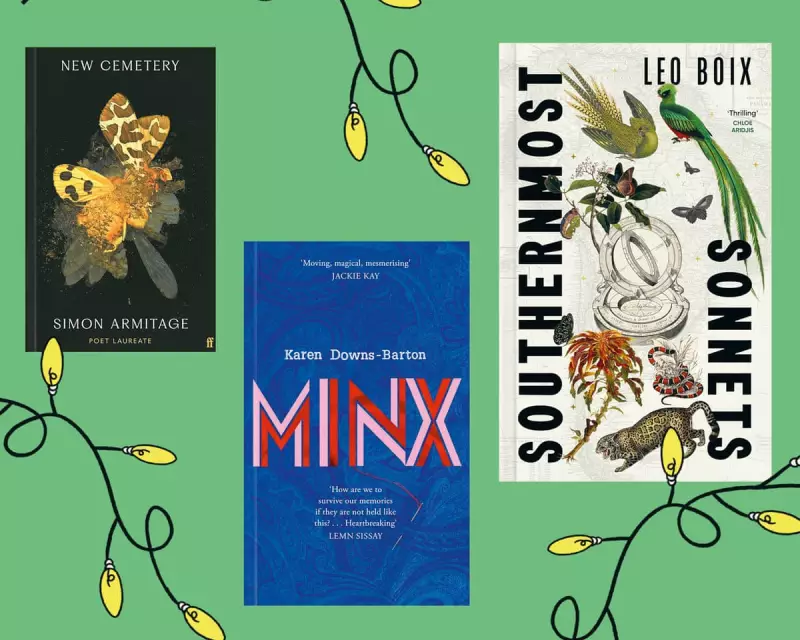
2025 also saw significant publications from established masters and electrifying new voices. The arrival of "The Poems of Seamus Heaney" (Faber), collecting many previously uncollected works, is a major literary event, reaffirming his towering legacy twelve years after his death. Poet Laureate Simon Armitage had a prolific year, publishing two collections: "New Cemetery," which reflects on death in fast-flowing tercets, and "Dwell," a joyful celebration of animal life.
Among the standout debuts, Isabelle Baafi’s "Chaotic Good" (Faber), winner of the Forward Prize for best first collection, dissects a toxic marriage with playful yet sharp precision. Karen Downs‑Barton’s "Minx" (Chatto & Windus) is equally eye-catching, unsparingly detailing her time in the care system and discrimination faced from an Anglo-Romany background, enriched by the use of Roma language.
Anthologies and a Collection of Lasting Brilliance
The most important anthology of the year is arguably "Nature Matters" (Faber), edited by Mona Arshi and Karen McCarthy Woolf. By showcasing nature poetry by poets of colour, it radically redefines the genre and centres its political dimensions.
One collection, however, has left an indelible mark on critics and readers alike. Richard Scott’s second book, "That Broke Into Shining Crystals" (Faber), handles trauma and its aftermath with astonishing beauty. From a bold remix of Andrew Marvell to breathtaking ekphrastic poems on still lifes, Scott connects pain to painting in mesmerising ways, resulting in what many consider one of the bravest and most brilliant collections of recent years.