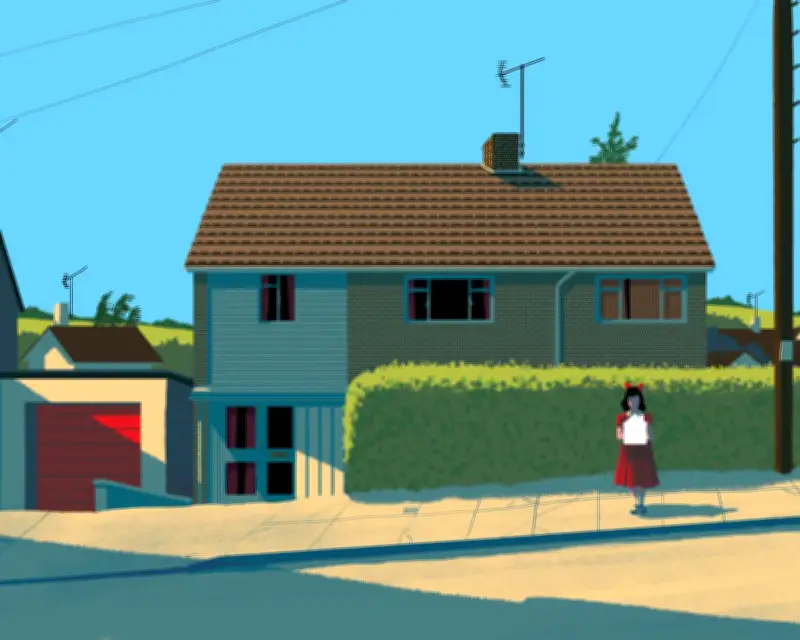
Six writers, including novelists Esther Freud and Deborah Levy and comedian Alexei Sayle, have revisited their childhood homes, uncovering a range of powerful emotions from warmth and nostalgia to sadness and dislocation. The journeys highlight how these early environments continue to shape identity and emotional well-being long into adulthood.
Psychotherapist Julia Samuel finds unexpected feelings
Psychotherapist and author Julia Samuel took her best friend to see her childhood home in Kensington, west London, where she lived with her parents and four siblings from age one until 20. The house was sold 43 years ago, and she had not been inside since she was 23. Walking through nearby Holland Park, Samuel felt her body remember before her mind did, recalling family picnics and teenage cigarettes.
Standing across the street, she saw the current family enter the house and felt an unexpected punch in her stomach, briefly wanting to call out. She realized she did not want to go inside, preferring to preserve the architecture of her memory. Samuel, who works as a psychotherapist, noted that people rarely return to childhood homes because they miss the building itself, but because they are revisiting earlier versions of themselves.

Alexei Sayle confronts a changed Anfield
Comedian Alexei Sayle returned to his old house on Valley Road in Anfield, Liverpool, where he lived until moving out in 1971 at age 19 to attend Chelsea School of Art. On this visit, he described being hit by an emotional hurricane, feeling like someone kidnapped and dumped on an unfamiliar street corner. He observed that 95% of nearby shopfronts were shuttered, with only a taco and churros takeaway still open.
Sayle found hope in grassroots initiatives like the Homebaked Cooperative Bakery, which reopened in 2013 after closing in 2010. He noted that the building had been a bakery for over 100 years, one he remembered visiting as a child. The experience was surprisingly gruelling, and he questioned whether he would visit again, wondering what unsettling effect it might have at age 84.
Esther Freud revisits The Old Laundry
Novelist Esther Freud, who lived in a converted laundry in East Sussex between ages eight and 14, returned decades later. The house, owned by her stepfather, was where she was happy, with meals around a big old kitchen table and feasts from an Aga. She described the household breaking apart suddenly when her mother left, and she never returned until much later.
Knocking on the door, the new owners showed her around. The house was smaller and tidier, her old bedroom turned into a dining room, and trees that shaded it had fallen in the storm of 1987. Freud concluded that The Old Laundry was nothing but a shell, and the real house now only existed inside her head.
Deborah Levy and Guy Gunaratne reflect on memory
Writer Deborah Levy, who grew up in a bungalow in Johannesburg, South Africa, described her childhood home as her first universe. She recalled the dark, cool interior, the sack of oranges in the pantry, and her mother's record player that later played her Bowie vinyl. Levy noted that the house has been redesigned, with the garden now closed off by a heavy door and wall, but she does not have a nostalgic longing to unlock its new mystery.
Novelist and artist Guy Gunaratne visited his childhood home in Neasden, north-west London, where he lived between ages three and nine. He remembered his father, part of the first wave of south Asian immigration, who saw property ownership as a hedge against future precarity. Gunaratne reflected that his father would have recognized the same instinct for community in his own choice of cooperative housing, and he recalled plotting a procession route past his father's old houses after his death last September.
Chloe Aridjis finds the house impossible to enter
Novelist Chloe Aridjis, who lived in the Mexican ambassador's residence in Wassenaar, the Netherlands, from age five for nearly three years, attempted to revisit the property this past April. The cook at the residence told her the ambassadress was in a meeting and could not let anyone in without permission. Aridjis recognized the tall brick chimney and shingled roof, and recalled the garden as the highlight of those years, with a 350-year-old beech tree and her dog Tarzan pulling her through the snow on a plastic sled.

She felt relief that she hadn't written over her memories, and the impossibility of entering the house only strengthened the sense of remove. Aridjis stated she felt quite certain she may never return. The writers' experiences suggest that childhood homes retain a powerful emotional architecture that persists throughout life, shaping early understanding of safety, belonging, and love.