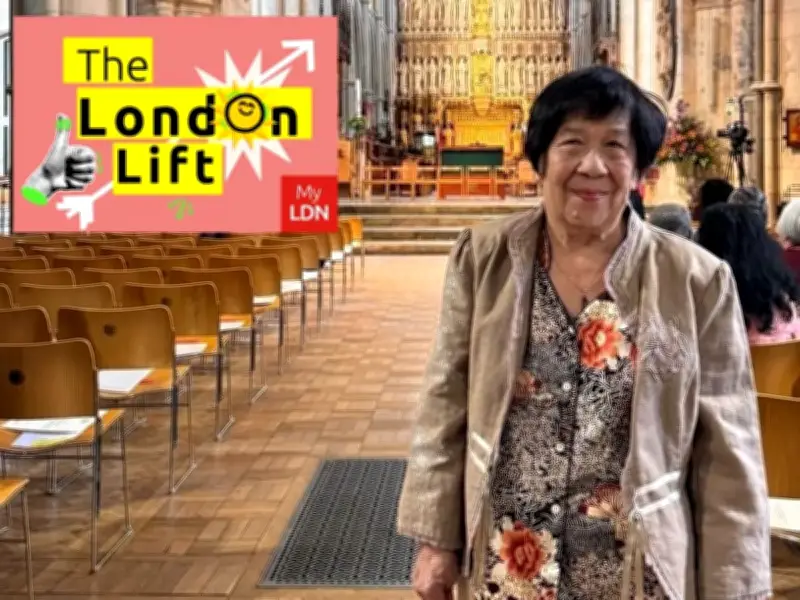
Christine Tan, an 82-year-old resident of South London, has rebuilt her strength to the point of lifting 10kg, a feat that seemed impossible just a few years ago when she could not even lift a cup of tea. Her recovery is attributed to the Lift for Life resistance programme at Guy's and St Thomas' Hospital.
Tan broke her wrist in 2025 and subsequently struggled with everyday tasks such as driving, lifting a cup of tea, and carrying shopping. She credits Guy's and St Thomas' Hospital for playing a pivotal role in her recovery through their Lift for Life programme.
From Disability Fears to 10kg Lifts
Speaking to MyLondon, Tan said: "I'm really privileged that they [the hospital] helped me as I live in the area. At first, I thought I'd be disabled for life after my accident."

She described her initial challenges: "I started off with a few exercises, and when I first went, I couldn't even lift 1kg or even a cup of tea; I had no energy. Every time I went, I would increase the weights, and by the end of 10 weeks, I could do much better. I saw myself improving so much."
Living alone, Tan found daily tasks demanding. "I live alone, and I have to do things on my own, so it was hard, such as shopping and carrying bags, but now I can. I tell people about my experiences and encourage them to go and try. It's important to keep active at our age. I go to the gym about four times a week, doing different classes, and do my best every day to do 10K steps," she added.
Programme Origins and Patient Demand
The Lift for Life programme was introduced by physiotherapist James Cameron in October 2024. His goal was to help older adults improve their strength and balance, ultimately leading to healthy ageing. The programme offers 10 weekly sessions at Guy's Hospital, which is one of the first hospitals to carry out this type of strength training. The classes aim to improve functional fitness and build a programme that people can continue at home or in a local gym.
Cameron explained to MyLondon: "Typically, the patients we deal with are patients who need strength and balance rehab. In my own gym, there's a fundamental exercise class, and I wanted to offer a fundamental resistance programme for older adults. This can help them so they don't fall in the next few years."
He noted the high demand: "We identified patients who needed it but we needed to know if they wanted it. We administered a questionnaire to patients, and over 90 per cent said they would be keen to join a strength-training class."
Measurable Improvements and Programme Structure
Cameron observed significant progress in participants: "You see massive improvements in them, and their confidence increases by the end. Christine, for example, had the confidence to try new things and engaged throughout it [the programme]."
He added: "Seeing people like Christine is very rewarding. Watching their enthusiasm grow, and the support I've had from members of my team, is great. As a team, we are always trying to be as innovative as possible, and we are always looking at improving patient satisfaction."
The programme consists of 16 patients over 10 weeks, with patients encouraged to continue the exercises after finishing. Sessions include resistance training, core, and balance exercises. It typically accepts patients who live in Lambeth and Southwark.
Tan continues her fitness routine with chair yoga on Mondays, zumba on Tuesdays, tai chi on Wednesdays, and a longer strength class on Fridays. She said: "[Lift for Life] was a good programme. I have friends who have broken bones but they were at different hospitals and never got these exercises - I'm lucky that I live here."