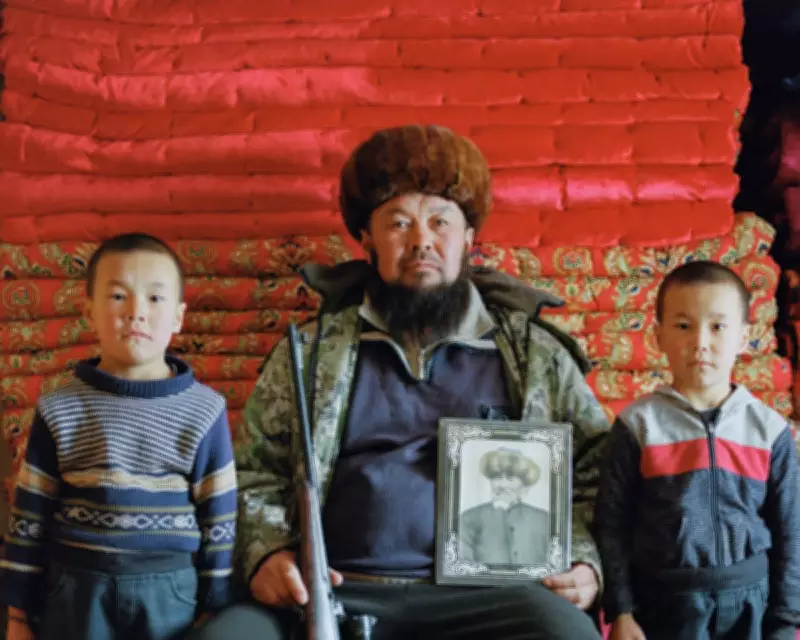
In the remote village of Ottuk, Kyrgyzstan, men protect their precious sheep by heading into the mountains to hunt wolves. Photographer Luke Oppenheimer went to document them for a short assignment in 2021, but ended up staying for four years, capturing an intimate portrait of the villagers and their ancient way of life.
The Project: From a Short Trip to a Four-Year Journey
In the winter of 2021, Oppenheimer traveled to the Tien Shan mountains for a brief assignment on wolves preying on livestock in Ottuk, a remote shepherd village. Each year, wolves kill dozens of horses and countless sheep, forcing men into the surrounding mountains during the harshest months to hunt and protect their herds. What began as a short trip soon grew into a much larger story, resulting in the book Ottuk, published by Aliens in Residence.
Life in the Mountains
The month-long trip expanded into a four-year project as Oppenheimer was gradually accepted into the community and adopted by one of its families. His work is an intimate portrait of the villagers, their way of life, and the landscape that has shaped them. In the mountains, temperatures can swiftly drop to -35°C. If sheep are out overnight, they all die, wiping out an entire family's livelihood. Snow-packed valleys littered with frozen sheep, standing upright like stone statuettes, are a common sight.
There is a saying in Kyrgyzstan: 'It only takes one frost' – meaning a single night can destroy everything. Life is precarious, shaped by elements, injuries, illness, and feuds. The villagers' existence is stripped to essentials: hospitality, loyalty, filial duty, and the weight of one's word.
The Hunters
Nuruzbai, 62, is known as a wild man in the village. He learned to hunt from his father at age 10. His father was a renowned marksman who narrowly escaped being drafted into the sniper division in World War II because his ability to shoot wolves at mining sites and collective farms was deemed necessary for village survival. Nuruzbai still hunts to this day, spending most of his time in the mountains.
Ruslan, 35, started hunting as a teen and now travels around the country shooting wolves for villages suffering from attacks. He is paid in sheep or horses. He lives with his wife and two kids in Ottuk.
Legends and Myths
Kyrgyzstan is a land of legends shaped by mythology and experience. The Kaiberen, a magical deer that once punished a greedy hunter by making him shoot his own son before burying them both in an avalanche, still incites caution in local hunters when choosing their prey. Members of the Bugu tribe refuse to hunt deer out of respect for their ungulate ancestry: according to legend, a mother deer saved a pair of orphans and brought them to the shores of Lake Issyk Kul, where they founded their first village.
These legends are seldom written down. They were told to Oppenheimer on mountain passes, in jeeps crossing endless plateaus, or in remote villages over cups of tea. Park rangers often live in huts for months with little human contact.
Historical Context
Kuban Jumabaev, regional head of the Snow Leopard Foundation, recounts that Kyrgyzstan is filled with myths that people really believe. In the 1970s or 1980s, the USSR tried to see if African wild dogs would survive in one of the parks. Rumors spread and over time it became a story about Russian wolves being imported.
During Soviet times, herders had government support with pre-approved corrals and transport. After the Soviet Union collapsed, these corrals were destroyed for construction materials. Ninety-two-year-old Tokush remembers when wolves entered her house and destroyed her home during collectivization. Despite smoking wolves out, making scarecrows, and shooting them, it was never enough.
Personal Connections
Nadir, Oppenheimer's best friend in Ottuk, recently told him that his eldest son would join the border guards at age 18 and soon marry. Oppenheimer imagined his life unfolding in a bureaucratic position, with only scars on his hands reminding him of calluses from farm work and wolf hunting.
As Oppenheimer looks out the window and into the mountains, he feels as though his friend Ishinbek is sitting beside him. Legends preserve not only the memory of a place and time but of the people who tell them.