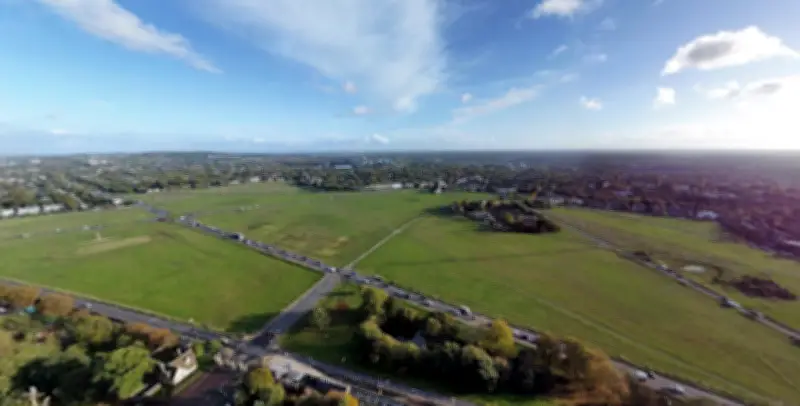
Blackheath, a 275-acre expanse in south-east London, has remained largely untouched for centuries, despite being surrounded by intensive urban development. The land, stretching between Greenwich and Lewisham, is one of the capital's largest surviving areas of open heathland, according to a report by London Now, a sister title of The Herald.
Its survival is not accidental but the result of centuries of history, changing ownership, and legal protection. The University of Greenwich's historical research notes that Blackheath was not technically a common, and ownership was split between the Lords of the Manor, such as the Dartmouth estate, and the Crown's Royal Manor of East Greenwich. Development required the landowner's consent, which was rarely granted.
Poor Soil and Manorial Waste
Initially, the land's unsuitability for farming saved it from development. Historical accounts describe its poor soil, making it more suitable for grazing and extracting chalk, sand, gravel, and stones. These activities left pits and hollows, with some of today's ponds believed to have originated as former gravel pits.
Moreover, Blackheath was historically regarded as "manorial waste," rather than ordinary building land. This classification further discouraged construction, as it was not considered prime real estate for residential or commercial use.
Development Around the Edges
Despite these restrictions, development around Blackheath began in the 15th century. In 1432, Humphrey, Duke of Gloucester, was granted permission to enclose around 200 acres of the northern part of the Heath, which later became Greenwich Park. From the late 17th century, development increasingly appeared around the remaining Heath.
Lord Dartmouth spearheaded development along its western side, and substantial houses and estates later encircled other parts of Blackheath. By the late 18th and early 19th centuries, Blackheath had become a desirable suburb for London's wealthier residents. Homes spread around the perimeter, and Blackheath Village evolved into a significant local centre. Yet, the vast open space in the middle remained.
Protected Since 1871
A pivotal moment in preserving Blackheath's original character came in 1871 when the Heath was taken into public care and protected for Londoners' benefit. Historical records indicate that while the freeholders retained rights over the soil, the land itself was placed under public management.
Today, Blackheath, crossing the boundary between the boroughs of Lewisham and Greenwich, is managed as public open space. This protection has allowed the surrounding city to continue growing, while the centre of Blackheath has remained largely open. More than 150 years later, that decision means one of south-east London's most valuable stretches of land remains largely just as its name suggests – a heath in the middle of the city.
A Stage for History
The undeveloped character of Blackheath has made it the setting for significant moments in English history. Its elevated position and proximity to major routes into London made it a natural meeting and gathering place. Rebels associated with the Peasants' Revolt gathered on Blackheath in 1381, while Jack Cade and his followers camped there during the rebellion of 1450. In 1497, the Battle of Blackheath saw forces loyal to Henry VII defeat Cornish rebels approaching London.
The Heath was also used for royal welcomes, fairs, religious gatherings, and sport. Its position alongside the historic route between London and Kent also gave it a less glamorous reputation, being associated with highwaymen targeting travellers for centuries.
A persistent story claims Blackheath received its name because victims of the Black Death were buried there. However, historical evidence does not support this explanation. The name was recorded centuries ago and is generally understood to refer to the landscape's appearance – essentially a dark-coloured heath. Historical research also states that the name predates the Black Death of the 14th century and rejects the idea that plague victims gave Blackheath its name.
Blackheath Today
Even after becoming protected open space, Blackheath has not always appeared as it does today. During the Second World War, sections were ploughed for food production, while military Nissen huts were erected elsewhere. Some of the old extraction pits were subsequently filled using rubble from buildings destroyed during bombing. The Vanbrugh Pits were left unfilled and survive as a reminder of the much rougher landscape that once characterised the Heath.
Modern Blackheath is almost encircled by development. Greenwich Park lies to the north, Blackheath Village and Lewisham to the south and west, while residential streets stretch towards Kidbrooke and Charlton to the east. Yet, the Heath remains a conspicuous break in London's otherwise densely built-up landscape. It is still used for recreation and public events, and perhaps most famously forms part of the starting area for the London Marathon.
What today appears as an unusually large empty patch on the map is the product of hundreds of years of history. Poor agricultural land helped prevent its early development, historic ownership restricted what could be built, and development largely concentrated around its edges. Then, in 1871, its future as an open space was secured, ensuring that Blackheath remains a heath in the middle of the city.