The Men Behind the Myth: Unravelling the Earp and Holliday Legend
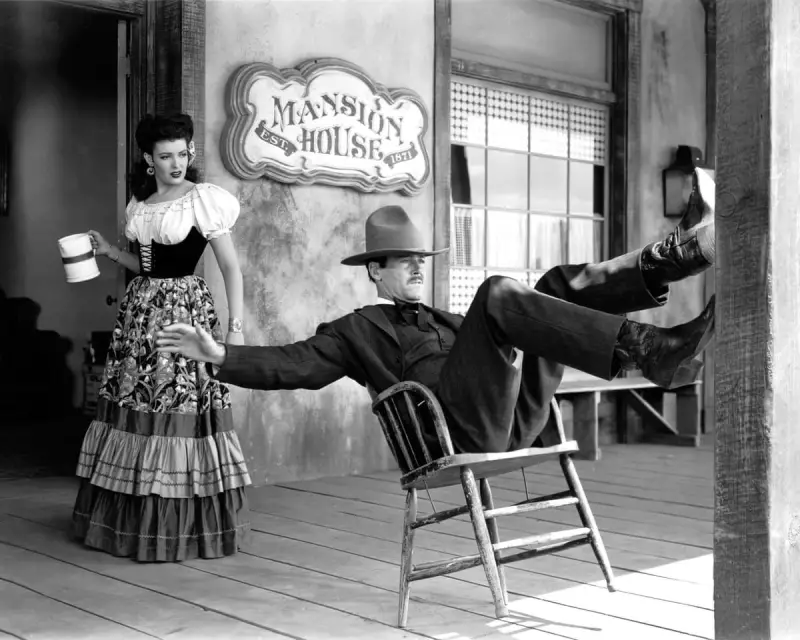
For generations, the story of Wyatt Earp and Doc Holliday has been immortalised in classic Western films, from Henry Fonda's portrayal in My Darling Clementine to Kurt Russell's in Tombstone. Yet, according to historian Mark Lee Gardner, the popular adage from John Ford's The Man Who Shot Liberty Valance—"When the legend becomes fact, print the legend"—is a disservice to the truth. In his new book, Brothers of the Gun: Wyatt Earp, Doc Holliday, and a Reckoning in Tombstone, Gardner drills through decades of myth-making to uncover the complex reality of these two iconic figures.
A Friendship Forged in a Lawless Land
Gardner's book explores the unlikely but enduring friendship between Wyatt Earp, the complicated lawman, and Doc Holliday, the reckless gambler stricken with tuberculosis. Their paths converged famously in Tombstone, Arizona, on 26 October 1881, at the Gunfight at the OK Corral. Alongside Earp's brothers, the pair confronted the Cowboys, a gang wanted for robbery and rustling. In less than a minute, the violent exchange was over, leaving three Cowboys dead and Holliday, Virgil, and Morgan Earp wounded.
Despite being one of many frontier conflicts, this particular shootout entered legend. Gardner, however, cautions against accepting any single narrative as absolute fact. He points to the testimony of Addie Borland, a dressmaker who witnessed the event, who simply stated, "All was confusion." "Every account is slightly different," Gardner explains, highlighting the conflicting reports from the subsequent Spicer hearing. "Even the people involved were confused."
Separating the Man from the Myth
Gardner's scholarly yet engaging work refuses to romanticise its subjects. Wyatt Earp, born in Monmouth, Illinois, in 1848, had a deeply checkered past before finding his footing in law enforcement. After the tragic death of his first wife, Urilla Sutherland, from typhoid in 1870, Earp, then a constable, kept collected tax money for himself and fled. He was later arrested for horse theft and ran a brothel in Illinois, where his common-law wife worked as a prostitute.
Yet, upon moving west, Earp transformed his reputation. In Wichita and later Dodge City, Kansas, he was praised in local newspapers as an outstanding police officer, renowned for his integrity in returning large sums of money to those he arrested. "He was ambitious," Gardner notes. "He wanted to be somebody." This ambition followed him to Tombstone, where he built a house and sought the office of county sheriff.
In contrast, Doc Holliday, born in Griffin, Georgia, in 1851, was a trained dentist whose life was derailed by tuberculosis and a gambling addiction. Gardner describes him as a man who "never really changes," moving from one boomtown to the next, self-medicating with alcohol and laudanum. Unlike Earp, Holliday showed no signs of wanting to settle down, his fatalistic streak becoming a core part of his enduring legend.
Legacy in Lead and Law
Gardner's narrative also illuminates the fascinating bureaucratic and political realities of the Old West, a far cry from the simplistic Hollywood portrayals. The aftermath of the OK Corral was not an end to the matter but the beginning of extensive legal proceedings, including the Spicer hearing to determine if the Earps and Holliday should stand trial for murder. Furthermore, the conflict was steeped in the hard politics of the era, with Earp, a Republican, vying for influence against Tombstone's Democratic sheriff, Johnny Behan.
Wyatt Earp lived until 1929, long enough to see his story begin its transformation into cinema, first depicted in a silent film in 1923. Gardner's Brothers of the Gun serves as a compelling correction to the record, a meticulously researched account that invites readers to look past the dotted-line diagrams of the gunfight and meet the flawed, ambitious, and all-too-human men who became American legends.