A retired Metropolitan Police detective from Wales has spent three decades investigating whether notorious Australian serial killer Ivan Milat murdered his wife's cousin in 1971, as a new parliamentary inquiry prepares to examine dozens of unsolved cases potentially linked to the convicted murderer.
The British connection
Hugh Hughes, a former detective with London's Metropolitan Police, has made numerous trips between his Welsh home and Canberra over thirty years, determined to solve the murder of Keren Rowland. Hughes is convinced that Rowland, who vanished from Canberra on 26 February 1971 while five months pregnant, was the first victim of Ivan Milat.
Rowland was just 20 years old when she disappeared after travelling to Canberra's city centre to collect her sister for a party. Her vehicle was later discovered abandoned on Parkes Way in Campbell, and her remains were found three months later in a pine plantation outside the city.
Hughes has collaborated with Rowland's brother, Steve, to review the original police investigation, though he claims ACT police have obstructed his efforts to obtain information through freedom of information requests, stating the case remains open.
Political pressure for answers
Jeremy Buckingham, a member of NSW's Legislative Council representing the Legalise Cannabis party, has successfully lobbied for a parliamentary inquiry into unsolved murders and long-term missing persons cases spanning 1965 to 2010. The inquiry will begin accepting submissions shortly.
Buckingham believes Milat, convicted in 1994 for murdering seven backpackers whose bodies were discovered in Belanglo State Forest, may have been responsible for more than eighty deaths. He presented NSW Premier Chris Minns with compelling evidence including a 1965 identikit image from the Wanda Beach murders alongside a youthful photograph of Milat, showing striking resemblance.
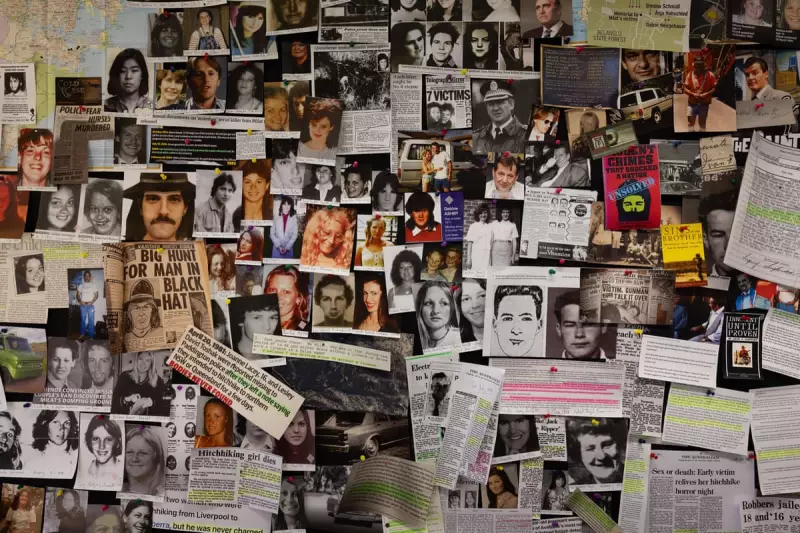
The politician's parliamentary office features an entire wall dedicated to photographs of missing and murdered individuals from the 1960s to 1990s, interspersed with images of Milat. Buckingham argues that resources spent on minor drug offences would be better allocated to investigating violent crimes that profoundly impact society.
Patterns of violence
Hughes points to compelling circumstantial evidence linking Milat to Rowland's murder. Milat was working at the Queanbeyan depot of the NSW Waste and Water board near where Rowland's body was discovered. The NSW government has confirmed Milat's employment with the water board during that period, though specific location details weren't provided.
Just weeks after Rowland's disappearance, Milat faced charges for abducting and raping two teenage hitchhikers in April 1971. He offered to drive Margaret Patterson, 18, and her friend Greta from Liverpool to Canberra but diverted to a secluded road near Goulburn where he threatened them with hunting knives and committed sexual assaults.
The women escaped when Patterson feigned illness and Milat stopped at a Goulburn petrol station. Although arrested after a police roadblock, Milat fled to New Zealand while on bail and was ultimately acquitted at his 1974 trial after his lawyer questioned the victims' psychiatric history and suggested they were lesbians.
Former Taskforce Air commander Clive Small, who recently passed away, identified three unsolved murders with high probability of being Milat's work due to similar modus operandi: Rowland's case; 18-year-old Peter Letcher, murdered while hitchhiking near Bathurst in 1987; and Dianne Pennacchio, killed in 1991 after hitching from Bungendore towards Queanbeyan.
Systemic failures
Buckingham has raised serious concerns about potential impediments within the justice system that may have protected Milat from earlier detection and prosecution. He told parliament in March: "I believe it is possible that Milat's long-term relationships with powerful and corrupt interests protected him from investigation, prosecution and justice for many decades."
Greens MLC Sue Higginson, supporting the inquiry, acknowledged historical police shortcomings: "Victim testimony from unsolved cases has detailed how the police did not follow up on certain leads and how they had issues gathering evidence. The police force at the time of the Milat killings was not what it is now."
Hughes expresses gratitude for cooperation from NSW police, including former commissioner Karen Webb, and hopes the renewed focus will finally provide closure for his wife's family. A NSW police spokesperson confirmed the force would cooperate with the inquiry but declined further comment while proceedings are active.
Police Minister Yasmin Catley emphasised that police continuously review unsolved cases, stating: "The inquiry will shine a spotlight on the extraordinary work of the unsolved homicide squad, the missing persons unit, forensic evidence and technical services command, whose work has solved crimes some once believed were unsolvable."
The parliamentary inquiry is scheduled to commence hearings in mid-2026, potentially bringing resolution to families who have waited decades for answers about their loved ones' fates.