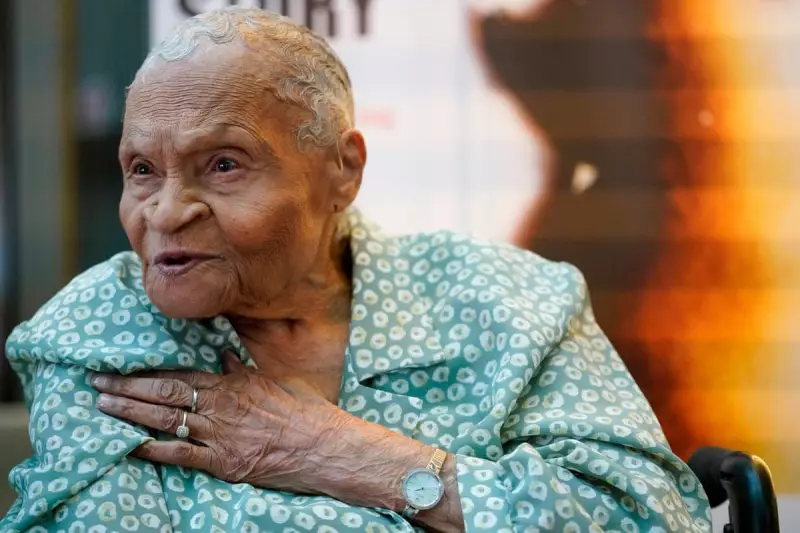
Viola Ford Fletcher, who became one of the final living witnesses to the horrific 1921 Tulsa race massacre, has passed away at the remarkable age of 111. Her death marks the closing of a significant chapter in American civil rights history.
A Life Dedicated to Justice
Mrs Fletcher died surrounded by family members at a hospital in Tulsa, according to her grandson Ike Howard. Her extraordinary life spanned over a century, during which she demonstrated incredible resilience and determination.
Sustained by deep religious faith, she raised three children, worked as a welder in a shipyard during the Second World War, and spent decades working as a housekeeper caring for families. She continued working until she was 85 years old.
Tulsa Mayor Monroe Nichols expressed the city's collective grief, stating: "Mother Fletcher endured more than anyone should, yet she spent her life lighting a path forward with purpose."
The Trauma of 1921
The defining moment of Mrs Fletcher's childhood occurred when she was just seven years old. On 31 May 1921, a two-day racial attack began on Tulsa's prosperous Greenwood district, known as Black Wall Street.
The violence erupted after a local newspaper published a sensationalised report about a Black man accused of assaulting a white woman. When armed Black Tulsans gathered at the courthouse to prevent a potential lynching, white residents responded with overwhelming force.
Hundreds of people were killed as homes were burned and looted, leaving approximately 35 city blocks of the thriving Black community completely decimated.
In her 2023 memoir, Don't Let Them Bury My Story, Mrs Fletcher wrote: "I could never forget the charred remains of our once-thriving community, the smoke billowing in the air, and the terror-stricken faces of my neighbours."
She described how her family fled in a horse-drawn buggy while her eyes burned from smoke and ash. She witnessed piles of bodies in the streets and saw a white man shoot a Black man in the head before firing toward her family.
Breaking Decades of Silence
For many years, Mrs Fletcher remained largely silent about the massacre, fearing reprisals. It wasn't until later in life that she began sharing her story publicly, working with her grandson Ike Howard to write her memoir.
Howard explained their motivation: "We don't want history to repeat itself so we do need to educate people about what happened and try to get people to understand why you need to be made whole, why you need to be repaired. The generational wealth that was lost, the home, all the belongings, everything was lost in one night."
The massacre remained largely unremembered for decades until wider discussions began in Oklahoma when the state formed an investigation commission in 1997.
The Fight for Reparations
In her final years, Mrs Fletcher became a powerful advocate for justice. In 2021, she testified before Congress about her experiences and joined her younger brother Hughes Van Ellis and another survivor, Lessie Benningfield Randle, in a lawsuit seeking reparations.
Tragically, the Oklahoma Supreme Court dismissed the case in June 2024, ruling that their grievances didn't fall within the scope of the state's public nuisance statute. Her brother Van Ellis had died the previous year at age 102.
Following the court's decision, Mrs Fletcher and Ms Randle issued a joint statement: "For as long as we remain in this lifetime, we will continue to shine a light on one of the darkest days in American history."
A Justice Department review released in January 2025 concluded that federal prosecution might have been possible a century ago but there was no longer any avenue to bring a criminal case.
From Prosperity to Displacement
Born in Oklahoma on 10 May 1914, Viola Ford Fletcher spent her early years in Greenwood, which she described in her memoir as an oasis for Black people during segregation. Her family enjoyed a comfortable home in a community that had everything from doctors and grocery stores to restaurants and banks.
After being forced to flee during the massacre, her family became nomadic, living in a tent while working as sharecroppers in the fields. Her formal education ended after the fourth grade.
At age 16, she returned to Tulsa and found work in a department store before marrying Robert Fletcher and moving to California. She eventually left her physically abusive husband and returned to Oklahoma to raise her children near family in Bartlesville.
Her grandson noted that the positive reaction Mrs Fletcher received when she began speaking publicly about her experiences proved therapeutic for her. Her decision to return to Tulsa in her later years was motivated by her hope that it would aid her ongoing fight for justice.
Viola Ford Fletcher's remarkable life serves as both a witness to one of America's darkest chapters and an inspiration for continued efforts toward racial justice and reconciliation.