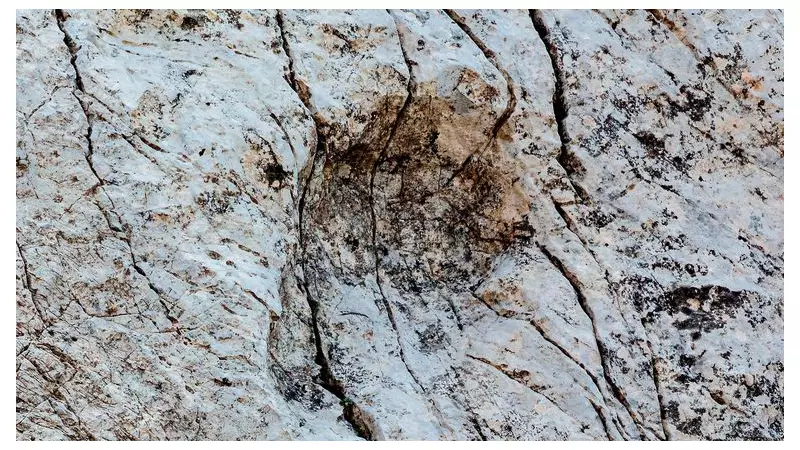
A breathtaking paleontological discovery has been made high in the Italian Alps, where a wildlife photographer stumbled upon tens of thousands of dinosaur footprints preserved on a vertical rock face.
A Photographer's Astonishing Find
The remarkable site was discovered in September 2025 by Elio Della Ferrera within the boundaries of Stelvio National Park in northern Italy. He was preparing to photograph local deer and vultures when his camera lens, trained on a cliff wall above the road, revealed an unimaginable sight. What he initially thought were a few marks turned out to be a vast collection of prehistoric tracks. "The huge surprise was not so much in discovering the footprints, but in discovering such a huge quantity," Della Ferrera explained. "There are really tens of thousands of prints up there, more or less well-preserved."
Despite the wall being in plain sight, the expert noted that the area is mostly shaded, making the prints incredibly difficult to spot without the powerful zoom of a professional camera lens. This likely explains why the immense site had remained hidden for so long, just a mile from the mountain town of Bormio.
Scale and Significance of the Tracks
Initial assessments by paleontologists estimate the site contains around 20,000 individual footprints spread across an area measuring approximately three miles. Some of the most impressive prints are up to 40 centimetres wide and clearly show detailed claw marks. Cristiano Dal Sasso, a paleontologist at Milan's Natural History Museum with 35 years of experience, described the collection as "spectacular."
"This is one of the largest and oldest footprint sites in Italy, and among the most spectacular I've seen," Dal Sasso stated. "This time reality really surpasses fantasy. There are very obvious traces of individuals that have walked at a slow, calm, quiet rhythmic pace, without running."
A Window into the Triassic World
The footprints are believed to date from the Triassic period, around 210 million years ago. Experts analysing the tracks suggest they were most likely made by herds of long-necked, herbivorous dinosaurs, probably plateosaurs. At the time, the region that is now a rugged alpine national park was a very different environment.
The area was a warm, shallow lagoon, creating ideal conditions for dinosaurs to roam along muddy beaches. The tracks were captured in time as the creatures walked near the waterline when the sediments were still soft, later hardening into rock and being lifted vertically by tectonic forces over millions of years. This pristine snapshot offers an unparalleled look into the behaviour and movement of some of Earth's earliest dinosaurs.
The discovery site's proximity to Bormio, a town set to host the men's alpine skiing events at the February 2026 Winter Olympics, adds a fascinating layer of contrast between the ancient past and modern human activity in this dramatic landscape.