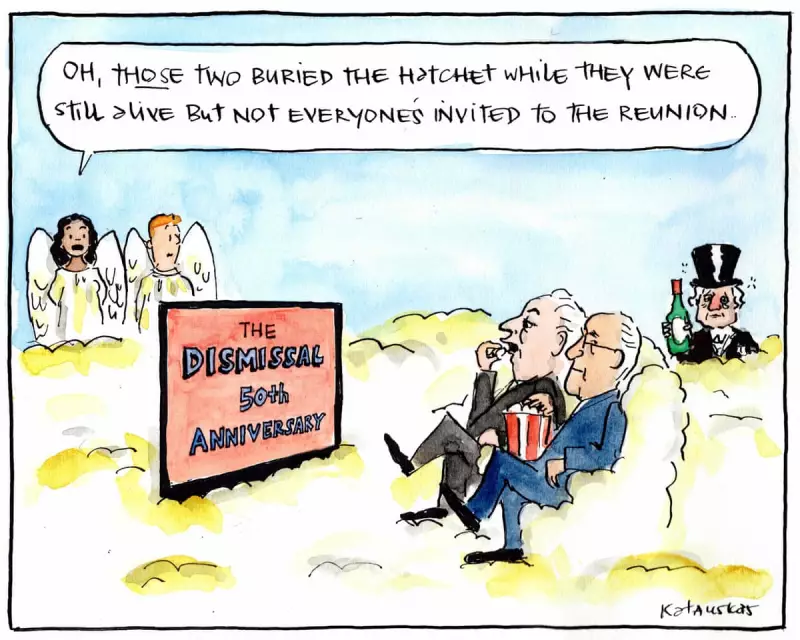
Fifty years have passed since one of the most dramatic events in Australian political history unfolded, yet the constitutional crisis of 1975 continues to provoke intense debate and reflection. The dismissal of Prime Minister Gough Whitlam's Labor government by Governor-General Sir John Kerr on November 11, 1975, remains a watershed moment that fundamentally altered Australia's political landscape.
The Constitutional Crisis That Shook a Nation
On that fateful day in 1975, Governor-General Sir John Kerr exercised his reserve powers to dismiss the democratically elected Whitlam government, an unprecedented move in Australian federal politics. The decision followed a prolonged political deadlock where the opposition-controlled Senate refused to pass the government's supply bills, effectively threatening to shut down government operations by cutting off funding.
The dismissal triggered immediate and lasting consequences, installing opposition leader Malcolm Fraser as caretaker prime minister and prompting a double dissolution election that saw Fraser's coalition achieve a landslide victory. The events of that day raised fundamental questions about the role of the monarchy's representative in a modern democracy and the balance of power between elected officials and appointed representatives.
Perspectives From the Major Players
If the key figures could speak today, their reflections would likely reveal complex layers of justification, regret, and conviction. Sir John Kerr undoubtedly saw himself as acting to resolve a constitutional impasse that threatened governmental functioning, believing he was upholding his duty to ensure stable governance. Historical records suggest he felt trapped between conflicting constitutional responsibilities and political realities.
For Gough Whitlam, the dismissal represented nothing less than a fundamental subversion of democratic processes. His famous proclamation on the steps of Parliament House - 'Well may we say 'God save the Queen', because nothing will save the Governor-General' - encapsulated the deep sense of betrayal felt by his supporters. Whitlam maintained throughout his life that Kerr's actions constituted an undemocratic coup that violated established conventions.
Malcolm Fraser, while benefiting politically from the crisis, later expressed nuanced views about the events. In subsequent years, he developed a political friendship with Whitlam and expressed reservations about the manner of his ascension to power, though he defended the necessity of breaking the parliamentary deadlock.
Lasting Impact and Constitutional Legacy
The dismissal's legacy continues to influence Australian politics and constitutional discourse. The event sparked ongoing debates about republicanism, the reform of vice-regal powers, and the proper relationship between the Senate and the House of Representatives. Many constitutional experts argue the crisis exposed dangerous ambiguities in Australia's system of government that remain unresolved five decades later.
The political trauma of 1975 shaped a generation of politicians and voters, creating deep-seated suspicions about the use of reserve powers and the potential for undemocratic outcomes within Australia's constitutional framework. Subsequent governors-general have been notably cautious about invoking similar powers, aware of the precedent set by Kerr's actions.
As Australia continues to evolve as a nation, the events of November 11, 1975, serve as a powerful reminder of the fragility of democratic norms and the enduring importance of clarifying the rules that govern political conflict. The dismissal remains not merely a historical curiosity but a living reference point in discussions about power, democracy, and constitutional reform.