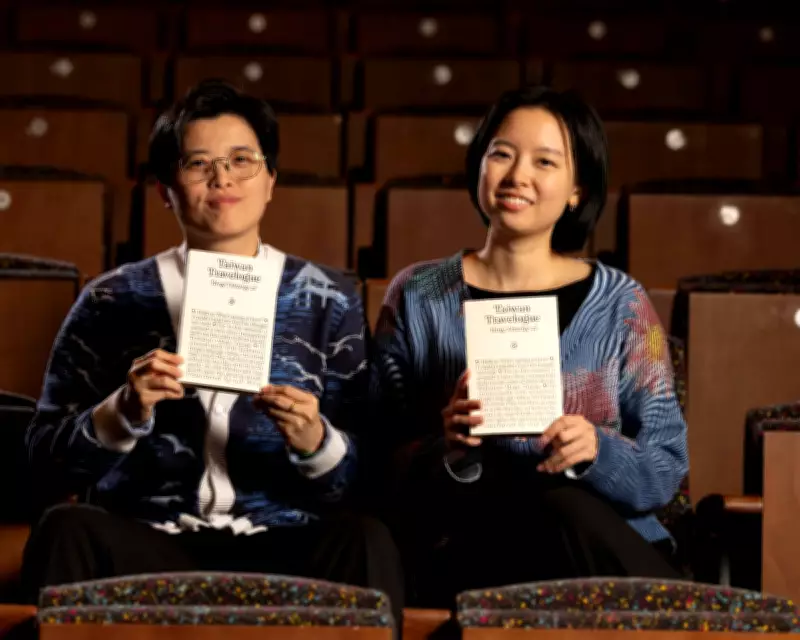
Taiwan Travelogue, a novel written by Yáng Shuāng-zǐ and translated by Lin King, has made history as the first book originally written in Mandarin Chinese to win the International Booker prize. The announcement was made during a ceremony at Tate Modern in London on Tuesday evening, where Yáng and King were awarded the £50,000 prize, to be split equally between them.
About the Novel
The novel is presented as a translation of a rediscovered memoir, narrated from the perspective of a novelist who travels to Japan-occupied Taiwan in 1938. There, she embarks on a culinary tour accompanied by an interpreter, with whom she falls in love. The book incorporates fictional footnotes and afterwords by its characters, as well as "real" annotations by King, which, according to judging chair Natasha Brown, "wrap an intriguing metafictional layer around its core love story."
Brown, a novelist herself, praised Taiwan Travelogue for achieving "an incredible double feat," succeeding as "both a romance and an incisive postcolonial novel." This marks the second consecutive year that the Sheffield-based independent press And Other Stories has won the prize, following last year's victory with Heart Lamp by Banu Mushtaq, translated by Deepa Bhasthi.
Historic Win
Yáng and King are the first Taiwanese and Taiwanese-American winners of the International Booker prize, which honors the best fiction translated into English. The original Mandarin Chinese edition of Taiwan Travelogue previously won Taiwan's highest literary honor, the Golden Tripod award. Additionally, King's English translation won the US National Book Award for translated literature in 2024.
Beyond fiction, Yáng writes essays, manga, and video game scripts. King also writes original fiction, with her debut novel, Weeb, forthcoming. In a March interview on the Booker prize website, Yáng shared that she began writing during the mid-1990s Taiwanese romance novel boom. "My middle school classmates decided to form a writing group together, though of the five of us, I'm the only one who kept writing," she said.
When asked about the inspiration for Taiwan Travelogue, Yáng explained that while both Korea and Taiwan were once colonies of the Japanese empire, Koreans "seem to feel uniformly resentful of that history, whereas Taiwanese people regard it with a much more conflicted mix of distaste and nostalgia. Using a contemporary Taiwanese lens, I wanted to untangle the complex circumstances that Taiwan's people faced in the past, and to explore what kind of future we ought to strive toward."
Shortlist and Judging Panel
Taiwan Travelogue prevailed over five other shortlisted titles: The Director by Daniel Kehlmann, translated by Ross Benjamin; The Witch by Marie NDiaye, translated by Jordan Stump; She Who Remains by Rene Karabash, translated by Izidora Angel; On Earth As It Is Beneath by Ana Paula Maia, translated by Padma Viswanathan; and The Nights Are Quiet in Tehran by Shida Bazyar, translated by Ruth Martin.
The judging panel, chaired by Natasha Brown, also included mathematician Marcus du Sautoy, translator Sophie Hughes, and writers Troy Onyango and Nilanjana S Roy. This year's prize was open to long-form fiction and short-story collections translated into English and published in the UK and/or Ireland between 1 May 2025 and 30 April 2026.
Previous winners of the International Booker prize include Han Kang for The Vegetarian, translated by Deborah Smith, and Olga Tokarczuk for Flights, translated by Jennifer Croft.