Viral 'Succulent Chinese Meal' Speech Preserved in Australia's National Archive
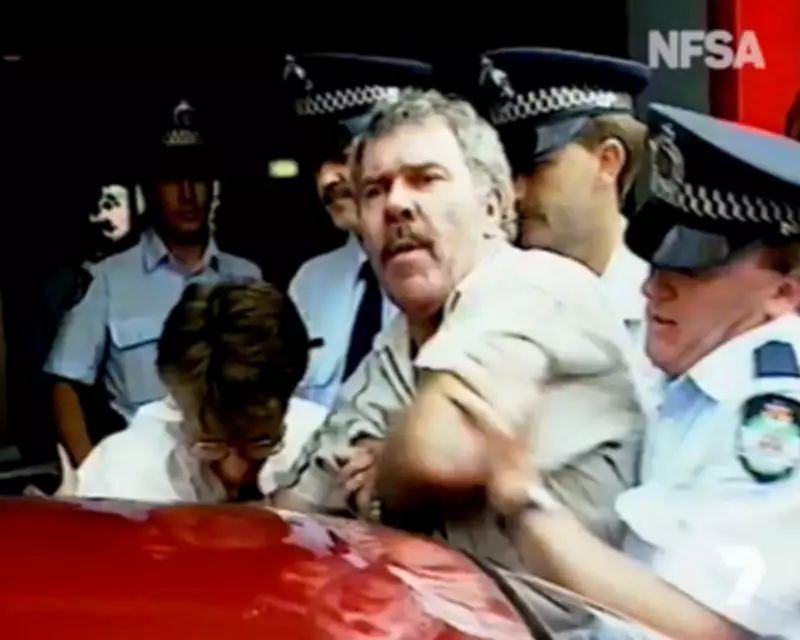
Jack Karlson, a minor criminal who achieved unexpected global internet fame, has seen his iconic 1991 arrest speech officially preserved in Australia's National Film and Sound Archive. The memorable clip, which features Karlson's dramatic declaration about democracy and a "succulent Chinese meal," went viral on YouTube decades after the original incident, transforming him into an internet sensation.
Democracy Manifest: From Police Arrest to Cultural Artifact
Thirty-five years after his dramatic arrest outside a Queensland Chinese restaurant, Karlson could never have anticipated that his theatrical protest would be watched by millions worldwide, become a lasting internet meme, and now be enshrined in Australia's official sound collection. His famous words—"Gentlemen, this is democracy manifest! ... What is the charge? Eating a meal? A succulent Chinese meal?"—have been added to the NFSA's Sounds of Australia collection alongside eight other significant audio recordings.
The NFSA established the Sounds of Australia collection nearly two decades ago to preserve recordings that reflect the country's historical, cultural, and aesthetic significance. Each year, the public nominates recordings that are more than ten years old, with a panel of NFSA sound experts voting on which entries make the final cut.
Diverse Audio Additions Reflect Australian Identity
Karlson's speech represents one of the few non-music additions to this year's collection, which spans various aspects of Australian culture. The 1991 7NEWS report that captured Karlson's arrest shows the small-time criminal—known to operate under multiple aliases—shouting "Get your hand off my penis!" before complimenting an officer's headlock technique during the one-minute exchange.
Other notable additions to the 2026 Sounds of Australia list include:
- Marcia Hines' 1977 dance track You (the oldest addition)
- Domestic violence campaigner Rosie Batty's 2015 Australian of the Year acceptance speech
- The PB/5 pedestrian crossing signal, sampled in Billie Eilish's 2019 hit Bad Guy
- Joe Dolce's 1981 comedy song Shaddap You Face
- Missy Higgins' 2004 chart-topping single Scar
- The 1990 Tabaran music video collaboration
- The 2001 Reading Writing hotline jingle
- A 2007 ABC Kimberley radio broadcast of a native title determination
Preserving Australia's Audio Heritage
NFSA chief curator Meagan Loader emphasized the archive's mission to collect content that resonates with all Australians, noting the "wild diversity" of public nominations each year. "There are so many different perspectives and identities that are wrapped up in being an Australian," Loader explained, "and we do try and reflect that diversity of experience in our collection."
The National Film and Sound Archive now houses more than 300,000 audio items, with approximately one-third of the collection classified as at-risk and preserved through ongoing digitization efforts. Karlson's speech joins this extensive repository as a testament to how unexpected moments can become enduring pieces of cultural history, bridging the gap between viral internet phenomena and official national preservation.
Missy Higgins' Scar, which reached number one on the ARIA singles chart upon its initial release and was recently voted number four in Triple J's Hottest 100 of Australian Songs in 2025, completes this year's diverse list of preserved sounds that collectively represent Australia's rich audio heritage.