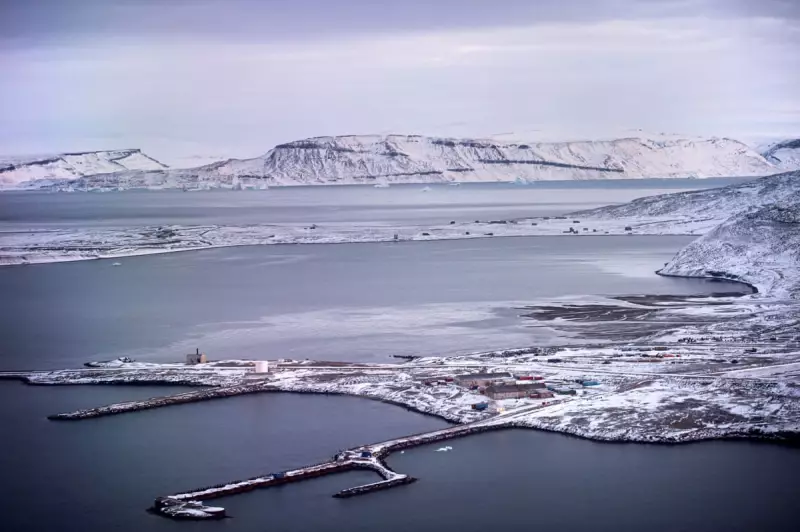
For over eight decades, the vast, icy expanse of Greenland has played a surprisingly central role in global defence strategy, hosting key United States military installations. The relationship, born from the exigencies of the Second World War, evolved through the Cold War and was punctuated by a serious nuclear incident, shaping Atlantic security to this day.
A Wartime Necessity: The 1941 Defence Agreement
In April 1941, with Denmark under Nazi occupation, the United States moved swiftly to secure Greenland. The US-Danish agreement, announced on 12 April 1941, authorised American protection of the island to prevent a feared German seizure for airbases. The Guardian reported at the time that Germany was poised to act, with bombers and transports waiting in Norway.
The US immediately began establishing outposts to create a vital aerial bridge. As noted in contemporary reports, fighter aircraft with a range of 1,000 miles could now 'hop' from Newfoundland to Greenland, then Iceland, and on to Britain. American naval vessels also gained the ability to patrol mid-Atlantic sea lanes, offering crucial protection to Allied shipping.
Cold War Expansion and the Thule Megabase
The strategic importance of Greenland intensified with the Cold War. A new joint defence agreement was signed in Copenhagen on 28 April 1951, formalising cooperation and allowing for the creation of defence areas under American command. This paved the way for a massive construction programme.
By November 1952, Danish sources announced plans for at least four major new US air force bases, supplementing the three existing sites. These new bases were designed to be hundreds of miles closer to the Soviet Union than the pivotal base at Thule (Pituffik) in north-west Greenland. Thule itself, codenamed 'Blue Jay', became a monumental project. Built secretly from 1951, it cost $500 million and required a huge logistical effort, with materials shipped during a brief 70-day annual window when the ice relented.
The 1968 Nuclear Accident and Its Aftermath
The risks of this militarised ice cap were starkly revealed on 21 January 1968. An American B-52 bomber, carrying four hydrogen bombs, crashed near Thule. The Pentagon confirmed the presence of nuclear weapons, contravening Danish policy which prohibited them on its soil, including Greenland.
The Danish Prime Minister, Mr Krag, expressed profound concern and demanded full information from Washington. In the crash's aftermath, US airmen undertook a hazardous clean-up operation, shovelling tons of radioactive snow and ice into sealed containers for removal. This incident remains a potent symbol of the hidden dangers of Cold War defence postures.
A Legacy of Geopolitics and Sovereignty
Throughout this history, the status of Greenland as Danish territory was a consistent, if strained, principle. The 1941 agreement expressly safeguarded Danish sovereignty, a point reiterated over the years. Notably, in January 1947, the US State Department denied reports that America had ever proposed buying Greenland from Denmark.
From a wartime shield against Nazi expansion to a frontline listening post against the Soviet Union, the US bases in Greenland tell a compelling story of 20th-century geopolitics. The remnants of this history, from the sprawling infrastructure of Thule to the long-cleared radioactive ice, underscore the island's enduring and contested role in global security.